What Is Semantic Analysis? A Simple Guide to How AI Understands Language
Ever wonder what is semantic analysis and how AI reads between the lines? This guide breaks it down with simple analogies and real-world examples.
Ever asked your phone for the "coolest pizza spot" and it somehow knew you meant "top-rated" and not a place with a broken thermostat? That's semantic analysis doing its magic behind the scenes.
It's the technology that teaches machines to understand the meaning, context, and intent behind human language, not just the literal words on the screen. It's the difference between an AI that just repeats information and one that genuinely helps you get stuff done.
So, What Is Semantic Analysis, Really?
Let's skip the dry, academic definition. Think of it this way: if you tell a friend, "This project is a monster," they instantly know you mean it's massive and difficult, not a literal beast with fangs. Semantic analysis gives computers that same ability to "read between the lines."
This is the secret sauce that separates a clunky, keyword-matching tool from a genuinely smart assistant that understands what you actually mean.
While it feels like a modern breakthrough, the study of meaning goes way back. The term 'sémantique' was first used by French linguist Michel Bréal in 1832. But it was a 1967 paper by computer scientist Robert W. Floyd that really set the stage for modern computing, drawing a clear line between syntax (form) and semantics (meaning).
Syntax vs. Semantics: A Quick Breakdown
Getting a handle on the difference between syntax and semantics is the key to unlocking this whole concept.
Syntax is all about grammar and structure. It's the rulebook for arranging words to form a proper sentence. A computer can easily tell if a sentence is syntactically correct. It’s the "how" of language.
Semantics dives deeper into the actual meaning. It's about interpreting the words and understanding the relationships between them. This is the "what" and "why" of language, and it's where things get tricky for a machine.
The classic example is the sentence: "Colorless green ideas sleep furiously." It's syntactically perfect—adjective, adjective, noun, verb, adverb. But semantically? It's complete gibberish. That's the difference right there.
Let's break down how a computer might interpret a simple request with and without semantic understanding.
Syntax vs. Semantics: What Your Computer Actually Hears
See the gap? A purely syntactic system gets stuck on the literal words, while a semantic system grasps the user's true intent. It’s like having a clueless robot assistant versus a genuinely helpful one.
This is exactly why old-school keyword search was so frustrating, while modern search feels almost psychic. Before diving deeper, it can be helpful to see how this works in the real world by understanding and how it processes information.
This powerful understanding is what fuels tools like Zemith's Document Assistant. It doesn't just find documents with your keywords; it reads and comprehends them to give you direct, accurate answers. To see a head-to-head comparison, check out our guide on .
How Machines Learn to Understand Meaning
So, how does a machine go from seeing a bunch of characters on a screen to actually getting what you mean? It’s not magic, though sometimes it feels like it. It’s all about a collection of smart techniques that teach AI to interpret language the way a person does. This is the heart of semantic analysis—building a bridge from raw text to real understanding.
Think about the word "crane." Your brain instantly figures out if someone's talking about a bird or a piece of construction equipment based on the words around it. For an AI, this is a major hurdle. The technique it uses to solve this puzzle is called Word Sense Disambiguation (WSD). It’s a core skill that helps a machine nail down which meaning of a word is the right one for the context.
This diagram shows how the process flows from basic grammar to deep meaning.

As you can see, understanding the grammar (syntax) is just the first step. That initial analysis is what allows the AI to dig deeper and unlock what the text is really trying to say.
Teaching AI to Be a Detective
Another key technique is Semantic Role Labeling (SRL). It sounds a bit academic, but it’s basically like teaching an AI to be a detective. For any given sentence, SRL’s job is to figure out “who did what to whom, where, and when.” It’s all about assigning roles to the different words and phrases.
Take a sentence like, "The marketing team launched the new campaign yesterday." An AI using SRL would break it down like this:
- Agent (Who): The marketing team
- Action (What): launched
- Patient (What was affected): the new campaign
- Temporal (When): yesterday
This kind of structured understanding is what lets an AI assistant, like the one inside Zemith, answer complex questions with incredible accuracy. It’s not just matching keywords; it’s genuinely understanding the relationships between the concepts in your documents. The result is an answer that feels like it came from a helpful colleague, not just a search bar.
Turning Words into Numbers
This is where things get really cool. One of the most powerful techniques in the playbook is Word Embeddings. This is where language gets a mathematical makeover. Words are converted into sets of numbers called vectors.
Why would we do that? Because computers are brilliant at math. By representing words as vectors in a massive, multi-dimensional space, an AI can start to calculate the relationships between them.
This is how an AI learns abstract concepts. It can figure out that the relationship between "king" and "queen" is similar to the relationship between "man" and "woman." This ability to grasp analogies is a massive leap toward human-like understanding.
These vectors manage to capture the subtle nuances of a word based on how it's used. For instance, the vector for "apple" (the fruit) will be mathematically closer to vectors for "pear" and "orange" than it is to the vector for "Apple" (the company), which will be much closer to "Microsoft" and "Google."
Getting a feel for these underlying methods really helps you appreciate the power behind today’s AI. The large language models driving the most advanced platforms are built on these exact principles. If you're interested in going deeper, you can learn more about the that are pushing the boundaries of what’s possible. At the end of the day, techniques like these are the secret sauce that makes AI such a useful partner in your work.
Why Semantic Analysis Actually Matters for Your Work
Alright, so we’ve peeked under the hood at how machines learn to interpret language. But let's be real—this isn't just theory for tech nerds. Semantic analysis is a productivity powerhouse you're already using every single day, probably without even realizing it.
This is where we connect the dots from 'what it is' to 'what it actually does for you'.
Think about the last time you typed a half-finished question into Google and it just knew what you meant. Or when a customer support bot actually solved your problem instead of making you want to throw your laptop out the window. That's semantic analysis in action, quietly saving you time and frustration.

This ability for machines to understand meaning has completely changed how we work and find information.
From Simple Words to Powerful Insights
The real game-changer is how semantic analysis turns mountains of text into actual, usable intelligence. Instead of just seeing words on a page, it sees context, intent, and even emotion.
This computational leap has been centuries in the making. The Google Ngram Viewer, which crunched over 0.3 trillion words from books published between 1600 and 2009, is a perfect example of how dramatically word meanings can shift.
Take the word 'toilet'—it referred to a ladies' dressing table in the 19th century before completely changing its meaning by the 1920s. Or 'mouse', which evolved from just an animal to a computer peripheral after 1980, showing a 300% surge in tech-related neighbors like 'computer' and 'click'. Semantic models can track these fascinating linguistic shifts with incredible precision.
This deep understanding unlocks some seriously useful applications:
- Automated Text Summarization: Imagine getting the key takeaways from a 50-page report in seconds. That's exactly what platforms like Zemith do with their Document Assistant, saving you hours of reading.
- Powerful Question-Answering: Instead of just searching for keywords, you can ask a complex question and get a direct, accurate answer. This is a core feature of today's best .
- Sentiment Analysis: Businesses can instantly gauge public feeling about their brand by analyzing social media comments, product reviews, and news articles.
The bottom line is simple: Semantic analysis helps you work smarter, not harder. It automates tedious tasks, uncovers hidden insights from your data, and ultimately frees you up to focus on what really matters.
Exploring real-world applications highlights this even further, especially when you look at different . By understanding customer feedback on a deeper level, companies can make better, more informed decisions that drive growth and improve satisfaction.
This isn't just about cool tech; it's about getting tangible results.
Putting Semantic Analysis To Work With Zemith
Alright, enough with the theory. Knowing what semantic analysis is feels good, but actually using it to get your work done faster? That’s a whole lot better. This is where we get our hands dirty and show you how Zemith’s platform makes all this advanced AI a practical, everyday tool—no data science degree required.
The real magic happens when semantic understanding stops being a concept and becomes a feature you can actually click. Instead of just crunching words, Zemith's tools are designed to grasp what you’re trying to do, helping you hit your goals with way less effort.
For Content Creators and Writers
Ever written a paragraph, read it back, and just thought, "Ugh, that's not quite right"? We've all been there. You know the meaning is locked in, but the tone just feels... off. Semantic analysis is the secret sauce for fixing this without gutting your core message.
Let's say you've drafted a product update that sounds a little timid. Inside Zemith’s Smart Notepad, you can just highlight the text and tell it to "rewrite this to sound more confident." The AI doesn't just do a simple word swap. It understands the semantic goal—confidence—and rebuilds the sentence structure to reflect that, all while keeping the original meaning intact.
It’s like having a co-writer who instantly gets the vibe you're going for. The tool understands that "We think users might like this feature" needs to become "Users will love this powerful new feature," instantly making your writing more persuasive.
For Researchers and Students
Staring down a dense, 50-page academic paper or a beefy market research report is intimidating. Trying to find that one specific statistic or the key counter-argument can feel like hunting for a needle in a haystack. This is where semantic analysis steps in as your personal research assistant.
With Zemith’s Document Assistant, you don't just search for keywords; you have a conversation with your documents. Upload a PDF and ask direct questions like, "What were the main arguments against the proposed theory?" or "Find all stats related to Q4 revenue growth."
The system doesn't just scan for the words "arguments" or "revenue." It semantically understands your question, pinpoints the sections that discuss those concepts, and pulls the information together into a clear, direct answer. This can turn hours of painful reading into a few minutes of sharp, focused work.
This is a universe away from just hitting CTRL+F. It’s about pulling actual intelligence from your documents in seconds. Once you've got your insights, you might even want to learn how to to automate other parts of your research workflow.
For Developers and Coders
If you're a developer, the daily grind is all about turning an idea into clean, working code. But getting a machine to understand your intent can be a real headache. You know exactly what you want to build, but digging up the right syntax and boilerplate code can really kill your momentum.
This is where the Zemith Coding Assistant comes in. You can give it a simple, natural language command like, "Build a responsive three-column pricing table with a highlighted 'Most Popular' option." The assistant instantly gets the semantic components of your request:
- "Responsive" means it needs to look good on both mobile and desktop.
- "Three-column pricing table" tells it the exact HTML and CSS structure needed.
- "Highlighted 'Most Popular' option" means it knows to add a special class or style to the middle column.
The AI translates your human intention directly into ready-to-use code that just works. This is what putting semantic analysis into practice is all about—it smooths out complex tasks, speeds up your workflow, and lets you focus on the creative problem-solving, not the tedious details.
Here’s a quick-reference guide to see how Zemith puts semantics to work for different roles.
Your Semantic Analysis Toolkit In Zemith
As you can see, the goal is always the same: to bridge the gap between what you want to do (your intent) and the final output, whether that’s a paragraph of text, a research summary, or a block of code.
The Future Is Semantic and a Little Weird
So, where is this all going? If semantic analysis is already this good, what’s next on the horizon? Let's take a peek into the exciting, and sometimes quirky, future of how machines understand us. The next big leap isn't just about parsing text; it's about making sense of the whole picture.
We’re moving toward multimodal AI, which is really just a fancy way of saying AI that can understand the relationship between text, images, sound, and even video—all at once. Think about connecting the dots between someone saying, "Wow, look at that view!" in a video, the stunning mountain landscape on screen, and the triumphant music playing in the background. This is the kind of intuitive understanding that powers features like Zemith’s AI Live Mode, where you can talk to the AI about what you see in real-time.

The Quest for Common Sense and Sarcasm
The real final frontier for AI is mastering the very things that make us human: common sense, cultural nuances, and of course, sarcasm. Teaching a machine that "Yeah, I love being stuck in traffic" is probably not a genuine expression of joy is one of the toughest challenges in computer science.
It’s the difference between an AI that processes information and one that genuinely gets you. Imagine an AI assistant that not only organizes your notes but also picks up on your sarcastic humor about a project deadline.
This ongoing quest has deep historical roots. The journey to understand how meaning changes over time, known as diachronic linguistics, has relied on massive datasets to track how language evolves. Modern semantic change detection frameworks can now identify these shifts with up to 95% precision. For example, they can pinpoint how 'cell' went from a strictly biological term to phone slang after 1995, a shift driven by a 400% spike in telecom-related co-occurrences. You can dive deeper into the to see just how far we've come.
Ultimately, the goal is to create tools that feel less like software and more like partners. We're talking about hyper-personalized learning platforms that can adapt to your confusion and AI assistants that actually understand your witty remarks. At Zemith, we're not just watching this future unfold—we're actively building it, creating smarter, more intuitive tools designed for a world where AI truly understands.
Answering Your Top Questions About Semantic Analysis
We've covered a lot of ground, from the basic building blocks to some pretty futuristic applications. But as with any deep topic, a few common questions tend to pop up. Let's tackle some of the ones I hear most often to make sure everything is clicking into place.
Think of this as your personal FAQ session, where we clear up any lingering confusion. The better you grasp these nuances, the more you'll appreciate what's happening under the hood of a tool like Zemith.
Is Semantic Analysis the Same as Sentiment Analysis?
This is a big one, and it's easy to see why they get mixed up. The short answer is no, but they are closely related.
Think of it this way: semantic analysis is the broad discipline of understanding the entire meaning of language. It's the whole library. Sentiment analysis, on the other hand, is just one specific book in that library, dedicated solely to emotion and opinion.
Sentiment analysis is a subset of semantic analysis. Its only job is to figure out if a piece of text is positive, negative, or neutral. It’s a fantastic tool for things like tracking brand reputation or sifting through customer reviews.
So, when a machine knows that "Your support team is useless" is an angry comment, that's sentiment analysis. But when it understands that the "support team" is the entity being described and "useless" is the quality attributed to it, that's the broader power of semantic analysis at work.
How Can I Use This for Better SEO?
Ah, now we're talking. Understanding semantic principles is basically a superpower for modern SEO. The old days of just cramming keywords onto a page are long gone. Today, search engines like Google are all about understanding a user's intent, which is a core semantic challenge.
Here’s how you can put this knowledge to work:
- Focus on Topics, Not Just Keywords: Instead of getting tunnel vision on a single phrase like "best running shoes," think like a human. Cover the entire topic. Talk about "marathon training footwear," "running shoe cushioning types," and "how to choose trail running shoes." This signals to search engines that you're a genuine authority.
- Answer Questions Directly: Get inside your user's head. A search for "what is conversational AI" isn't just a request for a definition; it's an implied question about examples, use cases, and benefits. If you structure your content to answer these follow-up questions, you'll be rewarded. You can read more about .
- Use Natural Language: Just write for people! Semantic search engines are incredibly sophisticated now. They understand synonyms, context, and the natural flow of conversation. Content that is clear, helpful, and well-written will always win in the long run.
What Are the Biggest Challenges in This Field?
Even with all the amazing progress, semantic analysis is far from solved. The biggest hurdles are the same things that make human language so wonderfully messy and interesting.
Ambiguity is the number one enemy. Take a sentence like, "I saw a man on a hill with a telescope." Who has the telescope? Me? The man? Is the telescope just sitting on the hill? Context is king, but teaching a machine to consistently nail that context is a massive challenge.
Then you have things like sarcasm, irony, and cultural idioms. An AI might see the comment, "Great, another meeting that could have been an email," and flag it as positive because it sees the word "great." Getting a machine to understand that we often mean the exact opposite of what we say is where the most advanced models—like the ones powering Zemith—are really starting to shine.
Ready to move from theory to practice? Zemith weaves all these powerful principles into a single AI platform designed to help you research faster, write better, and code smarter. Stop juggling a dozen different tools and start getting real work done.
استكشف ميزات زميث
كل الذكاء الاصطناعي. اشتراك واحد.
ChatGPT، Claude، Gemini، DeepSeek، Grok و25+ نموذج







ذكاء اصطناعي فوري ومباشر.
صوت + مشاركة شاشة · إجابات فورية
ما أفضل طريقة لتعلم لغة جديدة؟
الانغماس والتكرار المتباعد هما الأفضل. حاول استهلاك وسائط بلغتك المستهدفة يومياً.
صوت + مشاركة شاشة · الذكاء الاصطناعي يجيب في الوقت الفعلي
توليد الصور
Flux، Nano Banana، Ideogram، Recraft + المزيد

اكتب بسرعة الفكر.
إكمال تلقائي، إعادة كتابة وتوسيع بأمر
أي مستند. أي صيغة.
PDF أو رابط أو YouTube → دردشة، اختبار، بودكاست والمزيد
إنشاء الفيديو
Veo، Kling، MiniMax، Sora + المزيد

تحويل النص إلى كلام
أصوات ذكاء اصطناعي طبيعية، 30+ لغة
توليد الأكواد
كتابة، تصحيح وشرح الأكواد
الدردشة مع المستندات
رفع ملفات PDF، تحليل المحتوى
ذكاؤك الاصطناعي في جيبك.
وصول كامل على iOS وAndroid · مزامنة في كل مكان
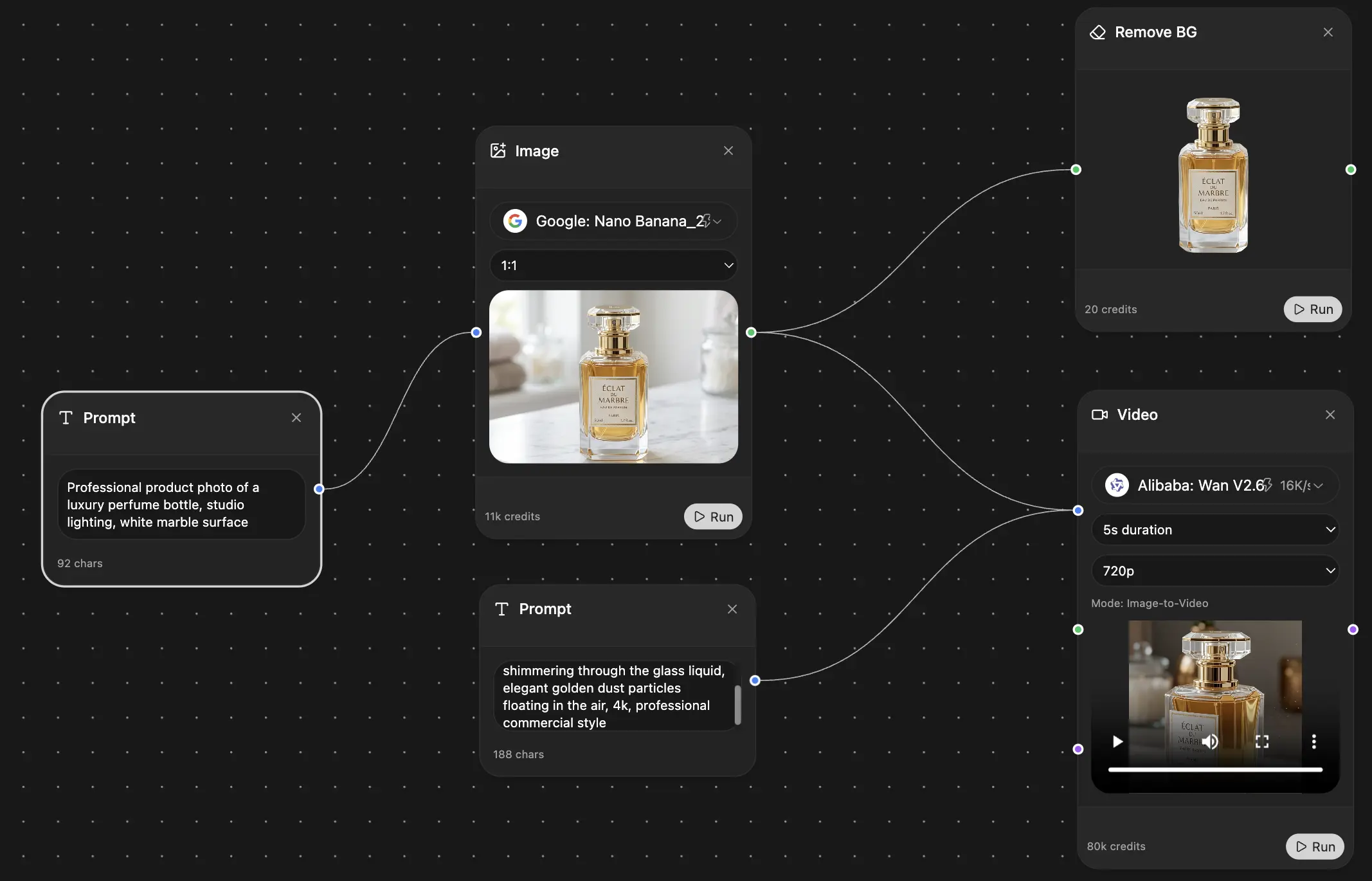
لوحتك اللامتناهية للذكاء الاصطناعي.
دردشة، صور، فيديو وأدوات حركة — جنبًا إلى جنب
وفر ساعات من العمل والبحث
تسعير بسيط وبأسعار معقولة
موثوق من قبل فرق في






مجاني
لا يتطلب بطاقة ائتمان
- 100 رصيد يومياً
- 3 نماذج ذكاء اصطناعي للتجربة
- دردشة ذكاء اصطناعي أساسية
بلس
- 1,000,000 رصيد/شهر
- أكثر من 25 نموذج ذكاء اصطناعي — GPT-5.2، Claude، Gemini، Grok والمزيد
- Agent Mode مع بحث الويب وأدوات الكمبيوتر والمزيد
- Creative Studio: توليد الصور وتوليد الفيديو
- Project Library: الدردشة مع المستندات والمواقع ويوتيوب، إنشاء البودكاست، البطاقات التعليمية، التقارير والمزيد
- Workflow Studio و FocusOS
احترافي
- كل شيء في بلس، و:
- 2,100,000 رصيد/شهر
- نماذج حصرية للمحترفين (Claude Opus، Grok 4، Sonar Pro)
- Motion Tools و Max Mode
- أول وصول إلى أحدث الميزات
- الوصول إلى عروض إضافية
ماذا يقول مستخدمونا
Great Tool after 2 months usage
"I love the way multiple tools they integrated in one platform. Going in the right direction."
— simplyzubair
Best in Kind!
"The quality of data and sheer speed of responses is outstanding. I use this app every day."
— barefootmedicine
Simply awesome
"The credit system is fair, models are perfect, and the discord is very responsive. Quite awesome."
— MarianZ
Great for Document Analysis
"Just works. Simple to use and great for working with documents. Money well spent."
— yerch82
Great AI site with accessible LLMs
"The organization of features is better than all the other sites — even better than ChatGPT."
— sumore
Excellent Tool
"It lives up to the all-in-one claim. All the necessary functions with a well-designed, easy UI."
— AlphaLeaf
Well-rounded platform with solid LLMs
"The team clearly puts their heart and soul into this platform. Really solid extra functionality."
— SlothMachine
Best AI tool I've ever used
"Updates made almost daily, feedback is incredibly fast. Just look at the changelogs — consistency."
— reu0691