AI for Entrepreneurs: Your 2026 Startup Playbook
Unlock startup growth with AI for entrepreneurs. This guide covers actionable use cases, an implementation roadmap, and quick wins using an integrated platform.
You're probably doing the founder shuffle right now. One tab for customer emails. One for your landing page. One for invoices. One for “quick market research” that somehow turned into reading three competitor sites and forgetting why you opened your laptop in the first place.
That's normal. It's also expensive.
Most entrepreneurs don't lose momentum because they lack ideas. They lose it because every important task competes with ten urgent ones. Marketing wants content. Sales wants follow-up. Product wants specs. Admin wants attention. Your calendar wants an apology.
AI changes that, but only if you stop treating it like a novelty. Used well, AI for entrepreneurs isn't a toy, a gimmick, or a shortcut for lazy work. It's a force multiplier for people who already have judgment, urgency, and too much on their plate.
The Entrepreneur's Dilemma And The AI Solution
A founder I'd describe as “professionally overbooked” usually has the same week on repeat. Monday starts with a sales call. Tuesday disappears into proposal edits. Wednesday gets eaten by content, hiring notes, and chasing documents. By Thursday, the product backlog is glaring at them like an unpaid parking ticket.
That's why AI matters now. Not because it's trendy, but because the barrier to building is lower than it's ever been. Market projections alone make the timing hard to ignore. The global AI market is projected to grow from about $390.91 billion in 2025 to roughly $3.50 trillion by 2033, a 31.5% CAGR, according to . For founders, that means AI is becoming infrastructure, not just software you occasionally poke at.
The practical problem is that most businesses still hit the same wall during adoption. Tools multiply. Workflows splinter. Context gets lost. If that sounds familiar, the broader are usually the same ones showing up in AI adoption too.
Practical rule: If AI gives you more tabs, more logins, and more copying and pasting, you didn't solve founder chaos. You upgraded it.
The entrepreneurs who get real value don't ask, “What cool AI tool should I try?” They ask, “Which part of my business keeps repeating work that a system could handle faster, cheaper, and more consistently?”
That's the shift. Curiosity is fine. Operational advantage is better.
AI Is Your New Co-Founder Not Just An Intern
A lot of founders make the same mistake early. They hand AI the leftovers.
Write a caption. Summarize a note. Clean up a paragraph. That's useful, sure, but it's also like hiring a brilliant operator and then asking them to alphabetize sticky notes. AI can do grunt work. It can also help shape decisions, structure thinking, and reduce the time between idea and execution.

Stop hiring twelve tools that don't talk
The duct-taped approach looks efficient at first. One tool for writing, another for research, another for notes, another for code, another for image generation. Soon you've built a tiny digital office full of freelancers who never attend the same meeting.
That creates four problems fast:
- Context loss: Every tool starts from zero, so you keep re-explaining your company, offer, audience, and tone.
- Workflow friction: Copy from one app, paste into another, fix formatting, repeat.
- Decision lag: You can generate output, but you can't build momentum because nothing is connected.
- Data scatter: Sensitive product notes, customer details, and strategy docs end up spread across random services.
A better mental model is this. AI should behave less like a disposable assistant and more like a partner with memory, context, and access to the same operating picture you use. That's why founders looking at should care less about flashy single features and more about whether the system can retain business context across tasks.
What a real AI partnership looks like
Treat your AI setup like a new co-founder onboarding into the company.
Give it your positioning. Your recurring customer objections. Your best-performing content. Your competitor notes. Your product docs. Your sales call transcripts. Your roadmap scraps that currently live in three notes apps and one cursed spreadsheet.
Then use that shared context across jobs that matter:
- Strategic brainstorming: refine offers, test positioning, pressure-test pricing logic
- Product thinking: turn rough ideas into specs, user stories, and prototype outlines
- Go-to-market support: draft campaigns that reflect your real audience, not generic internet mush
- Operational consistency: turn meetings and docs into action items, summaries, and reusable knowledge
If your AI forgets everything the moment you open a new chat, you're not collaborating. You're speed-dating software.
That's the difference between delegation and leverage. Delegation says, “Do this task.” Leverage says, “Help me run this business with full context.”
Your Startup Supercharged With AI Use Cases
Most businesses don't start with exotic AI deployments. They start with the obvious bottlenecks. That's not a weakness. It's smart prioritization. In 2025, the most common AI use case for businesses was marketing or sales at 34.70%, followed by business administration at 31.05%, according to . That lines up with what founders feel first. Customer acquisition and admin drag are where pain shows up early.
Here's how that turns into practical workflows.

Marketing that starts from one asset and fans out
Founders often create one decent piece of content, then leave value on the table because repurposing it takes too long. A cleaner workflow is to start from a source asset and branch outward.
Take a YouTube interview, webinar, or founder rant with surprising clarity. Run it through a YouTube-to-blog workflow, then use the output to create:
- A blog draft: Pull the strongest thesis and convert spoken language into structured writing.
- Social snippets: Extract short hooks, objections, and memorable one-liners.
- An email sequence: Turn the same material into a founder-style newsletter with a clear CTA.
- Landing page support copy: Reuse the strongest proof points and customer pain language.
The trick isn't just generating content. It's keeping the voice and argument consistent across formats. That gets much easier when your notes, brand inputs, and prior drafts live in one workspace instead of six disconnected ones.
A lot of founders also need funding context while shaping category narratives. If you're building in this space, the list of is a useful reality check on who's active and how the market is framing AI businesses.
Sales follow-up that doesn't die in your notes app
Sales failure is often boring. Not dramatic. Just boring. A good call happens, the founder gets busy, and the follow-up arrives late or weak.
Use a transcript or meeting notes as the source of truth. Then have AI pull out:
- The buyer's stated pain points
- Budget or timing signals
- Risks and objections
- A follow-up email draft specific to that conversation
- Next-step recommendations based on deal stage
That workflow works because it starts with the customer's words, not a generic template. It also helps solo founders sell like they have a proper enablement team behind them, minus the Slack messages and sales jargon no one asked for.
Operations that stop leaking time
Admin is where founder energy subtly disappears. One meeting creates a half-dozen little jobs. Summaries. Action items. Clarifications. Reminders. Nobody plans for that. It just multiplies.
Use AI in operations for repeatable cleanup:
- Meeting summaries: convert messy notes into decisions, owners, and deadlines
- Internal updates: turn raw discussions into polished project updates
- Document Q&A: ask questions across proposals, SOPs, or onboarding docs
- Research consolidation: combine web findings and internal notes into one brief
This is also where a unified platform starts earning its keep. Tools like Zemith combine document chat, project organization, writing support, coding help, and research workflows in one workspace, which reduces the usual copy-paste circus founders create when they stack point solutions. If you're comparing categories before committing, this overview of is a useful place to sort the options.
Here's a short demo to make the workflow more concrete:
Product work that moves from idea to MVP faster
AI for entrepreneurs becomes interesting.
A founder has an idea. Great. Then reality asks for user stories, edge cases, validation notes, wireframes, copy, and probably a rough prototype. AI can compress that sequence if you use it in stages instead of asking one giant vague question like “build my app,” which is the prompt equivalent of throwing ingredients at a wall and hoping for lasagna.
A stronger pattern looks like this:
- Start on a whiteboard with the user problem and core flow
- Turn that into product requirements or a lean feature list
- Generate UI copy and onboarding text
- Use a coding assistant for component drafts, debugging, or prototype logic
- Refine with real customer feedback, not model enthusiasm
Field note: AI is strongest when it helps you think clearly and ship faster. It's weakest when you ask it to replace product judgment.
That distinction matters. Speed is useful. False confidence is expensive.
Building Your AI Engine A Practical Roadmap
Most founders don't need a grand AI transformation plan. They need a way to stop experimenting randomly and start building a repeatable operating system.

Ideate
Start with one painful workflow, not a giant vision board of everything AI could someday touch.
Pick the process that is both frequent and annoying. Sales follow-up. Research synthesis. First-draft content. Feature spec cleanup. If a task happens often and drains attention, it's a strong candidate.
Write down three things:
- What triggers the work
- What inputs it needs
- What a good output looks like
That simple map is more valuable than fifty saved prompts from social media.
Test
Run small experiments before you reorganize your company around them.
Founders sometimes get seduced by low sticker prices. MIT Sloan notes a strategic tension here. Entry-level generative AI subscriptions are around $20 to $30 per month, but lower prices alone don't create durable value. The bigger question is where AI creates defensible differentiation versus automating low-value work, as discussed in .
Use test criteria that matter:
- Quality: Did the result need light editing or a total rewrite?
- Speed: Did the workflow reduce effort enough to become habitual?
- Repeatability: Can someone else on the team run it with similar output?
- Strategic value: Does this strengthen something unique about your business?
Integrate
A workflow isn't useful if it lives in a bookmarked tab no one opens after Tuesday.
Integration means the AI step becomes part of normal execution. Research goes into the same project hub. Meeting notes become structured tasks immediately. Product ideas get pushed into specs while context is still fresh. If you're exploring a , this is the point to judge whether the tool helps embed AI into daily work or just adds another window.
A few practical rules help:
- Create one source of context: brand docs, offer details, product notes, and customer language should be easy to reference
- Standardize prompts where useful: not every task needs a masterpiece prompt, but recurring jobs benefit from structure
- Keep a human checkpoint: founders should review high-stakes outputs before they touch customers
Scale
Scale the workflows that create compounding value, not just novelty.
There are two kinds of AI wins. Commodity wins save time on common tasks. Strategic wins improve how your business learns, sells, builds, or serves in a way competitors can't easily copy. Commodity wins are still worth having. They just shouldn't be mistaken for moat.
Build the AI engine around your judgment, your customer knowledge, and your operating rhythm. That's where leverage turns into advantage.
Measuring What Matters Calculating AI ROI
If your AI “ROI” is just “it feels faster,” you're still in the honeymoon phase.
Measure outcomes at the workflow level. Marketing should look at content throughput, lead quality, and how quickly campaigns move from idea to publish. Sales should track follow-up consistency, response quality, and the lag between conversation and next action. Operations should watch how quickly meetings turn into decisions and assigned work. Product should care about how fast rough ideas become usable specs or testable prototypes.
The cost side founders often miss
Token economics sounds technical, but the business lesson is simple. AI cost isn't only about how many times you call a model. It's shaped by model choice, prompt length, context size, and output length. Founders should treat this as a real unit-economics issue, especially because AI can automate work that absorbs 60% to 70% of employee time in many functions, as outlined in .
That changes how you design workflows.
- Use smaller models for routine tasks: classification, extraction, cleanup, and formatting don't always need heavyweight reasoning.
- Reserve stronger models for high-stakes thinking: strategy, synthesis, nuanced writing, and product logic benefit more from premium inference.
- Trim waste in prompts: stuffing every prompt with your entire company history is expensive and usually unnecessary.
The True Cost of Your AI Stack
A scrappy stack isn't always wrong. Early-stage founders should stay practical. But if the stack creates friction that cancels the speed benefit, the cheap option stops being cheap.
A better ROI question
Don't ask, “How much time did AI save?”
Ask, “Which business result improved because the workflow got faster, more consistent, or easier to repeat?” That's the number behind the number.
Common AI Pitfalls And How To Dodge Them
The biggest AI mistakes aren't technical. They're behavioral.
Shiny object syndrome
Founders love tools. Founders also love procrastinating through “research,” which is just shopping with extra tabs. If you keep testing every new model and never operationalize one workflow, you'll stay busy and unchanged.
Fix it by setting one rule. No new AI tool enters the stack unless it replaces friction in a current process.
Generic output disease
AI can write quickly. It can also produce content so bland it sounds like it was approved by a committee of beige office chairs.
Use source material with actual sharpness. Feed it customer calls, founder notes, sales objections, product beliefs, and your own point of view. Then edit for specificity. The goal isn't “AI-sounding good.” The goal is useful, distinct, and on-brand.
Good AI output usually starts with good business inputs.
Privacy by chaos
Scattering customer notes, pricing logic, and internal docs across random apps is a quiet risk. A controlled setup is easier to manage than a tool pile built one impulse signup at a time.
Keep sensitive work organized by project, use clear internal guidelines for what gets uploaded, and avoid making your operating system depend on browser chaos and vibes. Vibes are great for product names. Not for data handling.
Your First AI Wins This Week With Zemith
You don't need a full rebuild this week. You need a few useful wins that make the value obvious.

Run these three plays
Market research multiplier
Upload a competitor whitepaper, landing page copy, or product doc into a document workflow. Ask for a competitive summary, likely positioning angles, and three sales rebuttals your team can use. Then turn that into blog topics or newsletter angles.Content engine starter
Take your messy brainstorm notes and turn them into a clean draft. Bullet points become a newsletter. A rough voice memo becomes a blog outline. A customer objection becomes a social post series. If you want to go one step further, use the same workspace to so repeat questions and routines stop depending on memory.Meeting maximizer
After a customer or sales call, drop in the transcript or notes and ask for a concise summary, open questions, objections, and next-step actions. Then draft the follow-up while the conversation is still fresh.
The point of the first week
Your first AI wins should do two things. Save time on a recurring workflow and improve the quality of the output enough that you'll keep using it.
Don't chase magic. Chase repeatability.
If AI for entrepreneurs feels confusing, that's usually because too many people explain it as a pile of tools instead of an operating model. Keep it simple. Centralize context. Pick one painful workflow. Turn it into a habit. Then expand from there.
If you want one workspace for research, writing, documents, coding, and organized project context, is worth exploring. It fits best for entrepreneurs who are tired of stitching together disconnected AI tools and want a cleaner system they can use every day.
Explore Zemith Features
Every top AI. One subscription.
ChatGPT, Claude, Gemini, DeepSeek, Grok & 25+ more








Always on, real-time AI.
Voice + screen share · instant answers
What's the best way to learn a new language?
Immersion and spaced repetition work best. Try consuming media in your target language daily.
Voice + screen share · AI answers in real time
Image Generation
Flux, Nano Banana, Ideogram, Recraft + more

Write at the speed of thought.
AI autocomplete, rewrite & expand on command
Any document. Any format.
PDF, URL, or YouTube → chat, quiz, podcast & more
Video Creation
Veo, Kling, Grok Imagine and more

Text to Speech
Natural AI voices, 30+ languages
Code Generation
Write, debug & explain code
Chat with Documents
Upload PDFs, analyze content
Your AI, in your pocket.
Full access on iOS & Android · synced everywhere
Your infinite AI canvas.
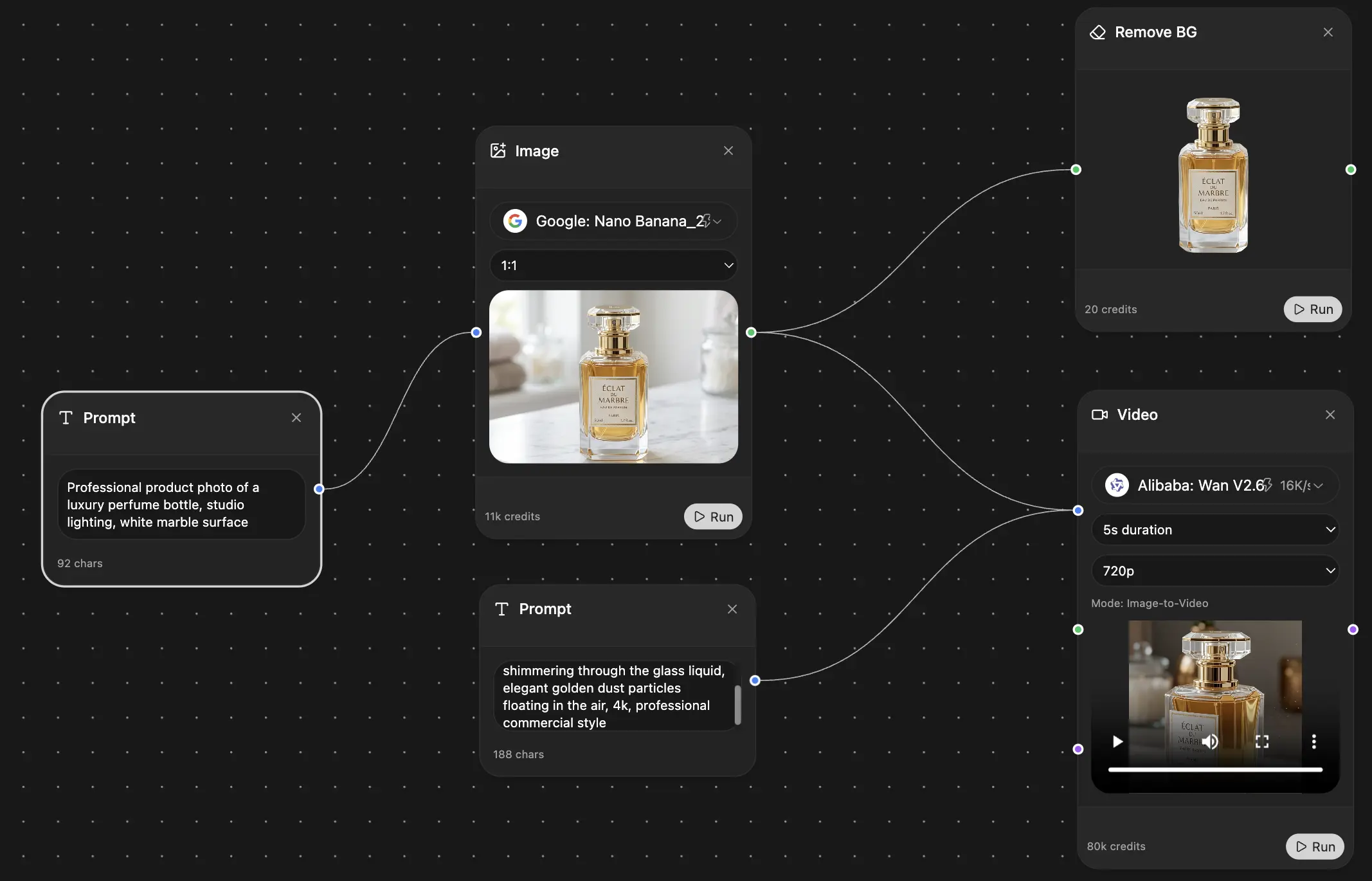
Chat, image, video & motion tools — side by side
Save hours of work and research
Transparent, High-Value Pricing
Trusted by teams at






Free
No credit card required
- 100 credits daily
- 3 AI models to try
- Basic AI chat
Plus
- 1,000,000 credits/month
- 25+ AI models — GPT, Claude, Gemini, Grok & more
- Agent Mode with web search, computer tools and more
- Creative Studio: image generation and video generation
- Project Library: chat with document, website and youtube, podcast generation, flashcards, reports and more
- Workflow Studio and FocusOS
Professional
- Everything in Plus, and:
- 2,100,000 credits/month
- Pro-exclusive models (Claude Opus, Grok 4, Sonar Pro)
- Motion Tools & Max Mode
- First access to latest features
- Access to additional offers
What Our Users Say
Great Tool after 2 months usage
"I love the way multiple tools they integrated in one platform. Going in the right direction."
— simplyzubair
Best in Kind!
"The quality of data and sheer speed of responses is outstanding. I use this app every day."
— barefootmedicine
Simply awesome
"The credit system is fair, models are perfect, and the discord is very responsive. Quite awesome."
— MarianZ
Great for Document Analysis
"Just works. Simple to use and great for working with documents. Money well spent."
— yerch82
Great AI site with accessible LLMs
"The organization of features is better than all the other sites — even better than ChatGPT."
— sumore
Excellent Tool
"It lives up to the all-in-one claim. All the necessary functions with a well-designed, easy UI."
— AlphaLeaf
Well-rounded platform with solid LLMs
"The team clearly puts their heart and soul into this platform. Really solid extra functionality."
— SlothMachine
Best AI tool I've ever used
"Updates made almost daily, feedback is incredibly fast. Just look at the changelogs — consistency."
— reu0691