The Ultimate 2026 AI Tools List (And How to Use It)
Tired of endless tabs? Our 2026 AI tools list reviews the best directories and reveals the one platform that can replace them all. Stop searching, start doing.
Another AI tools list? Not quite.
You probably searched “ai tools list” hoping for one clean answer and got the opposite. Ten tabs became twenty, then fifty, and now your browser looks like it's filing for workers' comp. That's the bad advice nobody says out loud. More options don't always make you smarter. Usually they just make you late.
Most listicles treat AI like a shopping spree. Collect more apps. Try more prompts. Add one more extension. In practice, that often means duplicate subscriptions, constant copy-pasting, and the special joy of forgetting which tool had the good output. Very modern. Very annoying.
The bigger shift is that AI isn't a niche toy anymore. G2 says AI tool users are projected to reach 1.2 billion by 2031, and the market is projected to reach $1.01 trillion with a 26.60% CAGR from 2025 to 2031, according to G2's AI tools market overview. That scale changes the question. It's no longer “are there enough tools?” There are too many. The useful question is which setup helps you stop browsing and start shipping.
So this isn't just another roundup of apps. It's a breakdown of the best places people use to discover AI tools, plus the one option that acts like an off-ramp from the endless search. If you still want to browse, I'll show you where. If you're tired of AI tool fatigue, I'll show you where that cycle can end.
1. Zemith

Zemith makes sense for a simple reason. At some point, hunting for AI tools turns into a part-time job, and part-time jobs should at least come with benefits.
Instead of sending you deeper into directory hell, Zemith takes the opposite approach. Put the core jobs in one workspace, keep your context attached to the work, and cut down the tab-hopping between chatbots, image generators, note apps, document tools, and coding assistants.
That matters because AI adoption is no longer the experiment it was a year ago. Vention's AI adoption survey reports that generative AI is already used across business functions in a large share of organizations, and chatbot usage among AI professionals is nearly universal. Once a team is already using AI in multiple places, adding another narrow tool often creates more operational mess than useful capability.
Why it works better than the usual AI stack
Zemith is a workspace first. The model access is the bait, but its primary value is staying inside the same environment long enough to finish something.
You get access to 25 models for writing, reasoning, coding, and image generation in one interface. Beyond that, the product wraps those models in actual working tools, so the flow does not break every time you move from reading to drafting to editing.
A few parts stand out in real use:
- Document workflows: You can chat with PDFs, URLs, and YouTube content, then turn that material into summaries, quizzes, flashcards, or podcast-style audio.
- Writing inside the workspace: The notepad supports inline autocomplete, rewrites, and style controls. That is much better than the usual copy, paste, re-paste routine across three different apps.
- Creative and technical work: Image generation, image editing, code debugging, and live previews are built into the same place, with project context preserved.
Projects and Library deserve more credit than they usually get in product blurbs. They store files, chats, and topic-specific context together, which means less repetition and fewer “let me re-explain the whole project” moments. Anyone who uses AI daily knows how much time that saves.
Practical rule: If your work involves research, drafting, files, and multiple revisions, the tool that keeps context attached to the project usually beats the tool with the flashiest demo.
What stands out in daily use
Zemith also includes Live Mode with voice and screen sharing, plus a whiteboard and Workflow Studio for mapping multi-step tasks visually. That pushes it beyond “many models in one tab.” It works more like an integrated AI workspace for knowledge work.
The pricing is straightforward, which is rarer than it should be. The full-featured plan is advertised at $14.99/month billed yearly, and there's a free tier for testing before you commit. The site also frames the product as a substitute for several separate subscriptions, which is the right way to judge it. Not by how many models it lists, but by how many tools you can stop paying for.
There are trade-offs, and they are worth stating plainly.
- Heavy users should check limits carefully: Advanced usage depends on credits and plan level, so the math changes if you run big volumes every day.
- Security-conscious teams need to verify details: If you handle regulated or sensitive data, confirm privacy, retention, and compliance requirements before shifting important workflows over.
- The feature set is broad: That is useful once the system clicks. On day one, it can feel dense if you only came looking for a chatbot.
For people stuck in the usual AI loop of comparing GPT, Claude, Gemini, image tools, file chat apps, and writing assistants, Zemith is the cleanest off-ramp in this list. It reduces the search itself, which is the point.
2. There's An AI For That
There's An AI For That is the directory a lot of people hit first, and for good reason. It's huge, task-led, and very good at answering the question “is there already a tool for this weirdly specific thing?” Usually, yes. Sometimes alarmingly yes.
Its strength is simple. You browse by job to be done, not by model nerd terminology. That makes it easier for non-technical users who don't care which architecture powers a tool. They just want to remove a background, summarize a report, clean up meeting notes, or generate a thumbnail before lunch.
Where it helps and where it doesn't
TAAFT is excellent when you're exploring possibilities. It's less excellent when you're trying to reduce tool sprawl. A massive directory solves discovery. It does not solve decision fatigue.
The best use case is early-stage scouting:
- Task-first browsing: Useful when you know the outcome you want but not the product name.
- Wide category coverage: Helpful for edge-case tools that broader business roundups skip.
- Trend spotting: The newsletter angle helps surface what's getting attention.
The downside is the one shared by many directories. Visibility and promotion can shape what you see first. That doesn't make the listings useless. It just means you should treat “featured” as advertising, not gospel.
Big directories are great for answering “what exists?” They're not always great for answering “what should replace three tools I already pay for?”
If you want breadth, TAAFT delivers. If you want fewer decisions, it can accidentally send you into another loop of browsing.
3. Futurepedia

Futurepedia feels less like a raw directory and more like a discovery-plus-learning hub. That's its edge. It doesn't just throw tools at you. It tries to help you understand them.
That matters because many people do not need more products. They need less confusion. Futurepedia mixes its directory with guides, curated “best of” pages, and educational resources, so you can go from “what is this tool?” to “how would I use it?” without opening six more tabs. Small mercy.
Best for people who want context
Futurepedia works well for users who are still learning categories, not just comparing brands. If you're trying to understand the difference between an AI meeting assistant, a writing copilot, and a model-routing workspace, the editorial layer helps.
A few practical reasons people like it:
- Discovery plus tutorials: Good for people who want to learn while they browse.
- Clear category navigation: Easier than many sprawling directories that feel like a rummage sale.
- Popularity cues: Helpful when you need a quick sense of what's established.
There is a trade-off. Sponsored content and affiliate relationships exist, and they're disclosed. That's normal on media-heavy platforms, but you should read with your eyes open. Editorial guidance is useful. It's not neutral by default.
One thing Futurepedia does well is reduce the “blank search box” problem. Some directories feel like they assume you already know what you're looking for. This one is more forgiving if you don't.
4. TopAI.tools
TopAI.tools is for people who are done with vague browsing and want to narrow options fast. It leans into filtering, comparison, and intent. That makes it more evaluator-friendly than hype-friendly, which is a compliment.
If TAAFT is the giant mall, TopAI.tools is more like walking into a store where somebody has at least organized the shelves. You still have choices, but the search feels less chaotic.
Better for comparison than discovery theater
This platform shines when you already know the type of tool you want and need to compare outputs, workflows, or fit. The filtering around inputs and outputs is practical, especially for users who think in workflows instead of brand names.
Useful strengths include:
- Intent-aware filtering: Better for narrowing than endless scrolling.
- Side-by-side comparisons: Helpful when two products look suspiciously similar.
- Playbooks and stack guidance: Good when you want a workflow, not just an app name.
The limitation is curation speed. More editorial review can improve trust, but it can also mean niche or brand-new tools take longer to appear. If your hobby is finding fresh AI launches before they've had a chance to explain themselves, this won't always be the fastest source.
For practical buyers, though, it's one of the better directory-style options because it treats selection like an evaluation problem, not entertainment.
5. Toolify

Toolify is what happens when an AI directory decides “more” is a product strategy. It indexes a very large number of tools across a huge range of categories, and it updates frequently. If you want breadth, it has breadth. If you want serenity, maybe keep walking.
This kind of scale has a purpose. Sometimes you really do want the widest possible market scan, especially if you're researching a niche use case, tracking competitors, or trying to catch emerging tools before they hit the mainstream.
Best when you want market noise on purpose
Toolify is strongest as a pulse-check platform. The “Most Saved,” “Most Used,” and recency-driven views can help you spot which tools are getting attention right now.
What it does well:
- Massive coverage: Handy when smaller curated directories don't list what you need.
- Popularity signals: Save and usage views help surface momentum.
- Specialized sections: Useful if you're specifically browsing GPTs, extensions, or models.
The obvious downside is overload. Volume helps discovery, but it also creates clutter. You can lose a surprising amount of time comparing tools that all do roughly the same thing with slightly different landing page adjectives.
A practical way to use Toolify is to scan for patterns, not winners. If five tools in the same category keep showing up, that tells you the workflow matters. It doesn't automatically tell you which product deserves a place in your stack.
6. FutureTools

FutureTools goes the other direction from giant aggregator chaos. It's curated, personality-driven, and more selective. That gives it a different vibe from “every AI app with a logo gets listed.”
That human curation matters because the AI market has a wrapper problem. Plenty of tools are slight variations on the same underlying capabilities. A manually reviewed directory can help filter out some of the copycat noise.
Why curation still matters
FutureTools is useful when you care more about signal than completeness. Its editorial voice gives the directory a point of view, and that's often more useful than pretending every listing has equal value.
Reasons people trust it:
- Manual review process: Better odds of avoiding obvious low-quality clones.
- News and glossary content: Helpful if you want context around the tools.
- Stronger editorial identity: Easier to follow if you like a curator's taste.
The trade-off is speed and breadth. A curated site usually won't surface obscure or very new tools as fast as mass directories. That's fine if you want vetted picks. Less fine if your goal is exhaustive research.
A smaller, opinionated list often saves more time than a giant “neutral” database. Neutrality is overrated when you're just trying to get work done.
FutureTools is a good browse when you want a shortlist, not a census.
7. KoalAI

KoalAI sits in a useful middle ground. It offers a broad directory, but it also adds comparison features and is fairly transparent about sponsored placements. That combination makes it more practical than a pure dumping ground.
A lot of directories pick one lane. Either they aim for giant coverage or they aim for premium curation. KoalAI tries to keep enough breadth to be useful while still giving you tools to narrow the field. For many users, that's a good compromise.
A decent balance of breadth and filtering
KoalAI works well if you want to browse categories but still compare options before clicking out to ten external sites. The advanced search helps, and clear sponsorship labeling is better than blending ads into rankings.
What's useful here:
- Comparison tools: Good for basic shortlist work.
- Advanced search: Helpful when you know the category but not the vendor.
- Sponsored labels: Transparency is always welcome in directories.
The main weakness is description quality. Some tool summaries are AI-generated, and you can feel it. They're often fine for orientation, but not always nuanced enough to tell you what the product is like in real use. If a listing sounds polished but vague, that's your cue to verify on the product site.
KoalAI won't end your search on its own, but it can reduce the time you spend wandering.
8. NextPedia

NextPedia is built for quick scanning. It doesn't try to be your AI university. It tries to show you what's new, what's trending, and what's worth a fast look.
That makes it useful for marketers, creators, and anyone doing casual monitoring of the AI industry. If you want a quick pulse on mainstream creative and productivity tools, it's easy to skim without feeling like you've entered an endless software maze.
Fast browse, limited depth
The appeal is speed. You can jump into recently added or trending sections and get a quick sense of movement without a lot of setup.
Where it helps:
- Recently added views: Good for spotting fresh launches.
- Trending sections: Useful for quick market awareness.
- Simple layout: Easy on the brain compared with cluttered alternatives.
The limit is that simplicity can favor mainstream categories over very niche ones. You're less likely to find deep technical segmentation here. And occasional load delays or anti-bot checks can interrupt that otherwise quick experience.
If your version of research is “show me the current shortlist without making this a whole project,” NextPedia is a solid stop.
9. AITools.fyi

AITools.fyi is lighter and cleaner than many of the giant directories. That's the draw. It doesn't overwhelm you with too many moving parts, which is refreshing when the rest of the AI internet feels like it drank six coffees and learned CSS yesterday.
This is a good option for quick discovery. Tool pages are straightforward, the navigation is simple, and the blog/trending content helps surface things without demanding a deep dive.
Good for casual browsing
Some directories are better when you already have a framework for evaluation. AITools.fyi is better when you just want to browse a clean list and follow your curiosity a bit.
A few practical positives:
- Straightforward navigation: Low friction for quick sessions.
- Tool pages with tags and links: Enough context to decide whether to click through.
- Trending plus blog content: Useful for lightweight discovery.
The caution is the same one that follows many ad-supported directories. Sponsorship can influence prominence. That doesn't mean the promoted tools are bad. It means ranking order isn't always the same thing as best fit.
This is a nice “coffee break browse” directory. It's less ideal if you need a rigorous buying framework.
10. Toosio

Toosio is the most builder-leaning directory on this list. It's aimed more at engineers, founders, and technical buyers than general productivity shoppers. That narrower positioning is exactly why it's useful.
Most AI directories over-index on shiny consumer apps. Toosio spends more energy on APIs, SDKs, agents, and developer utilities. If your job includes evaluating infrastructure, tooling, or technical workflows, that's a much better signal-to-noise ratio.
Better for technical teams than general browsing
Toosio works when the question isn't “what's a fun AI app?” but “what fits this stack, this workflow, and this team?” Review-style entries are more useful for technical decisions because they frame products in terms of fit, not just features.
What stands out:
- Developer-focused curation: Better for technical evaluation.
- Review-style entries: More decision-friendly than bare listings.
- Founder and engineering angle: Helpful if you think in systems, not just apps.
The trade-off is size. A focused directory usually has a smaller catalog than broad aggregators. It may also miss very new tools if they fall outside the current curation scope.
For developers, though, this is one of the more practical places to browse because it respects the fact that not every AI tool decision is a marketing decision.
Top 10 AI Tools Comparison
Stop Collecting Tools, Start Creating Value
A long ai tools list can feel productive. Half an hour later, you still have twelve tabs open and the actual work is untouched.
That is the trap with discovery platforms. They are useful for scanning the market, spotting new categories, and comparing options. They are not the finish line. The actual work is getting the memo written, the PDF reviewed, the prototype drafted, the campaign shipped, or the meeting notes cleaned up before another task lands in your lap.
Workplace adoption has already tilted toward utility over novelty. Statista's workplace AI usage data shows chatbots and virtual assistants were the most common type of AI technology among U.S. workplace users in late 2025, according to Statista's workplace AI usage data. That lines up with what teams need. Faster writing, quicker research, better summaries, easier document handling, and less repetitive admin.
The market itself is concentrated around a handful of major model providers, but day-to-day work is not. The We Are Tenet summary points to a few dominant AI products, with usage clustered around major names, in The We Are Tenet AI usage summary. In practice, that makes single-purpose wrappers wear thin fast. Paying for one app to summarize files, another to generate images, another to help with code, and another to store context gets expensive and annoying.
The underrated value in AI is saving time inside everyday workflows, not just flashy generation. Tom's Guide made that case well in Tom's Guide's look at time-saving AI features. That is the lens worth using after you finish browsing directories. Ask which setup removes handoffs, cuts tab-switching, and keeps context intact across a week of real work.
The setup that wins is the one you still use after the novelty burns off.
This is how Zemith stands out. It works as an off-ramp from the endless search. Instead of pushing you back into comparison mode, it brings research, writing, image generation, document chat, coding help, and project memory into one workspace. That matches how work shows up. Mixed formats, shifting priorities, too many files, not enough time.
Directories still have a place. Use There's An AI For That when you want breadth. Use Futurepedia when you want editorial guidance. Use TopAI.tools when comparison tables help. Use FutureTools for hand-picked recommendations. Use Toosio when technical reviews matter. Then stop shopping and pick a home base.
I have tested enough AI tools to know the pattern. Tool fatigue rarely comes from a lack of options. It comes from too many overlapping ones, each adding one more login, one more bill, and one more context switch.
Close the tab safari. Keep the tools that earn their spot. Put the rest out of their misery.
If you are done auditioning software and want one workspace that helps you finish things, try Zemith. As noted earlier, it brings multi-model AI, document chat, writing tools, image generation, coding help, research workflows, and project memory into one place, so more of your time goes to work instead of shopping for tools.
Explore Zemith Features
Every top AI. One subscription.
ChatGPT, Claude, Gemini, DeepSeek, Grok & 25+ more








Always on, real-time AI.
Voice + screen share · instant answers
What's the best way to learn a new language?
Immersion and spaced repetition work best. Try consuming media in your target language daily.
Voice + screen share · AI answers in real time
Image Generation
Flux, Nano Banana, Ideogram, Recraft + more

Write at the speed of thought.
AI autocomplete, rewrite & expand on command
Any document. Any format.
PDF, URL, or YouTube → chat, quiz, podcast & more
Video Creation
Veo, Kling, Grok Imagine and more

Text to Speech
Natural AI voices, 30+ languages
Code Generation
Write, debug & explain code
Chat with Documents
Upload PDFs, analyze content
Your AI, in your pocket.
Full access on iOS & Android · synced everywhere
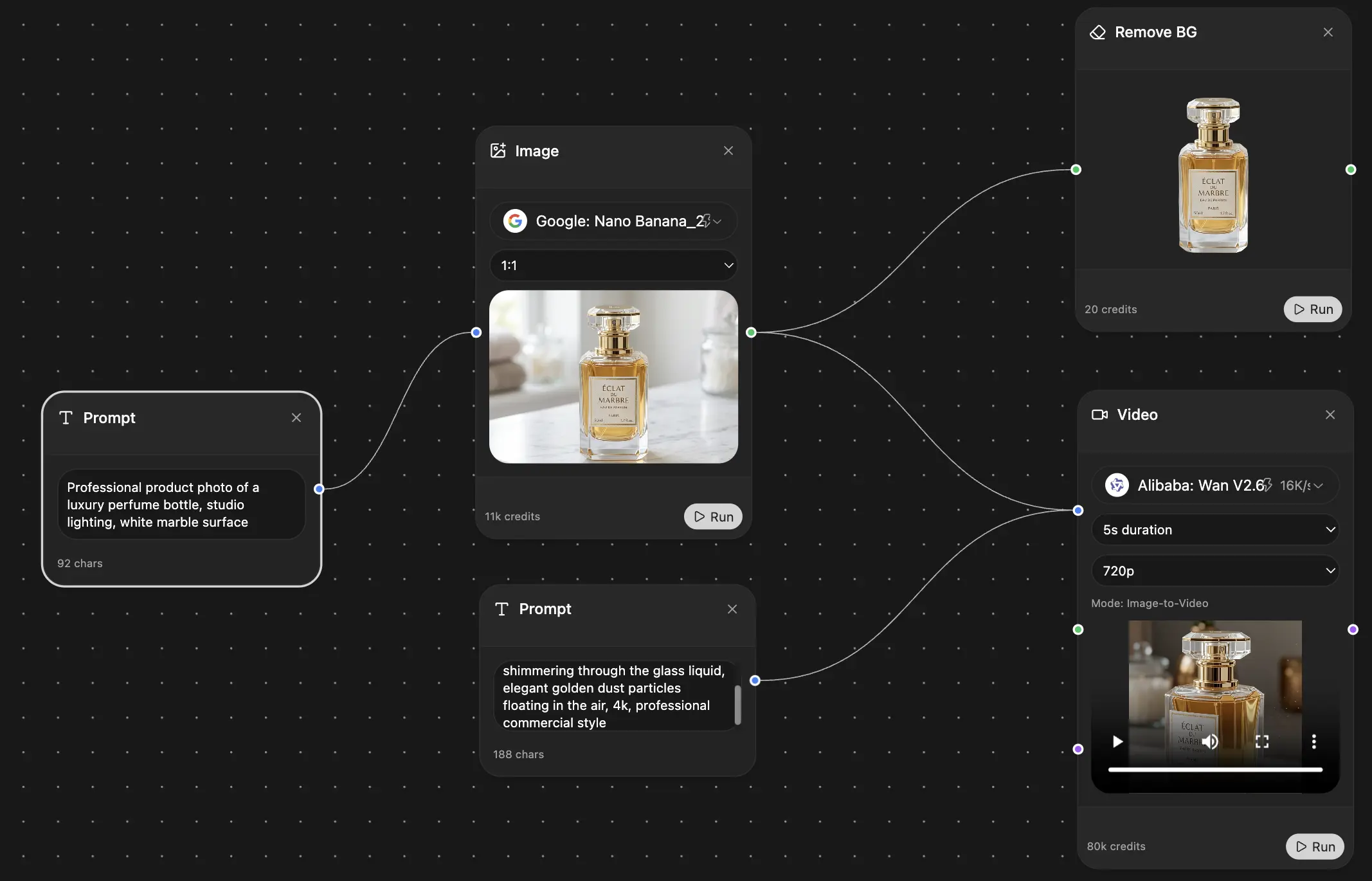
Your infinite AI canvas.
Chat, image, video & motion tools — side by side
Transparent, High-Value Pricing
Free
No credit card required
- Limited daily usage
- Selected AI models to try
- Limited features
Plus
- Choose from multiple leading models — GPT, Claude, Gemini and Grok.
- 25× more usage than Free.
- Create and edit images with Creative Studio.
- Connect your favorite apps and get work done in one place.
- Research the web and turn sources into clear answers.
- Turn documents, websites and YouTube into podcasts, flashcards and reports.
- Build repeatable workflows and stay focused with FocusOS.
Professional
- Everything in Plus, and:
- Unlock every model on Zemith, including GPT 6 Astra, Claude Opus and Sonar Pro.
- 50× more usage than Free.
- Create more with the full Creative Studio toolkit.
- Let agents work in the background — run Cloud tasks and schedule recurring work.
- Push further on complex work with Max Mode.
- First access to new features.
Trusted by teams at






What Our Users Say
Great Tool after 2 months usage
"I love the way multiple tools they integrated in one platform. Going in the right direction."
— simplyzubair
Best in Kind!
"The quality of data and sheer speed of responses is outstanding. I use this app every day."
— barefootmedicine
Simply awesome
"The credit system is fair, models are perfect, and the discord is very responsive. Quite awesome."
— MarianZ
Great for Document Analysis
"Just works. Simple to use and great for working with documents. Money well spent."
— yerch82
Great AI site with accessible LLMs
"The organization of features is better than all the other sites — even better than ChatGPT."
— sumore
Excellent Tool
"It lives up to the all-in-one claim. All the necessary functions with a well-designed, easy UI."
— AlphaLeaf
Well-rounded platform with solid LLMs
"The team clearly puts their heart and soul into this platform. Really solid extra functionality."
— SlothMachine
Best AI tool I've ever used
"Updates made almost daily, feedback is incredibly fast. Just look at the changelogs — consistency."
— reu0691