The Top 10 Code Formatter Online Tools for 2026
Find the best code formatter online for your project. We review 10 top tools for JS, SQL, JSON, and more, covering privacy, features, and when to use them.
You paste in a minified JSON payload from a webhook, a JavaScript snippet from a teammate, or a SQL query copied out of a ticket. It comes in as one angry line with commas hiding in corners and brackets picking fights. That is when an online formatter earns its tab.
These tools stuck because the job is common and boring in the worst possible moments. You hit it while debugging logs, inspecting API responses, cleaning generated markup, or trying to review code that was clearly assembled under deadline pressure. Some browser tools cast a very wide net, including . Others stay focused on a smaller set of everyday formats. The right pick depends on what you are formatting, how closely you need to match project tooling, and whether the content is safe to paste into a public page.
Formatting is no longer just visual cleanup. Good formatters parse code, apply language rules, and produce output your editor or CI pipeline is likely to accept without argument. That changed team workflows for the better. Instead of debating style in pull requests, developers can treat formatting as a routine step and spend review time on logic. If your team also needs a baseline for naming, structure, and readability, a practical helps more than another round of brace theology.
This article is not just a list of formatter sites. It is a when-to-use-what guide. Some tools are ideal when you need exact Prettier output. Some are better for quick JSON or SQL cleanup. Some are old-school utility pages that still do the job. And some modern AI assistants, including Zemith, are changing the workflow by formatting code inside the same context where you edit, refactor, and debug it.
Why Formatting Matters in Real Projects
Consistent formatting makes code easier to scan, review, and maintain. It reduces noisy diffs and cuts down on style comments that add nothing to the actual change.
There is also a team onboarding benefit. Once formatting is automatic, new contributors can make useful commits without memorizing every local preference about quotes, spacing, or line breaks.
Practical rule: If pull requests keep turning into whitespace court, set a formatter and move on.
Privacy Risks People Skip Right Past
This is the part many developers ignore until someone pastes a secret into the wrong box. Plenty of formatter sites talk about supported languages and almost nothing about storage, logging, retention, or whether submitted code is processed beyond the current session. .
Treat pasted code as sensitive unless you have verified the tool's handling policy. API keys, customer data, internal endpoints, private SQL, auth headers, and proprietary business logic should stay out of public formatter pages.
For throwaway snippets, browser tools are fast and convenient. For production code or anything confidential, use local tooling, an editor plugin, or an AI workspace that keeps formatting tied to the codebase context instead of a random paste box on the open web.
1. Prettier Playground

The is the first place I send people when they ask, “What should this file look like if the project uses Prettier?” That's its superpower. You're not getting a near-enough result. You're seeing the output that lines up with an actual Prettier-based workflow.
Prettier made opinionated, automated formatting feel normal. It describes itself as an opinionated formatter with support for many languages and integration with most editors. That's why the playground matters. If your repo already uses Prettier, the browser version is the shortest path from “what is this mess” to “okay, now I can review it.”
Best When You Need the Real Prettier Answer
This tool shines with JavaScript, TypeScript, JSX, TSX, HTML, CSS, Markdown, YAML, GraphQL, and related formats. Paste code in, tweak options like quotes, semicolons, print width, tabs or spaces, then copy the result back where it belongs.
I also like it for shareable reproductions. When formatting behavior looks odd, sending a playground state is much cleaner than posting screenshots of curly braces like you're documenting wildlife.
- Use it for project parity: If a repo runs Prettier in CI or pre-commit hooks, this is the browser check that matches that world.
- Use it for quick experiments: It's handy when you want to compare option changes without touching local config.
- Skip it for niche languages: If your file type sits outside Prettier's usual lane, don't force it.
If you're trying to build habits that reduce cleanup work in the first place, this pairs nicely with broader .
Prettier is great when you want fewer decisions. It's annoying when you want many decisions. That's not a bug. That's the whole deal.
2. Biome Playground

The is what I reach for when formatting and linting need to happen in the same breath. If Prettier is the stylist who fixes your shirt collar, Biome is the friend who also tells you your fly is down.
It's focused mostly on the web toolchain, especially JS, TS, and JSON. That narrower scope is a trade-off, but it keeps the experience tight. Paste code in and you get formatting plus diagnostics without bouncing between separate tools.
Where Biome Beats Simpler Beautifiers
Biome is useful when the problem isn't just ugliness. Sometimes the code is badly formatted because it's also structurally sloppy. In those cases, seeing lint feedback next to formatting output saves time.
A few practical wins stand out:
- Fast feedback: It's good for sanity-checking a snippet before you commit to a migration.
- Better ergonomics for modern web stacks: JS and TS teams can evaluate formatting and lint behavior together.
- Helpful adoption preview: You can test whether Biome's rules fit your codebase before rolling it into local tooling or CI.
The downside is coverage. If your workday bounces between SQL, XML, Python, shell scripts, and frontend code, Biome won't be your one-tab answer. It's a specialist, not a utility drawer.
For teams already exploring AI-supported workflows, this is also a nice reminder that speed alone isn't enough. A useful tool needs good defaults, clear diagnostics, and minimal friction. That's the same reason integrated coding workspaces keep gaining attention.
3. Beautifier.io

is the opposite of Prettier in one important way. It gives you knobs. Lots of knobs. If you've ever wanted to control brace style, wrapping rules, or whether array indentation should be preserved, this tool is ready to let you become the formatting wizard you always suspected you were.
That's useful in legacy codebases where “just run Prettier” is not an answer anyone can accept this quarter. Sometimes you need output that respects old conventions long enough to avoid detonating a giant diff.
Good for Legacy Code and Style Matching
Beautifier.io works well for JavaScript, JSON, HTML, CSS, SCSS, and Sass. It's especially handy when the goal is not strict standardization but tactical cleanup.
Here's where it fits:
- Best for legacy alignment: You can shape output to resemble existing code rather than impose a new house style.
- Best for one-off cleanup: HTML emails, copied CMS templates, and older front-end snippets often benefit from its flexibility.
- Worst for team consistency: Too many options means two developers can “beautify” the same input differently.
That last point matters. In solo work, freedom is nice. In shared repos, freedom turns into “why does every file have a different personality?” pretty quickly.
If you need a code formatter online tool because the snippet is ugly and fragile, Beautifier.io is often a better rescue tool than a style authority.
4. DirtyMarkup

has one job. Clean up front-end messes fast. It doesn't try to be a universal dev platform, and that's part of its appeal.
This is the tool I think of for copied HTML from email builders, CMS output, inline CSS spaghetti, and bits of JavaScript embedded where JavaScript should probably never have been embedded. It's blunt, quick, and usually good enough.
The Fast Option for Markup Cleanup
DirtyMarkup works best when you don't want to think. Paste the markup, hit beautify, and move on with your life.
A few real-world scenarios where it helps:
- CMS output cleanup: WYSIWYG editors can produce markup that looks personally offended by readability.
- Email template triage: Inline styles and nested tables are a lot easier to inspect after formatting.
- Small automation workflows: The public API gives teams a way to build internal helpers around repeated cleanup tasks.
The trade-off is control. Compared with a more configurable tool, DirtyMarkup gives you fewer dials to turn. For a lot of users, that's a plus.
If your HTML came from a marketing tool, a page builder, or an unknown ancestor, DirtyMarkup is often the fastest path from “what even is this” to “okay, I can debug this.”
5. Code Beautify

A familiar mess: a teammate drops malformed JSON in chat, the SQL from a support ticket is all on one line, and the XML config has indentation that looks like it lost a fight. is built for that kind of day.
Its value is range. You get formatters, validators, converters, and viewers for JSON, XML, HTML, CSS, JavaScript, SQL, YAML, CSV, and more in one place. For ad hoc cleanup, that beats hopping across five single-purpose sites and hoping each one handles your input the same way.
Best for Mixed-Format Debugging
I reach for Code Beautify when the problem is not language-specific. It is workflow-specific. You are triaging data from APIs, config files, front-end snippets, and database queries, all before lunch.
A few cases where it earns a tab:
- API payload cleanup: Tree views and formatting make nested JSON or XML easier to inspect before you start blaming the backend.
- Format validation: It helps catch broken structure while you are still trying to answer, “is this invalid, or just ugly?”
- One-off conversions: Handy for quick transformations when installing local tooling would take longer than the task itself.
There is a trade-off. Broad tool suites rarely give you the opinionated consistency of something like Prettier or Biome. If your team needs identical output in CI, use local formatters in the repo. If you need to make a random payload readable right now, Code Beautify is faster.
Privacy deserves more scrutiny than the formatting itself. Online tools are fine for sample data, mock responses, and sanitized snippets. They are a bad place for production secrets, customer records, access tokens, or anything covered by policy. I treat browser formatters as disposable utilities, not trusted workspaces.
That line matters even more for API teams. Clean formatting helps, but readable contracts and predictable payloads prevent half the mess in the first place. Zemith's guide to is a good companion if your “formatter problem” is really an API design problem in a trench coat.
There is also a bigger shift here. Standalone browser formatters still solve quick cleanup jobs, but modern AI coding assistants can format code with project context, style rules, and surrounding files in view. That is a different tool for a different job. Use Code Beautify for fast, mixed-format triage. Use context-aware tooling when formatting decisions need to match the codebase, not just the pasted snippet.
6. FreeFormatter.com

feels like the sensible old toolbox in the garage. It may not be flashy, but when you need a JSON beautifier, XML formatter, HTML cleanup, CSS formatting, or SQL touch-up, it's right there and it usually does the job without drama.
This category became popular partly because broad language support matters in real work. Long-running suites like FreeFormatter cover the formats developers trip over constantly, especially when dealing with service payloads, config files, or production cleanup jobs.
Why It Stays Useful
I like FreeFormatter when I want a single-purpose page that gets out of the way. There's less “platform energy” here and more “paste input, get output.”
It works well for:
- Quick inspection: JSON tree views make nested payloads less painful.
- Ad-hoc validation: You can check structure and formatting in one stop for common formats.
- Low-friction debugging: It's useful when a teammate sends malformed data and you just need it readable.
It's not a full workbench the way some larger tool suites try to be. That's fine. Not every problem needs a cockpit.
For review-heavy teams, formatting is only one piece of readability. A practical helps catch the stuff formatting alone won't fix, like naming confusion, hidden side effects, and brittle logic.
7. JSONLint
is the minimalist pick. Open it, paste JSON, validate, fix, format, move on. No extra ceremony. No parade of side widgets trying to convert your payload into twelve other formats before you've even confirmed the comma is in the right place.
That simplicity is exactly why it stays useful. When the problem is “is this valid JSON or did someone hand-edit it with great confidence and poor results,” JSONLint is hard to beat.
The Right Tool for Fast JSON Sanity Checks
JSONLint's sweet spot is tight and obvious:
- Validation first: It flags syntax issues with line and column reporting.
- Formatting second: Once the JSON is valid, the pretty-print output is clean and readable.
- No distraction: The interface doesn't make you work to find the one thing you came for.
The weakness is also obvious. It's JSON only. If your payload turns out to be JavaScript object literal soup pasted from a frontend file, JSONLint won't pretend otherwise.
That honesty is useful. A lot of debugging time gets wasted because people use the wrong tool on the wrong input and blame the tool. JSONLint is a validator with formatting, not a magical forgiveness engine.
If you spend a lot of time cleaning API responses, Zemith's guide to is worth a read because good API design reduces the number of cursed payloads you need to debug in the first place.
8. JSON Formatter & Validator

is more of a JSON workbench than a plain formatter. If JSONLint is a scalpel, this is the multitool. Tree view, minify, validation, browsing helpers, conversions on related pages. It's useful when you need to inspect structure, not just tidy whitespace.
For large nested objects, that tree view matters. A pretty-printed wall of JSON is better than one line, but it can still be exhausting. Expand-and-collapse navigation is the difference between reading data and wrestling it.
Where It Helps and Where to Be Careful
This tool is good for browser-based inspection tasks:
- Explore nested payloads: Tree views help you find extensively nested keys faster.
- Switch between readable and compact forms: Useful when testing requests or logging output.
- Handle repeated ad-hoc JSON tasks: It's convenient for support, QA, and integration debugging.
The catch is privacy. Some formatting sites with save or sharing features have created real exposure risks when users paste sensitive data. That's why any code formatter online workflow needs a simple rule: if the payload contains customer data, internal tokens, auth headers, or proprietary logic, don't paste it into a public site.
Treat online JSON tools like a whiteboard in a shared office. Great for examples. Bad for secrets.
9. SQLFormat.org

is the tool for the classic “someone pasted a query into Slack and now I'm angry” moment. It focuses on SQL only, and I prefer that. SQL formatting has enough dialect quirks already without a generic formatter pretending all queries behave the same way.
You get control over keyword casing, indentation, compact mode, and related style choices. That's enough flexibility to make ugly ad-hoc queries readable without turning configuration into a hobby.
A Strong Pick for Query Cleanup
SQLFormat.org works especially well when you need to inspect or share a query quickly and you don't want to open a full database IDE just to stop squinting.
Good use cases include:
- Reviewing ticket attachments: Reformat a query before checking joins, filters, and grouping.
- Normalizing shared snippets: Makes team discussions easier when everyone can parse the same structure.
- Reducing privacy risk relative to server-side processing: The site notes client-side formatting in recent updates, which is the kind of detail I want to see from any browser-based tool.
It's still not a substitute for SQL linting, execution checks, or dialect-aware review inside your actual database workflow. Formatting helps reveal problems. It doesn't prove the query is good.
If your work regularly crosses from query cleanup into schema thinking, Zemith's piece on complements this nicely.
10. XML Formatter

is purpose-built for a format many developers only remember exists when something breaks in enterprise integration, a sitemap gets weird, or a config file starts throwing mysterious errors. Then suddenly XML is your whole afternoon.
A focused XML tool is still useful because XML problems are often structural and visual at the same time. Proper indentation, validation, and a tree view make it much easier to spot mismatched tags, odd nesting, or malformed payload sections.
Good for Integrations, Configs, and Sitemaps
This tool earns its place when you're dealing with:
- Integration payloads: SOAP and older system exchanges still show up more often than people admit.
- Configuration files: Build systems, feeds, and app configs can become unreadable quickly.
- Sitemap and feed debugging: Validation plus readable structure saves time.
The converter features are nice, but I treat them as helpers, not gospel. Any XML-to-something conversion depends heavily on how predictable the input structure is.
One broader point matters here. Practical demand has moved beyond just HTML, CSS, JavaScript, JSON, and TypeScript. . That's exactly why XML tools still matter. Real software stacks are messier and older than blog posts like to admit.
Top 10 Online Code Formatters, Feature Comparison
Format Like a Pro From Browser to AI Assistant
Online formatters are worth keeping in your toolbox. They're fast, convenient, and perfect for non-sensitive snippets when you need a quick cleanup job. If a webhook payload arrives as one hostile line of JSON or a teammate sends a SQL query that looks like it lost a bar fight, a browser tool can save the next fifteen minutes of your life.
But a code formatter online shouldn't be the center of your development workflow. It's the emergency sink in the hallway. Useful when you need it, not where you want to do all your work.
Level Up with Formatting Inside the Workflow
A significant win comes from automation inside the tools you already use. That means editor integrations, format-on-save, and pre-commit hooks. The ecosystem shift toward deterministic formatting is one reason tools like Prettier became so influential. They moved formatting from manual cleanup to a standard part of how code gets written and shared.
A practical baseline looks like this:
- IDE extensions: Install Prettier or Biome in your editor and turn on format-on-save.
- Pre-commit automation: Use Husky and lint-staged so messy code doesn't even make it into the repo.
- CI enforcement: Let the pipeline catch style drift before it turns into noisy pull requests.
This matters more in distributed teams. Consistent formatting lowers review friction, especially when people are working across time zones and handing code off asynchronously. Nobody wants a review thread about spacing while a release is waiting.
When the Assistant Handles the Cleanup Too
AI-assisted workflows are beginning to change the equation. Instead of generating code in one place, debugging in another, formatting in a browser tab, then previewing somewhere else, developers are looking for fewer handoffs.
Zemith is relevant here because it includes a Coding Assistant with code generation, debugging support, and live previews for React and HTML in a single workspace. It also offers a Code Interpreter that can write and execute Python. That doesn't make it a dedicated formatter replacement in the same narrow sense as Prettier Playground or SQLFormat.org. It does mean formatting can become part of a more context-aware flow instead of a separate cleanup chore.
That's the direction I'd recommend for daily work. Use browser formatters for safe, fast, one-off cleanup. Use local formatter tooling for repositories. Use integrated assistants when you want generation, refactoring, debugging, and previewing to stay in one place.
There's also a side benefit. Keeping code in a private workspace is usually a lot smarter than copy-pasting chunks of app logic into random public tabs and hoping nobody stored them somewhere unfortunate. We joke about messy code. Secret leakage isn't funny.
If your work also touches UI workflows, this roundup of is a useful complement to the coding side.
The best formatter is still the one that runs automatically and quietly. The second-best is the browser tab that rescues you from unreadable nonsense in under a minute.
If you want fewer copy-paste steps in your development flow, try as a single workspace for coding help, debugging, live previews, document work, and research. It won't replace every dedicated formatter on this list, but it can reduce how often you need to jump between separate tools just to get clean, usable code.
Explore Zemith Features
Every top AI. One subscription.
ChatGPT, Claude, Gemini, DeepSeek, Grok & 25+ more








Always on, real-time AI.
Voice + screen share · instant answers
What's the best way to learn a new language?
Immersion and spaced repetition work best. Try consuming media in your target language daily.
Voice + screen share · AI answers in real time
Image Generation
Flux, Nano Banana, Ideogram, Recraft + more

Write at the speed of thought.
AI autocomplete, rewrite & expand on command
Any document. Any format.
PDF, URL, or YouTube → chat, quiz, podcast & more
Video Creation
Veo, Kling, Grok Imagine and more

Text to Speech
Natural AI voices, 30+ languages
Code Generation
Write, debug & explain code
Chat with Documents
Upload PDFs, analyze content
Your AI, in your pocket.
Full access on iOS & Android · synced everywhere
Your infinite AI canvas.
Chat, image, video & motion tools — side by side
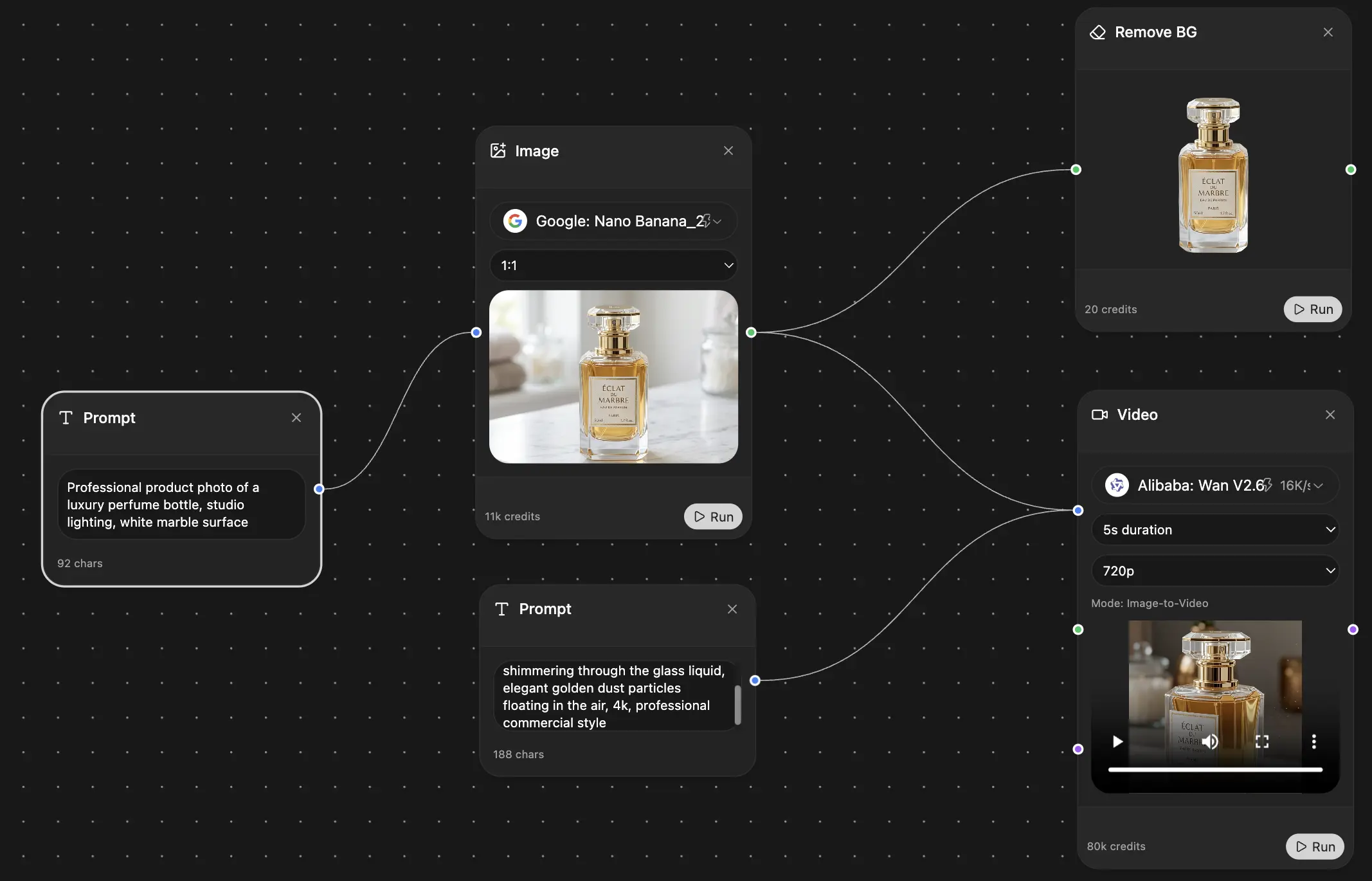
Save hours of work and research
Transparent, High-Value Pricing
Trusted by teams at






Free
No credit card required
- 100 credits daily
- 3 AI models to try
- Basic AI chat
Plus
- 1,000,000 credits/month
- 25+ AI models — GPT, Claude, Gemini, Grok & more
- Agent Mode with web search, computer tools and more
- Creative Studio: image generation and video generation
- Project Library: chat with document, website and youtube, podcast generation, flashcards, reports and more
- Workflow Studio and FocusOS
Professional
- Everything in Plus, and:
- 2,100,000 credits/month
- Pro-exclusive models (Claude Opus, Grok 4, Sonar Pro)
- Motion Tools & Max Mode
- First access to latest features
- Access to additional offers
What Our Users Say
Great Tool after 2 months usage
"I love the way multiple tools they integrated in one platform. Going in the right direction."
— simplyzubair
Best in Kind!
"The quality of data and sheer speed of responses is outstanding. I use this app every day."
— barefootmedicine
Simply awesome
"The credit system is fair, models are perfect, and the discord is very responsive. Quite awesome."
— MarianZ
Great for Document Analysis
"Just works. Simple to use and great for working with documents. Money well spent."
— yerch82
Great AI site with accessible LLMs
"The organization of features is better than all the other sites — even better than ChatGPT."
— sumore
Excellent Tool
"It lives up to the all-in-one claim. All the necessary functions with a well-designed, easy UI."
— AlphaLeaf
Well-rounded platform with solid LLMs
"The team clearly puts their heart and soul into this platform. Really solid extra functionality."
— SlothMachine
Best AI tool I've ever used
"Updates made almost daily, feedback is incredibly fast. Just look at the changelogs — consistency."
— reu0691