Boost Creativity: Collaborative Brainstorming Tool
Ditch messy whiteboards. Discover how a modern collaborative brainstorming tool boosts creativity. Zemith's AI solves collaboration pain points.
You're probably in one of two places right now.
Either your team has a “brainstorming process” that mostly means a video call, a shared doc, and one loud person saying “let's just throw ideas out there,” or you've already bought a whiteboard tool and discovered that moving sticky notes around is not the same thing as running a useful creative session.
That gap is the collaboration tax. It shows up as friction nobody budgets for. People hunt for the brief in one app, research in another, AI prompts in a third, meeting notes in a fourth, and then someone screenshots the final board because nobody trusts they'll find it later. By the end, the team is tired before the actual work even starts.
I've seen sessions die in three predictable ways. The room gets hijacked by the fastest talker. The quiet people hold back their best ideas. Or the AI joins the party and spits out polished nonsense because it has no clue what the project is about.
A good collaborative brainstorming tool fixes the first layer of that mess. A smart integrated workspace fixes the second.
That Brainstorming Meeting That Could Have Been an Email
Everyone has lived through this meeting.
A manager says, “Let's ideate.” Someone opens a whiteboard. Someone else starts adding sticky notes with gems like “go viral” and “be more user-centric.” One person is still explaining their first idea while three better ones disappear under a pile of neon rectangles. Meanwhile, the intern has the strongest observation in the room and says absolutely nothing because the conversation has turned into competitive public speaking.
Then comes the ritual nobody enjoys. The group spends more time organizing the chaos than generating anything useful. Half the board is duplicates. The other half is too vague to act on. Someone takes ownership of “cleaning it up later,” which is corporate language for “this will die in a folder.”

That's why teams moved away from pure analog brainstorming. Research indicates that teams using digital whiteboards and collaborative platforms generate up to 30% more unique ideas compared to those relying solely on traditional methods like physical sticky notes or paper-based mind mapping (Fact 1). The difference isn't magic. It's structure. People can contribute at the same time, capture ideas before they vanish, and stop wasting energy on handwriting archaeology.
Why the old meeting fails
The problem usually isn't creativity. It's mechanics.
- Conversation bottlenecks: Only one person can talk at a time.
- Messy capture: Good ideas get buried under louder, earlier, or shinier ones.
- Weak follow-through: Notes live in one place, decisions in another, and context nowhere.
The worst brainstorming sessions don't fail because the team lacks ideas. They fail because the team lacks a system.
A modern collaborative brainstorming tool gives teams a shared visual space that's faster, fairer, and easier to revisit. The stronger ones also add facilitation features, asynchronous input, and AI help. The strongest setups go further and keep your documents, research, and idea generation in the same workspace, which is where the collaboration tax starts to disappear.
What Exactly Is a Collaborative Brainstorming Tool
If a shared document is a digital sheet of paper, a collaborative brainstorming tool is a digital workshop.
It gives the team a place to think visually, not just type line by line. Instead of stacking comments in a doc or losing ideas in chat, people can spread concepts across a canvas, group them, connect them, vote on them, and refine them together. That difference matters more than it sounds. A doc is good at recording. A brainstorming board is good at discovering.

The core idea
Most tools in this category revolve around a few simple mechanics:
- Shared visual space: People work on the same canvas at the same time.
- Flexible building blocks: Sticky notes, diagrams, shapes, comments, images, and templates all live together.
- Live collaboration: Teammates can react, reorganize, and build on each other's ideas without waiting their turn.
That's why these tools feel different from Slack or Google Docs. Chat apps are built for conversation. Documents are built for drafting. A collaborative board is built for making half-formed ideas visible while they're still useful.
What makes the category distinct
The best tools don't just mimic a physical whiteboard. They improve on it.
An infinite canvas means nobody has to erase a corner to make room. Templates reduce the “blank board panic” that hits five minutes into a session. Voting and clustering help teams move from divergence to selection without spending half the meeting asking, “Wait, which note are we talking about?”
If you want a deeper look at the whiteboard side of the category, this guide to collaborative whiteboard apps is a solid next step.
What teams actually use them for
Different teams use the same canvas in very different ways.
Practical rule: If your team needs to see relationships between ideas, not just list them, a document won't carry the load by itself.
This is its core value. A collaborative brainstorming tool doesn't just store thoughts. It gives them shape.
Features That Separate Great Tools from Glorified Notepads
Some tools give you sticky notes and call it innovation. That's like putting a microwave in a garage and calling it a restaurant.
The difference between a usable board and a tool your team returns to every week comes down to a handful of features that solve real meeting problems. Not flashy demos. Not AI confetti. Actual session mechanics.
Look for features that change team behavior
The strongest tools help the people who usually get steamrolled.
A key statistical finding indicates that teams using structured digital brainstorming tools report a 35% higher satisfaction rate among quieter or less vocal team members, who contribute 40% more ideas when using silent input methods like “brainwriting” features (Fact 2). That tells you something important. The right feature set doesn't just organize ideas. It changes who gets heard.
The shortlist I'd use when evaluating any collaborative brainstorming tool looks like this:
- Silent contribution modes: Brainwriting, private note capture, or anonymous idea submission helps quieter teammates contribute before discussion starts.
- Voting and prioritization: Dot voting, ranking, and reaction tools stop teams from “discussing” everything into a fog.
- Templates that save setup time: SWOTs, journey maps, retros, campaign boards, and problem trees are practical, not glamorous.
- Facilitation controls: Timers, sections, prompts, and presenter modes keep the group moving.
- Searchable persistence: Good boards stay useful after the meeting. Bad ones become digital attics.
Evolution of Brainstorming Methods
A standard board can be excellent for workshops. Miro, for example, is popular for a reason. But many teams still hit friction after the session because the work fragments again. The notes go elsewhere. The transcript lives elsewhere. The polished draft lives elsewhere.
If your meetings involve spoken ideation, it also helps to find transcription software for content so verbal ideas don't vanish while someone is screen-sharing and pretending they're definitely writing everything down.
What usually disappoints teams
A lot of tools feel productive in the demo and annoying in practice.
Common misses include weak document handling, awkward exports, and boards that don't connect cleanly to the writing and planning work that follows. Teams often discover they need a better bridge between brainstorming and actual collaboration, which is why it helps to compare options alongside broader document collaboration software.
Buy for the messy middle, not the kickoff meeting. Any tool can help you generate notes. The useful ones help you turn notes into decisions.
That's where most evaluations go wrong. Teams choose based on how fun the board looks, not how well it survives contact with real work.
The Hidden Problem Most AI Brainstorming Tools Have
AI has made brainstorming faster. It has not automatically made it better.
The hidden problem is AI-context blindness. That's what happens when the model generates ideas without access to the brief, prior discussion, constraints, audience, or source material the team is working from. The outputs sound polished, but they arrive weirdly detached from reality. You ask for campaign ideas for a niche B2B product, and the AI responds like it just woke up in a Super Bowl ad pitch.
Why generic AI creates more work
This is the trap. People assume a faster list of ideas means a better session. Often it just means a bigger cleanup job.
Data shows that 80% of AI brainstorming sessions fail to integrate prior project context, leading to generic outputs that require manual rework, a gap that persists as no mainstream collaborative board tool has integrated deep document/canvas reading into its real-time flow (Fact 5). If that feels familiar, it's because most AI brainstorming still starts with a blank prompt instead of a real workspace.
The result is predictable:
- Ideas drift from the brief
- Teams re-explain the project to the AI over and over
- People copy and paste context between tools like interns in a hurry
The model matters, but context matters more
Yes, teams should compare models. Different models handle reasoning, writing style, and instruction-following differently. If you're sorting that out internally, this breakdown of the best AI models for your team is useful.
But model selection doesn't solve context blindness by itself. A smarter model with no project context still guesses. That's why teams also need to think about memory, retrieval, and usable working context, especially when comparing tools with larger context windows for GPT-4o style workflows.
A blank-prompt AI is a brainstorming intern with zero onboarding.
That doesn't make AI useless. It makes bolt-on AI less helpful than it first appears. If the board can't see the materials your team is already using, the AI can't do much beyond generic suggestion spam.
How Zemith Cures Context Blindness and Boosts Creativity
The cleanest fix for context blindness is to stop treating brainstorming, research, and drafting as separate activities.
That's where an integrated workspace changes the workflow. Instead of running a board in one tab, source documents in another, AI chat in another, and final notes somewhere else, the team works in one environment where those pieces can inform each other. That's a very different setup from slapping an AI button onto a whiteboard and hoping for the best.

What changes when the workspace holds the context
Zemith is one example of that integrated approach. It combines an interactive whiteboard with organized workspaces, document handling, research support, and access to multiple AI models in the same interface. In practice, that means the board doesn't have to live as an isolated artifact.
A product team can keep the brief, notes, supporting docs, and board in the same project space. A content team can brainstorm headlines while also refining copy in the notepad and checking source material. A researcher can move from rough concepts to structured summaries without rebuilding the context each time.
That matters because for researchers and knowledge workers, Zemith's "Deep Research Capabilities" and "Document Assistant" allow teams to instantly generate academic-paper level insights and summaries from brainstormed ideas directly within the same session, solving the "fragmentation of research and creativity" problem (Fact 8).
How this reduces the collaboration tax
The collaboration tax usually comes from five annoying habits:
- Re-entering context into every AI prompt.
- Switching apps to compare notes, docs, and research.
- Losing momentum between ideation and refinement.
- Forgetting why a chosen idea made sense in the first place.
- Handing off chaos instead of handing off structure.
An integrated setup cuts into all five.
Instead of brainstorming in a vacuum, the team can build from live project materials. Instead of copying outputs from one app to another, they can keep the chain of thought intact. Instead of creating “the board version” and “the doc version” of the same conversation, they can move directly from idea map to working draft.
Practical use cases where this helps
Here's where teams usually feel the difference first:
- Developers and engineers: They can sketch flows, reference specs, and work with coding assistance in the same workspace instead of juggling a whiteboard and separate AI chats.
- Marketers: They can brainstorm campaign angles while checking messaging docs, audience notes, and research artifacts without tab-hopping themselves into oblivion.
- Writers and creators: They can turn board concepts into usable outlines and drafts without losing the original visual thinking.
- Researchers: They can move from a concept cluster to summaries and research synthesis inside the same working session.
If your team is trying to tighten that loop between brainstorming and execution, this overview of an AI assistant for work covers the broader category well.
For content teams in particular, I'd also look at practical guides on optimizing content creation with AI, because the same workflow issue shows up there too. Good ideas rarely fail because the first draft was hard. They fail because the context scattered before the draft began.
What works and what doesn't
What works is a system where the AI can respond to the project you're currently in.
What doesn't work is asking a blank chatbot, “Give me 20 ideas,” pasting the least embarrassing five into a board, and then spending the next hour pretending the outputs are more relevant than they are.
Field note: Teams don't need more idea volume by itself. They need ideas that already know the job.
That's the primary advantage of context-aware collaboration. It doesn't just make brainstorming faster. It makes the next hour less dumb.
Real-World Brainstorming Workflows for Your Team
Abstract feature lists are fine. Real workflows are what convince people.
Teams often don't struggle with coming up with something. They struggle with getting from rough thought to useful next step without shredding context along the way. Here's what that looks like when the workflow is designed around actual work instead of a pretty board screenshot.

Product team workflow
A product lead starts with a problem statement on the board. Engineering notes, customer complaints, and draft requirements sit nearby in the same workspace. The team maps pain points first, then possible solutions, then trade-offs.
Nobody has to stop and ask, “Can someone paste the spec into the chat?” The context is already there. The outcome is usually cleaner because the board reflects actual constraints, not wishful whiteboard theater.
A simple pattern works well:
- Start with the friction: What exactly is broken for the user?
- Map options visually: Competing solutions become easier to compare when the team can see dependencies.
- End with a handoff artifact: The chosen direction should already be understandable by the next team.
Marketing team workflow
Marketing teams often drown in scattered inputs. Last quarter's campaign notes are in one place, audience snippets in another, approvals in email, and fresh ideas in whatever app someone opened first.
A stronger workflow keeps the campaign brief, idea board, and refinement process close together. The team can cluster angles around audience pain points, attach messaging references, and turn a loose brainstorm into a prioritized campaign structure.
If your team needs more session templates and practical prompts, this guide on how to brainstorm ideas is worth bookmarking.
A useful campaign brainstorm ends with sharper messaging, not just a colorful board.
Content and creator workflow
This one is often overlooked. Writers, video teams, and solo creators also need a collaborative brainstorming tool, especially when ideas move between visual planning and written execution.
A creator might map a video concept on the board, group examples by theme, sketch the story arc, and then move into scripting. A content editor can review the structure without trying to decode a pile of disconnected notes. It feels less like “brainstorm now, write later” and more like one continuous process.
That's a big deal for long tail keyword workflows too. If you're building around phrases like “collaborative brainstorming tool for remote marketing teams” or “streamline AI workflows for creative professionals,” the board can hold topic clusters while the writing side starts taking shape immediately.
Meeting agenda workflow
Even routine meetings get better when the process isn't clunky.
Teams can collect agenda items asynchronously, group duplicates, vote on priorities, and show up with a plan instead of creating one live while everyone watches the calendar burn. It sounds simple because it is. Simplicity is underrated.
Also, a meeting that starts with a sorted agenda instead of ten minutes of “Can everyone see my screen?” deserves a small parade.
How to Get Your Team to Actually Use a New Tool
A new tool doesn't fail because people hate software. It fails because the first session is awkward, nobody knows the ground rules, and the team crawls back to docs, chat, and chaos.
Adoption gets easier when you lower the stakes.
Keep the rollout boring on purpose
Don't debut a new collaborative brainstorming tool during the most political meeting of the quarter. Use it on a smaller planning session first. Let people get used to adding notes, voting, and organizing ideas without feeling like they're being tested.
A few habits help a lot:
- Start with one repeatable use case: Weekly planning, content ideation, sprint kickoff, or agenda building all work well.
- Use a template first: Blank canvases are exciting for about nine seconds.
- Name a facilitator: Someone needs to drive the pace, group ideas, and keep the board from turning into a digital garage sale.
- Show what happens after the session: People adopt tools when they see decisions, drafts, or tasks come out the other end.
Solve the switching problem early
This is the part teams underestimate. If the new tool creates more tabs, more subscriptions, and more handoffs, people won't stick with it.
Consolidating tools into a single, integrated workspace like Zemith.com eliminates the need for constant switching between different AI applications, saving an estimated 15-20% of weekly productivity time that is otherwise lost to context switching (Fact 6). That kind of reduction matters because it's felt immediately. People don't need a memo to notice fewer copy-paste loops.
If you want adoption, remove steps. Don't add a training burden and call it enablement.
One more practical tip. Save a strong example board after your first successful session. Nothing sells a new workflow like showing the team a real artifact and saying, “We made this in one meeting, and nobody had to play note janitor afterward.”
If your team is tired of bouncing between whiteboards, docs, research tabs, and disconnected AI chats, Zemith is worth a look. It brings brainstorming, document work, research, and multiple AI tools into one workspace, which makes it easier to keep context intact from the first idea to the final draft.
Explore Zemith Features
Every top AI. One subscription.
ChatGPT, Claude, Gemini, DeepSeek, Grok & 25+ more







Always on, real-time AI.
Voice + screen share · instant answers
What's the best way to learn a new language?
Immersion and spaced repetition work best. Try consuming media in your target language daily.
Voice + screen share · AI answers in real time
Image Generation
Flux, Nano Banana, Ideogram, Recraft + more

Write at the speed of thought.
AI autocomplete, rewrite & expand on command
Any document. Any format.
PDF, URL, or YouTube → chat, quiz, podcast & more
Video Creation
Veo, Kling, Grok Imagine and more

Text to Speech
Natural AI voices, 30+ languages
Code Generation
Write, debug & explain code
Chat with Documents
Upload PDFs, analyze content
Your AI, in your pocket.
Full access on iOS & Android · synced everywhere
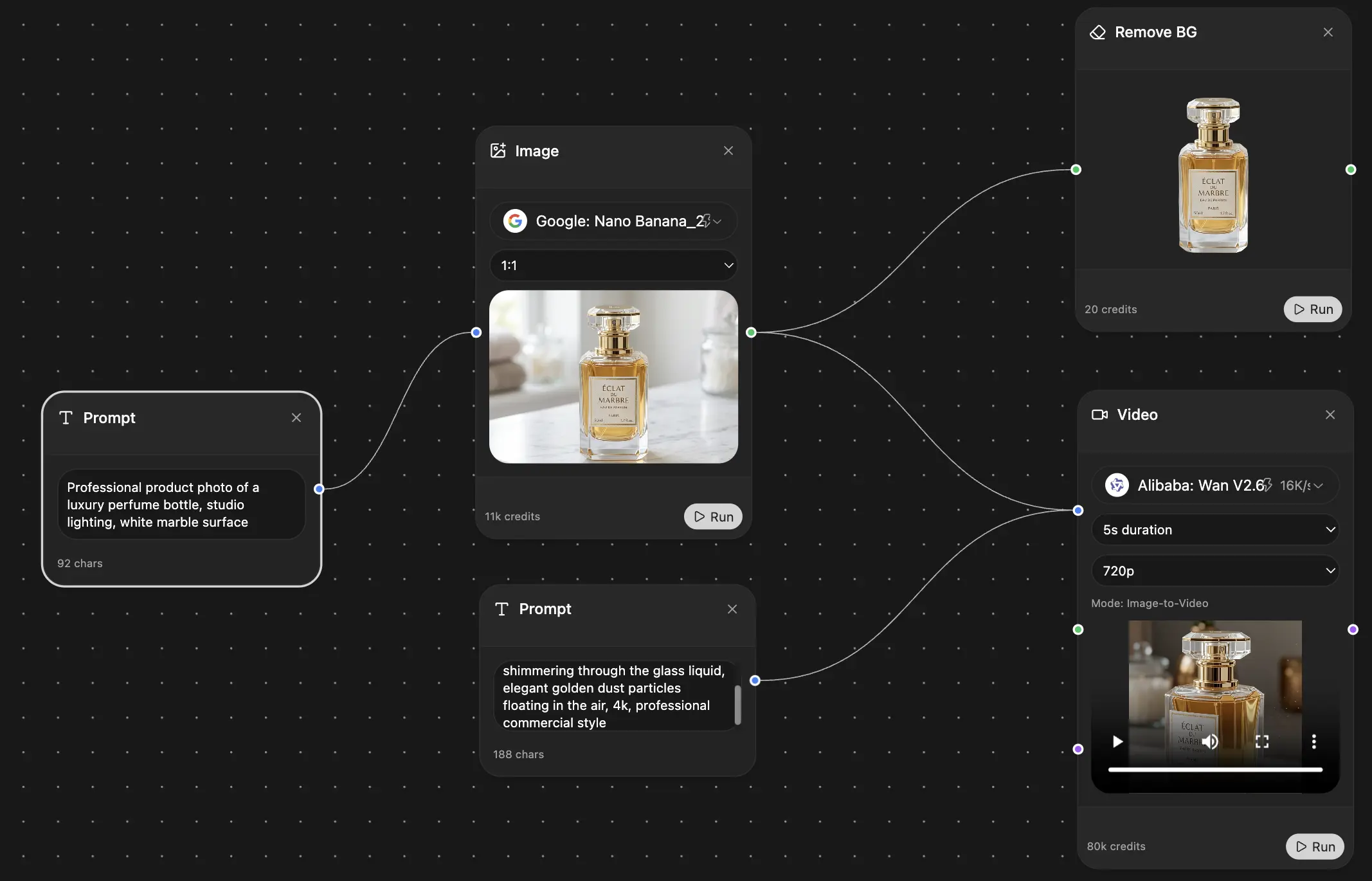
Your infinite AI canvas.
Chat, image, video & motion tools — side by side
Save hours of work and research
Transparent, High-Value Pricing
Trusted by teams at






Free
No credit card required
- 100 credits daily
- 3 AI models to try
- Basic AI chat
Plus
- 1,000,000 credits/month
- 25+ AI models — GPT, Claude, Gemini, Grok & more
- Agent Mode with web search, computer tools and more
- Creative Studio: image generation and video generation
- Project Library: chat with document, website and youtube, podcast generation, flashcards, reports and more
- Workflow Studio and FocusOS
Professional
- Everything in Plus, and:
- 2,100,000 credits/month
- Pro-exclusive models (Claude Opus, Grok 4, Sonar Pro)
- Motion Tools & Max Mode
- First access to latest features
- Access to additional offers
What Our Users Say
Great Tool after 2 months usage
"I love the way multiple tools they integrated in one platform. Going in the right direction."
— simplyzubair
Best in Kind!
"The quality of data and sheer speed of responses is outstanding. I use this app every day."
— barefootmedicine
Simply awesome
"The credit system is fair, models are perfect, and the discord is very responsive. Quite awesome."
— MarianZ
Great for Document Analysis
"Just works. Simple to use and great for working with documents. Money well spent."
— yerch82
Great AI site with accessible LLMs
"The organization of features is better than all the other sites — even better than ChatGPT."
— sumore
Excellent Tool
"It lives up to the all-in-one claim. All the necessary functions with a well-designed, easy UI."
— AlphaLeaf
Well-rounded platform with solid LLMs
"The team clearly puts their heart and soul into this platform. Really solid extra functionality."
— SlothMachine
Best AI tool I've ever used
"Updates made almost daily, feedback is incredibly fast. Just look at the changelogs — consistency."
— reu0691