Turn Code Into a Flowchart (and Stop Debugging Blindly)
Master your logic: generate a flowchart from code with AI and tools to visualize projects fast and impress your team.
So, what does it actually mean to get a flowchart from code? It’s pretty much what it sounds like: taking your source code and automatically turning it into a visual diagram. This process looks at your script’s logic—all the loops, conditionals, and functions—and maps them out into a classic flowchart. Suddenly, you have a bird's-eye view of how your code actually works, not just how you think it works.
Why Turn Perfectly Good Code Into Pictures?
Let's be real. Staring at a wall of nested if statements can sometimes feel like trying to untangle a drawer full of old headphones. You know the logic is in there somewhere, but figuring it out can be a real headache. Is that else tied to the first if or the third one? shrugs
This is where generating a flowchart from your code stops being a novelty and becomes a developer's secret weapon.
It’s not about replacing your ability to read code; it’s about giving that skill a visual sidekick. Think of the flowchart as a GPS for your logic, helping you spot detours, dead ends, and unexpected loops you might otherwise miss in a thousand lines of text.
Slash Debugging and Onboarding Time
The payoff is immediate. When you can see the flow of data and decisions, hunting down a bug gets way faster. Instead of tracing variables line-by-line through the console, you can just follow the arrows on a chart to see exactly where things went off the rails. It’s like having a cheat code for debugging.
It’s also a game-changer for bringing new people up to speed. Dropping a massive, complex codebase on a new team member is a tough way to start. But if you hand them that same code along with a flowchart? You've just slashed their learning curve and made a complex system feel intuitive from day one. They'll be shipping code instead of asking "what does this function do?" for the tenth time.
The struggle with manual documentation is real. Manually drawing out your code’s logic can eat up to 40% of a developer's documentation time. Shifting to automated tools can boost productivity by 35% and cut bug-fix time by 28%, turning a tedious chore into a massive efficiency win. You can see more details about this efficiency gain in the .
Visualize Your Code's Logic
This decision tree gives you a quick visual on when to go manual versus when to automate.

The key takeaway here is pretty clear: for anything more than a trivial script, automation is your friend. It delivers speed, accuracy, and consistency that manual methods just can't match.
Here’s a quick breakdown to show the immediate benefits of automating your flowchart creation.
Manual vs Automated Flowcharting At a Glance
Ultimately, automated tools let you focus on what matters: understanding and improving the code, not just drawing it.
This whole process gives you a high-level understanding that perfectly complements your line-by-line view. After all, a clear visual can often explain what pages of text never could. We talk more about this concept in our guide on .
At Zemith, we're all about making complex tasks simple. Integrating visual tools like flowcharts directly into your workflow—right alongside your code snippets and documentation—creates a single, reliable source of truth. It's just about working smarter, not harder.
The Automated Route: Tools That Generate Flowcharts Instantly
Okay, theory is great, but let's be honest—we're all looking for the quick win. That's where automated tools come in, letting you generate a flowchart from code without the manual grunt work. These tools are your best friend when you need to untangle some gnarly logic, fast.
Ever wonder how these things actually see your code? It’s not magic. Most of them rely on something called an Abstract Syntax Tree (AST). In a nutshell, the tool parses your code and builds a logical tree of its structure. It identifies every function, loop (for, while), and conditional (if/else), then automatically maps them to the right flowchart symbols. It's like having a tireless assistant who can read code literally and spit out a visual map.

The result is a clean translation of your text-based logic into a visual diagram. Some tools just give you a static image, while others create interactive charts where clicking a node highlights the exact line of code it represents. Pretty cool.
Picking the Right Tool for the Job
Not all code-to-flowchart generators are built the same. The one you choose really hinges on your programming language, how complex your project is, and what you plan to do with the final diagram.
Here’s a breakdown of what’s out there based on what you might need:
- Python Devs: You'll feel right at home with PyFlowchart. It’s an open-source, command-line tool that’s perfect for quickly generating a flowchart from a Python script or function. No frills, just results.
- Web-Based Simplicity: For a quick turnaround, tools like code2flow.com are fantastic. You just paste your code—it handles JavaScript, Python, PHP, and more—and boom, you get an interactive flowchart. It's a lifesaver for explaining logic to non-technical folks.
- IDE Integration: My personal favorite approach is using an extension right inside my editor. VS Code, for instance, has several plugins that generate diagrams on the fly. This means I don't have to break my workflow by switching contexts.
The key is to match the tool to the task. For a quick check on a single function, a simple online generator is all you need. But if you’re trying to document a massive legacy system, you'll want a more powerful tool that can handle that level of complexity.
Getting Started in Less Than 5 Minutes
Just to show you how fast this can be, here’s how you’d use a tool like code2flow.
- Find a chunk of code you want to understand better. Maybe it's that tricky user authentication flow or some data processing logic.
- Pop over to the website and drop your code into their editor.
- Click the "Visualize" button.
That’s literally it. Within seconds, you have a flowchart mapping every twist and turn. This kind of instant feedback is invaluable for catching bugs or just getting a sanity check on your own logic.
As you explore these generators, you'll see how advanced are changing the game across the board. Automating complex tasks is a massive productivity boost, whether for visualizing code or streamlining business operations. On a related note, you might want to check out our guide on the , which are revolutionizing how developers work. These helpers go way beyond just diagramming, offering smart suggestions, autocompletions, and even writing entire functions for you.
Using Prompts and AI to Create Flowcharts from Plain Text
Alright, let's switch gears. Instead of digging through code, what if you could just tell an AI what you want and have a flowchart pop into existence? That's not science fiction anymore; it's how smart teams are working right now. Using AI to turn simple text descriptions into visual logic is a huge productivity boost.
This method relies on large language models (LLMs) that can understand plain English, bullet points, or even pseudocode. The AI then translates your description into a clean, visual flowchart. This is fantastic because it means anyone on the team can create a diagram, not just the folks who live and breathe code.

Think of it like this: you describe the logic, and the AI handles the drawing. This creates a super-tight feedback loop between your idea and the visual diagram, making it perfect for rapid brainstorming and high-level design.
Why Prompts Are a Game-Changer for Flowcharting
The real beauty of this approach is its speed and simplicity. Forget fussing with shapes and connectors. You just write down the steps like you're explaining it to a coworker.
I’ve found this method is incredibly useful for:
- High-Level System Design: You can quickly sketch out how different microservices are supposed to talk to each other without getting lost in the weeds.
- Brainstorming User Flows: Product managers and designers can instantly turn their user journey notes into a visual flow, no specialized software needed.
- Rapid Prototyping: It gives you a quick visual sanity check on your logic before you even think about writing code.
This is where having an all-in-one workspace like Zemith really pays off. You can be in the Smart Notepad jotting down ideas for a new feature, highlight your list, and ask the built-in AI to whip up a flowchart on the spot. Everything stays in one place—no jumping between apps, just a smooth transition from idea to diagram.
How to Write a Prompt That Actually Works
The quality of your AI-generated flowchart comes down to one thing: the quality of your prompt. A little structure goes a long way. While you can use casual language, giving the AI clear, step-by-step instructions will always give you a better result.
Here's a prompt template I use all the time. Feel free to copy and paste it.
Prompt: "Generate a flowchart for a user login process. Start with the user entering credentials. If the credentials are valid, show a 'Login Successful' message and direct them to the dashboard. If invalid, show an 'Error: Invalid Credentials' message and return them to the login form. After three failed attempts, lock the account and show a 'Account Locked' message."
The AI can take this text and generate the flowchart directly or give you the Mermaid syntax to embed elsewhere. If you want to get nerdy and understand what's happening under the hood, you can look into how APIs for chat completions work.
Getting good at writing prompts is a valuable skill. If you want to level up, our guide on is a great place to start.
This AI-driven workflow is making a real impact. Some platforms report that users are creating diagrams up to 300% faster. With 78% of software teams in the US relying on flowcharts, this can also make onboarding new developers 50% quicker.
The Hands-On Approach For Deeper Understanding
Automated tools are great for getting a quick overview, but let’s be honest—sometimes the best way to really get what a piece of code is doing is to roll up your sleeves and trace it yourself. It might sound a little old-school, but manually creating a flowchart from code forces you to engage with the logic in a way that automation just can’t touch.
Don't worry, I'm not telling you to go buy a set of plastic stencils. We've got digital whiteboards for that now. The real magic isn't in the drawing itself; it’s in the thinking that happens along the way.

When you physically trace every loop, function call, and conditional, you have to confront the logic head-on. It's an active debugging process. I can’t tell you how many times I’ve found a subtle bug, a redundant check, or a huge optimization opportunity just by mapping something out by hand. It’s the difference between watching a travel show and actually hiking the trail.
A Modern Take on Manual Mapping
So, how do you do this without it feeling like a total chore? Forget the clunky software from a decade ago. The modern way to do this is way more intuitive.
First off, don't try to map your entire application. That’s a recipe for disaster. Just pick one specific function or a critical user flow that’s been giving you trouble.
Next, fire up a digital whiteboard. This is where an all-in-one workspace like Zemith really comes in handy. Its built-in Whiteboard means you can have your code snippet open right next to your drawing canvas. No more flipping back and forth between your editor and a separate drawing app.
Now for the fun part: start tracing. Begin at the top of your function and draw the corresponding flowchart symbol for each line. A rectangle for a process, a diamond for an if statement, and arrows connecting the flow. It’s like creating a visual twin for your code. You can actually see how this kind of visual planning works in reverse in our guide on turning a .
And here’s a pro tip: talk it out as you draw. This is a visual twist on the "rubber duck" technique, and it’s a killer combo for sniffing out flawed logic. You’ll be surprised by what you catch.
This hands-on method isn't about creating perfect, permanent documentation. It's a thinking tool—a temporary, focused exercise designed to give you a moment of deep clarity on a specific problem.
The real payoff is that "aha!" moment when you physically draw a loop that never terminates or a condition that can never be met. It builds a mental model of your code that sticks with you long after you've closed the whiteboard.
Making Flowcharts Your Colleagues Will Actually Love
Generating a flowchart from code is one thing, but creating one that doesn't look like a plate of spaghetti is a whole different ballgame. A messy, confusing diagram can honestly be worse than the tangled code it’s supposed to demystify. Let's make sure your visuals are a genuine help, not just another headache for your team.
The first rule of readable flowcharts? Stick to the established conventions. Using standard shapes isn't just for show; it's a universal language that developers instinctively understand.
Keep It Clean and Consistent
Think of it like applying a linter to your code. Consistency makes everything easier to parse. Here’s a quick rundown of the essential symbols you'll be using:
- Ovals (Terminals): These mark your
StartandEndpoints. Every flowchart needs a clear beginning and a definite finish line. Simple. - Rectangles (Processes): Use these for any action or operation. Think of them as any line of code that does something, like
x = x + 1. - Diamonds (Decisions): This is the most important one! This is for your
if/elsestatements, loops, or any other conditional logic. Every diamond should have at least two paths branching out (e.g., "True" and "False").
Following these standards means anyone, even someone totally new to the project, can glance at your diagram and get the gist without needing a legend. It’s like using proper indentation—it just makes sense.
Have you ever seen a flowchart that was so massive it needed its own zip code? I once saw one for a single function that was so complex it looked like the blueprint for the Death Star. Don't be that person.
If your flowchart is starting to sprawl off the screen, take it as a huge red flag. It’s a sign your function is probably doing way too much. The best move is to break things down. Create a high-level chart showing the main flow, then link to smaller, more detailed charts for each complex part using a "sub-process" symbol.
Use Color and White Space Wisely
Color isn't just for making things look pretty; it's a powerful tool for communication when you use it with intention.
Assigning specific colors can add a whole new layer of meaning without adding clutter. For instance:
- Green is great for success paths or positive outcomes.
- Red can immediately signal error handling or failed conditions.
- Yellow works well for user input steps or calls to external APIs.
This kind of visual shorthand helps people process the logic way faster. It's also an incredible way to teach complex topics. In fact, studies show that visualization can boost retention of difficult concepts by 65% over text alone. You can and speed up comprehension.
Finally, give your diagrams room to breathe! Ample white space around elements keeps your chart from feeling cramped and overwhelming. When you build these visuals as part of your development process, you're creating a vital piece of your project's knowledge base. For more ideas on how to create great documentation, check out our guide on .
Your Flowchart From Code Questions Answered
Whenever you start turning code into flowcharts, a bunch of questions inevitably pop up. We get it—we've heard them all, from the genuinely curious to the slightly panicked. Let’s tackle some of the most common ones we see.
Which Programming Languages Do Flowchart Generators Support?
This is probably the first question everyone asks. The answer is pretty good for the mainstream languages. Most tools have fantastic support for the usual suspects: Python, JavaScript, Java, and C++. Python, in particular, seems to have a ton of open-source options out there.
But what if you're stuck maintaining some legacy code in a niche language? That's where you might run into trouble finding a dedicated parser.
This is where AI-powered tools really shine. An AI doesn't rely on a specific parser; it reads and understands the logic of the code, no matter what language it's written in. It’s why platforms like are so versatile. You can throw almost any code snippet at its AI, and it will map out the logical flow. And hey, if that doesn't work, you always have the manual method as a universal backup plan.
Can These Tools Handle Our Giant Enterprise Codebase?
Technically, yes. But should you? Absolutely not.
Trying to generate one massive flowchart for an entire application is a recipe for disaster. You’ll end up with a monstrous, unreadable web of lines and boxes—a "chart" that helps nobody.
The only sane way to do this is to think small and be selective. Zero in on the specific parts of the codebase that actually matter:
- Complex business logic tucked away inside a single function or method.
- A critical user journey, like your app's checkout or registration flow.
- That one tricky algorithm that is the secret sauce of your product.
The goal isn’t to create one chart to rule them all. It's to build a library of small, focused, and useful diagrams that illuminate the most important parts of your project.
How Can I Get My Team To Actually Use Flowcharts?
Ah, the million-dollar question. Getting team buy-in is everything. The trick is to make it dead simple and show the value immediately. A big announcement like, "We're all using flowcharts now!" is doomed to fail.
Start smaller. Suggest that for any pull request involving a gnarly piece of logic, the developer should include a quick flowchart. This lets reviewers grasp the changes in seconds, not hours of code-deciphering.
Another great way is to bring the diagrams into your team’s existing workspace. When your code snippets, diagrams, and project discussions all live in one spot—like they do in a Zemith project—the friction disappears. It just becomes second nature for a developer to drop a flowchart into a chat to explain an idea. It stops being a chore and starts being a genuinely helpful communication tool.
Is This Cheating For My Computer Science Homework?
Haha, we see you, and we respect the hustle! Let's be real: using a generator on code you’ve already written is a fantastic way to check your own work. It can help you spot logical flaws you might have missed.
But if the assignment was to create the flowchart first to plan out your program, then yeah, generating it from your finished code is definitely cheating. Use these tools as a way to learn and verify your thinking, not to skip it. Trust us, your professor has seen every trick in the book.
Ready to stop guessing and start seeing your code's logic? Zemith brings an AI diagram generator, a smart notepad, and a digital whiteboard into a single, cohesive workspace. It makes generating, creating, and sharing flowcharts completely effortless. Stop switching between a dozen apps and bring your whole workflow together. today.
Explore Zemith Features
Every top AI. One subscription.
ChatGPT, Claude, Gemini, DeepSeek, Grok & 25+ more







Always on, real-time AI.
Voice + screen share · instant answers
What's the best way to learn a new language?
Immersion and spaced repetition work best. Try consuming media in your target language daily.
Voice + screen share · AI answers in real time
Image Generation
Flux, Nano Banana, Ideogram, Recraft + more

Write at the speed of thought.
AI autocomplete, rewrite & expand on command
Any document. Any format.
PDF, URL, or YouTube → chat, quiz, podcast & more
Video Creation
Veo, Kling, Grok Imagine and more

Text to Speech
Natural AI voices, 30+ languages
Code Generation
Write, debug & explain code
Chat with Documents
Upload PDFs, analyze content
Your AI, in your pocket.
Full access on iOS & Android · synced everywhere
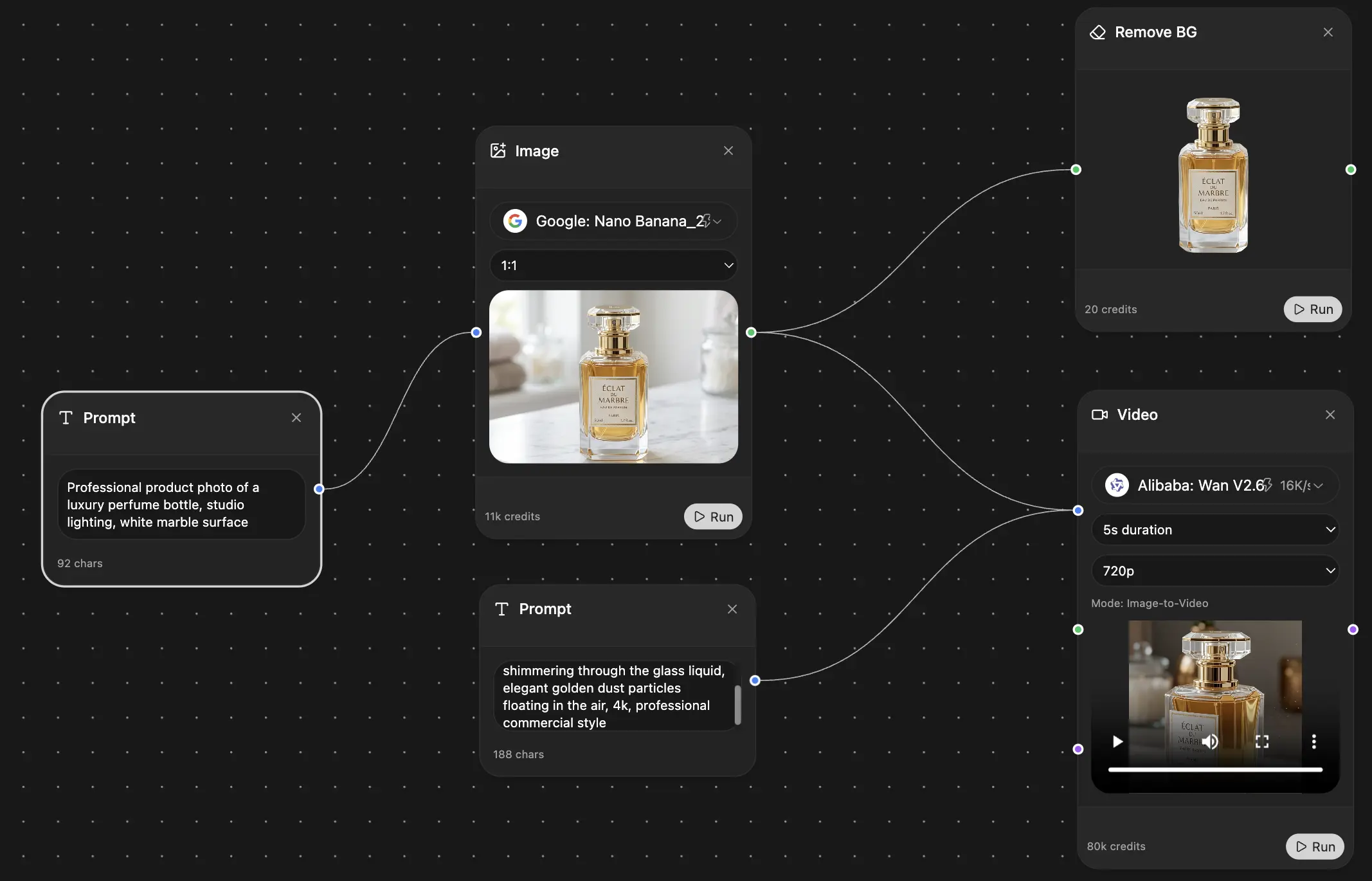
Your infinite AI canvas.
Chat, image, video & motion tools — side by side
Save hours of work and research
Transparent, High-Value Pricing
Trusted by teams at






Free
No credit card required
- 100 credits daily
- 3 AI models to try
- Basic AI chat
Plus
- 1,000,000 credits/month
- 25+ AI models — GPT, Claude, Gemini, Grok & more
- Agent Mode with web search, computer tools and more
- Creative Studio: image generation and video generation
- Project Library: chat with document, website and youtube, podcast generation, flashcards, reports and more
- Workflow Studio and FocusOS
Professional
- Everything in Plus, and:
- 2,100,000 credits/month
- Pro-exclusive models (Claude Opus, Grok 4, Sonar Pro)
- Motion Tools & Max Mode
- First access to latest features
- Access to additional offers
What Our Users Say
Great Tool after 2 months usage
"I love the way multiple tools they integrated in one platform. Going in the right direction."
— simplyzubair
Best in Kind!
"The quality of data and sheer speed of responses is outstanding. I use this app every day."
— barefootmedicine
Simply awesome
"The credit system is fair, models are perfect, and the discord is very responsive. Quite awesome."
— MarianZ
Great for Document Analysis
"Just works. Simple to use and great for working with documents. Money well spent."
— yerch82
Great AI site with accessible LLMs
"The organization of features is better than all the other sites — even better than ChatGPT."
— sumore
Excellent Tool
"It lives up to the all-in-one claim. All the necessary functions with a well-designed, easy UI."
— AlphaLeaf
Well-rounded platform with solid LLMs
"The team clearly puts their heart and soul into this platform. Really solid extra functionality."
— SlothMachine
Best AI tool I've ever used
"Updates made almost daily, feedback is incredibly fast. Just look at the changelogs — consistency."
— reu0691