
Gemini 3 Pro and Google Antigravity: The Future of AI Development is Here
Google just dropped Gemini 3 Pro and Antigravity—and it's a game-changer. As a founder building AI tools, here's what this means for developers, creators, and anyone working with AI.
Gemini 3 Pro and Google Antigravity: The Future of AI Development is Here
I've been building Zemith for over a year now, and I've watched the AI landscape shift dramatically. Every few months, there's a new "breakthrough" model that promises to change everything. Most of the time, it's incremental. But sometimes—like today—it's actually different.
On November 18, 2025, Google unveiled Gemini 3 Pro alongside Antigravity, an AI-powered IDE. And honestly? This feels like the moment when AI development tools actually become useful instead of just interesting.
Let me break down what just happened and why it matters.
What is Gemini 3 Pro?
Gemini 3 Pro is Google's latest AI model, and it's a significant step forward. Here's what makes it different:
Fully Multimodal: Unlike previous models that handled different media types separately, Gemini 3 Pro processes text, images, video, audio, and code seamlessly. It doesn't just understand each format—it understands how they relate to each other.
Enhanced Reasoning: Google positioned this as a "thought partner" rather than just a search tool. The model has improved understanding of user intent and context, which means more relevant, concise responses instead of generic information dumps.
Integrated Everywhere: Google rolled Gemini 3 Pro into Search and the Gemini app immediately. This isn't a research project—it's production-ready AI that millions of people are using right now.
But here's what caught my attention as someone building AI products: Gemini 3 Pro isn't just another model. It's designed to be the engine behind developer tools. Which brings us to Antigravity.
What is Google Antigravity?
Antigravity is Google's new AI-powered integrated development environment (IDE). Think of it as VS Code, but built from the ground up for AI-assisted development.
Agent-First Approach: Antigravity uses autonomous AI agents—powered primarily by Gemini 3 Pro—to handle complex coding tasks. You're not just getting code suggestions. You're delegating entire workflows to AI agents that can think through problems, write code, test it, and iterate.
Verifiable Deliverables: One of the biggest problems with AI coding assistants is that you can't always trust what they produce. Antigravity addresses this with verifiable deliverables—you can see exactly what the AI did, how it did it, and verify the results.
Integrated Everything: Direct access to the editor, terminal, and an integrated browser. No more context switching between tools. The AI has the same view of your development environment that you do.
Multi-Model Support: While Gemini 3 Pro is the primary engine, Antigravity supports multiple AI models. This is smart—different models excel at different tasks, and having options matters.
Why This Matters
I've been testing AI models obsessively for the past year. I've seen what works and what doesn't. And what Google just released addresses real problems that developers face every day.
Problem 1: Context Switching Kills Productivity
When you're coding with AI, you're constantly jumping between your IDE, the AI chat interface, documentation, and your terminal. Antigravity eliminates that. Everything is in one place, and the AI has access to everything you do.
Problem 2: AI Hallucinations in Code
We've all been there: an AI suggests code that looks right but doesn't actually work. Or it references APIs that don't exist. Antigravity's verifiable deliverables mean you can see what the AI is doing and catch errors before they become problems.
Problem 3: AI Models Are Getting Better, But Tools Aren't
The models themselves have improved dramatically. But the tools we use to interact with them? Not so much. Antigravity is the first IDE I've seen that's actually designed for how AI development works, not just retrofitted to support it.
What This Means for Developers
If you're a developer, here's what you should know:
The bar just got higher. Tools like Antigravity set a new standard for what AI-assisted development can look like. Other IDEs will need to catch up, or developers will switch.
Agent-based workflows are the future. The days of simple autocomplete are ending. We're moving toward AI agents that can handle entire tasks autonomously, not just suggest the next line of code.
Multimodal AI is becoming essential. As Gemini 3 Pro shows, the future isn't just text-to-text AI. It's AI that understands code, images, documentation, and how they all fit together.
What This Means for AI Product Builders
As someone building Zemith, I'm watching this closely. Here's what I'm taking away:
Integration matters more than features. Gemini 3 Pro isn't revolutionary because of one killer feature. It's revolutionary because it's integrated into everything Google does. That's the playbook: make AI seamless, not separate.
Developer experience is the differentiator. Antigravity isn't just "AI in an IDE." It's an IDE designed for AI. That distinction matters. The best AI tools won't be the ones with the most features—they'll be the ones that feel natural to use.
Multi-model support is smart. Google could have locked Antigravity to Gemini 3 Pro only. They didn't. They built it to support multiple models. That's because they understand: different models for different tasks. It's the same philosophy behind Zemith.
The Bigger Picture
What Google just released isn't just about better AI or better tools. It's about the fundamental shift in how we build software.
We're moving from "AI as a feature" to "AI as the foundation." Gemini 3 Pro isn't a chatbot you use occasionally. It's the engine powering search, development tools, and everything else. Antigravity isn't an IDE with AI added on. It's an IDE built around AI.
This is the future: AI isn't separate from your workflow. It is your workflow.
What's Next?
I don't know what Google has planned next. But I know this: the pace of AI development is accelerating, and tools like Antigravity are just the beginning.
We're going to see more agent-based workflows. More multimodal AI. More tools that feel like they were designed for AI from day one, not retrofitted.
And honestly? That's exciting. Because it means the tools we use to build things are finally catching up to what the AI models can actually do.
Try Gemini 3 Pro Today
Here's the thing: you don't have to wait to experience what Gemini 3 Pro can do. Gemini 3 Pro is already available on zemith.com.
At Zemith, we've integrated Gemini 3 Pro into our platform, so you can use it alongside ChatGPT, Claude, and other leading AI models. You can test it with your actual work, compare it to other models side-by-side, and see for yourself what makes it different.
Whether you're a developer exploring Antigravity, a creator looking for better AI tools, or just someone curious about what's next in AI—Gemini 3 Pro is ready to use right now.
The future of AI development isn't coming. It's here. And it's available on Zemith.
Ready to try Gemini 3 Pro? Check it out on Zemith and see how it compares to other AI models. Use it for coding, content creation, research, or whatever you're building.
Explore Zemith Features
Every top AI. One subscription.
ChatGPT, Claude, Gemini, DeepSeek, Grok & 25+ more







Always on, real-time AI.
Voice + screen share · instant answers
What's the best way to learn a new language?
Immersion and spaced repetition work best. Try consuming media in your target language daily.
Voice + screen share · AI answers in real time
Image Generation
Flux, Nano Banana, Ideogram, Recraft + more

Write at the speed of thought.
AI autocomplete, rewrite & expand on command
Any document. Any format.
PDF, URL, or YouTube → chat, quiz, podcast & more
Video Creation
Veo, Kling, Grok Imagine and more

Text to Speech
Natural AI voices, 30+ languages
Code Generation
Write, debug & explain code
Chat with Documents
Upload PDFs, analyze content
Your AI, in your pocket.
Full access on iOS & Android · synced everywhere
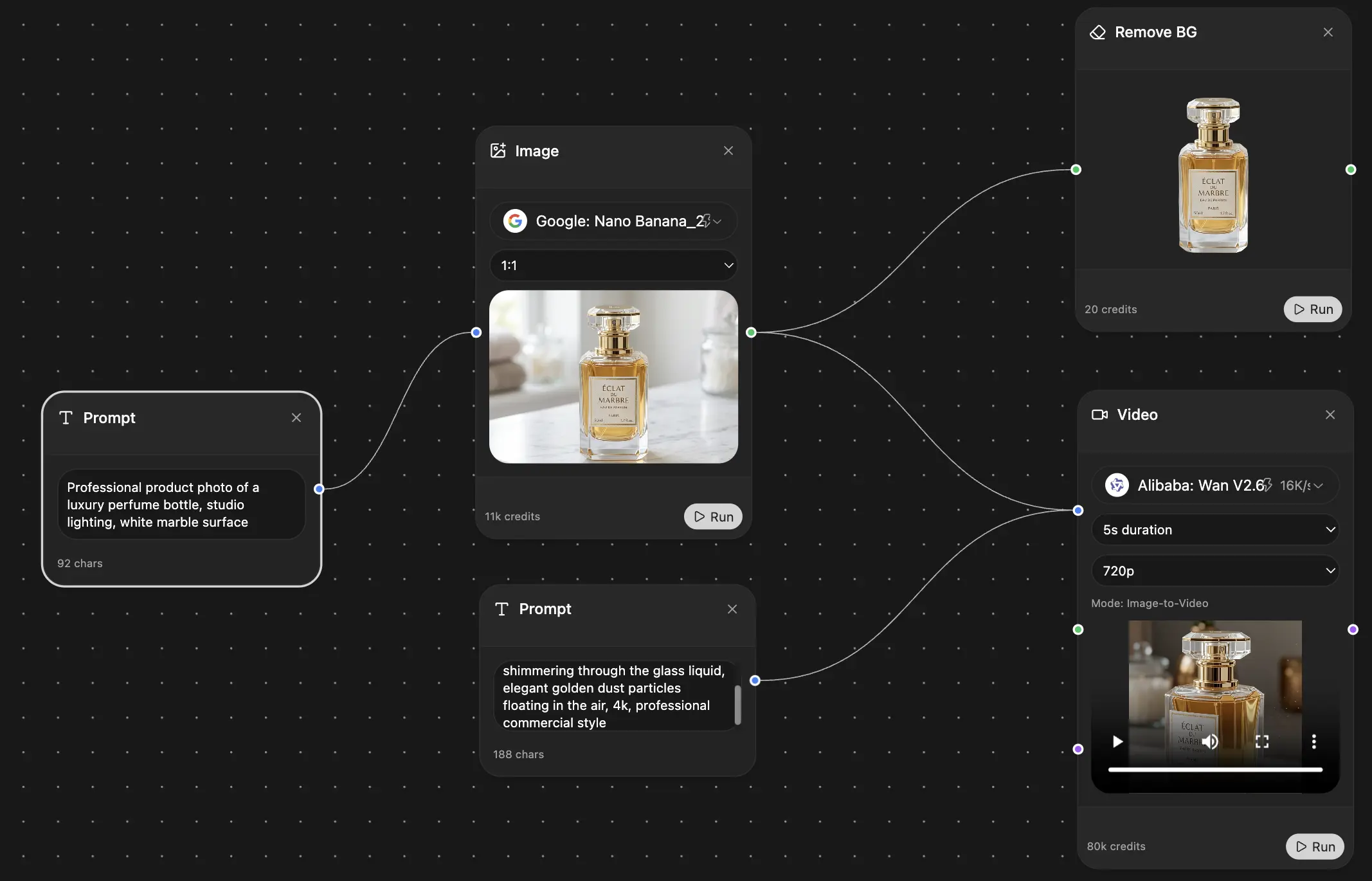
Your infinite AI canvas.
Chat, image, video & motion tools — side by side
Save hours of work and research
Transparent, High-Value Pricing
Trusted by teams at






Free
No credit card required
- 100 credits daily
- 3 AI models to try
- Basic AI chat
Plus
- 1,000,000 credits/month
- 25+ AI models — GPT, Claude, Gemini, Grok & more
- Agent Mode with web search, computer tools and more
- Creative Studio: image generation and video generation
- Project Library: chat with document, website and youtube, podcast generation, flashcards, reports and more
- Workflow Studio and FocusOS
Professional
- Everything in Plus, and:
- 2,100,000 credits/month
- Pro-exclusive models (Claude Opus, Grok 4, Sonar Pro)
- Motion Tools & Max Mode
- First access to latest features
- Access to additional offers