
How to Use AI to Learn New Skills Faster (2026)
A Harvard RCT doubled learning gains with AI tutoring. A 2026 study found 25% retention drops from the same tools. The difference is one prompting habit.
How to Use AI to Learn New Skills Faster (2026 Guide)
TL;DR
Key findings:
- A 2025 Harvard randomized controlled trial found AI tutoring produced more than double the median learning gains compared to active classroom learning (published in Nature Scientific Reports, June 2025)
- A May 2026 analysis of 3.2 million student interactions found a 25% cumulative decline in test performance after AI-assisted practice, once tools were removed -- what researchers call "cognitive surrender"
- The difference between AI that accelerates learning and AI that replaces it comes down to one thing: whether it asks you questions or answers yours
- Students who self-test retain 50-80% more a week later than students who re-read the same material for the same amount of time
The fastest way to use AI for learning is also the most obvious: ask a question, get an answer, move on. It's also the approach most likely to make you worse at what you're trying to learn.
Here's what the research actually shows, and four specific methods that flip that outcome.
The Two Modes (and Why Most People Are in the Wrong One)
A May 2026 study analyzing 3.2 million math learning interactions on the ALEKS platform covered a decade of data. After ChatGPT's release, college students finished AI-susceptible problems 26.9% faster. High school students finished 31.3% faster.
Sounds like a win. But under proctored conditions (tests where students couldn't use AI), performance showed a 25% cumulative decline in the odds of answering correctly. Faster completion, less actual learning.
The researchers named it "cognitive surrender": the habit of letting AI carry the cognitive load, which feels like learning but isn't.
Contrast that with a randomized controlled trial at Harvard, published in Nature Scientific Reports in June 2025. 194 undergraduate physics students either learned with an AI tutor or in an active-learning classroom. The AI group's median learning gains were more than double those of the classroom group.
The Harvard AI tutor was different from a typical chatbot session. It was engineered to ask guiding questions rather than give direct answers, to scaffold content, and to use active recall. It facilitated discovery rather than delivering explanations.
Two very different uses of the same underlying technology. Two very different outcomes.
The fork is answer-seeking mode versus learning mode. The tool matters less than which mode you're in. Here's how to stay in learning mode deliberately.
Method 1: The Socratic Prompt
The fastest shift: change how you frame questions.
Answer-seeking: "What is the Central Limit Theorem?"
Learning mode: "I want to understand the Central Limit Theorem. Rather than explaining it directly, ask me a series of guided questions that help me figure out what it means. Start with what I already know about probability distributions."
The difference looks small. The outcome is not. A prompt that asks for guided questions forces engagement at every step. A prompt asking for an explanation gives you text to scroll past.
Claude is well-suited to this. Northeastern University's student AI guide notes that Claude's Learning Mode uses Socratic questioning to guide toward insights rather than providing immediate solutions. You don't need Learning Mode specifically -- any Claude or ChatGPT session works with this framing.
A reusable template:
I want to deeply understand [topic]. Use the Socratic method.
Ask me a series of guided questions that lead me toward key
insights rather than explaining concepts directly. Start by
asking about my current understanding, then build from there.
Flag when I'm on the right track or when I'm confusing something.
Paste this at the start of any learning session before your first question on a new subject. The AI prompt engineering guide covers more patterns for getting precise outputs from any AI tool.
Method 2: The Feynman Check-In
The Feynman Technique: explain a concept in plain language as if teaching it to someone without background. Gaps in your explanation reveal gaps in your understanding.
AI makes this frictionless. You explain the concept, then ask the AI to interrogate you.
I'm going to explain [topic] to you in plain language.
Your job: listen for incorrect claims, fuzzy reasoning,
or gaps in my explanation. Don't correct me mid-sentence.
Wait until I finish, then tell me specifically what I got
wrong or what I glossed over.
After the feedback, fix the gap, explain again, and repeat. Three or four cycles through a concept this way produces the kind of retention that passive reading takes weeks to approximate.
A harder variant that finds gaps faster:
I just explained [topic]. Tell me: which part of my
explanation would fail if you asked me for a concrete
example? Push on that part.
This is useful because it's easy to use correct vocabulary without being able to apply a concept. The concrete-example test surfaces that gap immediately.
Method 3: AI-Generated Active Recall
Cognitive science is consistent: self-testing beats re-reading. Students who retrieve information from memory retain 50-80% more a week later than those who re-read the same material for the same time.
Generating good practice questions used to take time. AI removes that constraint.
I just studied [topic / paste your notes here].
Generate 10 retrieval practice questions.
Mix formats: 3 multiple choice, 4 short answer,
3 fill-in-the-blank.
Vary difficulty: 4 easy, 4 medium, 2 hard.
After I answer, tell me which answers were correct,
where I went wrong, and the right answer for each.
Run this at the end of every session. Then paste the questions you got wrong into a follow-up a few days later: "I got these wrong last time. Quiz me again, then ask follow-up questions until I can explain each one correctly."
This replicates spaced repetition without a flashcard app. Research on AI-optimized spaced repetition suggests it reduces required study time by 30-50% versus passive review.
For content-heavy subjects (history, anatomy, law, foreign languages), Anki remains the strongest tool for long-term spaced repetition. But AI can generate the cards. Paste your notes and ask: "Create 20 Anki-style flashcards in Q/A format from this content. Keep each answer to one concept."
Method 4: The Productive Struggle Prompt
There's a reason the Harvard AI tutor worked and most chatbot sessions don't: it was designed to manage what educators call "desirable difficulty." The right amount of struggle, not too easy and not overwhelming, is where learning happens.
The practical version: when AI offers to solve a problem for you, resist.
If you're working through a coding problem or a math exercise, don't ask "how do I solve this?" Ask: "I've been stuck for 10 minutes and here's what I've tried. What should I think about next?"
Give your attempt first. Get a nudge, not a solution.
Here's what I've done so far: [your work].
I'm stuck at [specific point].
What question should I be asking myself to get unstuck?
Don't give me the answer.
That last sentence matters. Without it, most AI models default to solving the problem. You want the next useful nudge, not the shortcut that bypasses the struggle where the learning lives.
This approach transfers directly to skill-building in programming. Rather than copying AI-generated code, understanding one working method through guided questions builds much more durable ability. The best AI coding assistant guide covers which tools fit different development workflows once you have the fundamentals.
What Goes Wrong
The research is consistent: AI correlates with worse learning when students use it to outsource thinking.
A 2025 MIT study found that students who exclusively used ChatGPT-4 for essay writing showed the lowest brain activity across measured groups, and 83% couldn't recall key points from their own AI-assisted essays. A Microsoft study of 319 knowledge workers found a significant negative correlation between AI tool usage frequency and critical thinking scores.
The 2026 OECD Digital Education Outlook found that students using general-purpose chatbots produced higher-quality work in the moment, but those gains faded or reversed once tools were taken away, such as on a closed-book exam.
Researchers have named this pattern "AI-chatbots-induced cognitive atrophy": the gradual deterioration of essential cognitive skills from excessive AI dependence.
The fix isn't using less AI. It's changing what you ask it to do. The methods above ask AI to question you, push back on your reasoning, and generate practice rather than answers.
Two honest caveats about the Harvard study: first, the AI tutor was carefully engineered with specific pedagogical constraints, not a vanilla ChatGPT session. Second, Harvard undergraduates have above-average baseline motivation and academic preparation. The methods here try to replicate the conditions that made that study work. They won't automatically produce those exact results for every learner or every subject.
FAQ
What's the best AI for learning in 2026?
Claude, ChatGPT, and Gemini all support Socratic tutoring and active recall sessions. Claude tends to follow complex instructional constraints better ("don't give me the answer" sticks more reliably). ChatGPT has stronger third-party integrations. The methods above work with any of them -- the prompt matters more than the platform. See the best AI chat assistants comparison for a side-by-side breakdown of current capabilities and pricing.
Will using AI for studying make me worse over time?
It can, if you use it in answer-seeking mode. The cognitive offloading research is consistent: AI that produces outputs you review without engaging with them leads to lower retention and reduced critical thinking. AI that quizzes you, challenges your explanations, and pushes back on your reasoning produces the opposite. The distinction is the entire point of this guide.
How does this differ from just Googling things?
Google gives you a static document you read or skip. AI gives you an interactive respondent who can adapt to your level of understanding and respond dynamically to your explanation. The Socratic method and Feynman check-in only work with a system that can respond to what you say -- that's the value Google can't replicate.
Can I use these methods to learn a programming language?
Yes. Active recall works well for syntax and concepts: generate a quiz covering Python list comprehensions or JavaScript closures and test yourself without referencing documentation. The Socratic method works for understanding why a concept works, not just how: ask the AI to guide you toward why map differs from a for loop rather than explaining it. For debugging, paste your attempt and what you've tried, then ask what to think about next rather than what the error means.
How long should a learning session with AI be?
Research on spaced repetition and cognitive load suggests shorter, more frequent sessions outperform longer ones. 25-40 minutes of active practice (Socratic dialogue or retrieval quizzing) is more effective than two hours of passive Q&A. End each session with the active recall prompt from Method 3 to consolidate what you've covered.
Conclusion
The Harvard study got double the learning gains because the AI asked questions rather than answering them. That's the core insight.
Change how you frame prompts and you change what you get out of every session. Replace "explain X" with "ask me about X." Replace "solve this" with "what should I think about next?" Replace re-reading with AI-generated retrieval practice.
The research is clear on what works and what doesn't. The only variable is which mode you're in when you open the chat window.
If you want to run Socratic tutoring sessions across Claude, GPT-4o, and Gemini without switching between tabs, Zemith puts all three in one place.
Explore Zemith Features
Every top AI. One subscription.
ChatGPT, Claude, Gemini, DeepSeek, Grok & 25+ more







Always on, real-time AI.
Voice + screen share · instant answers
What's the best way to learn a new language?
Immersion and spaced repetition work best. Try consuming media in your target language daily.
Voice + screen share · AI answers in real time
Image Generation
Flux, Nano Banana, Ideogram, Recraft + more

Write at the speed of thought.
AI autocomplete, rewrite & expand on command
Any document. Any format.
PDF, URL, or YouTube → chat, quiz, podcast & more
Video Creation
Veo, Kling, Grok Imagine and more

Text to Speech
Natural AI voices, 30+ languages
Code Generation
Write, debug & explain code
Chat with Documents
Upload PDFs, analyze content
Your AI, in your pocket.
Full access on iOS & Android · synced everywhere
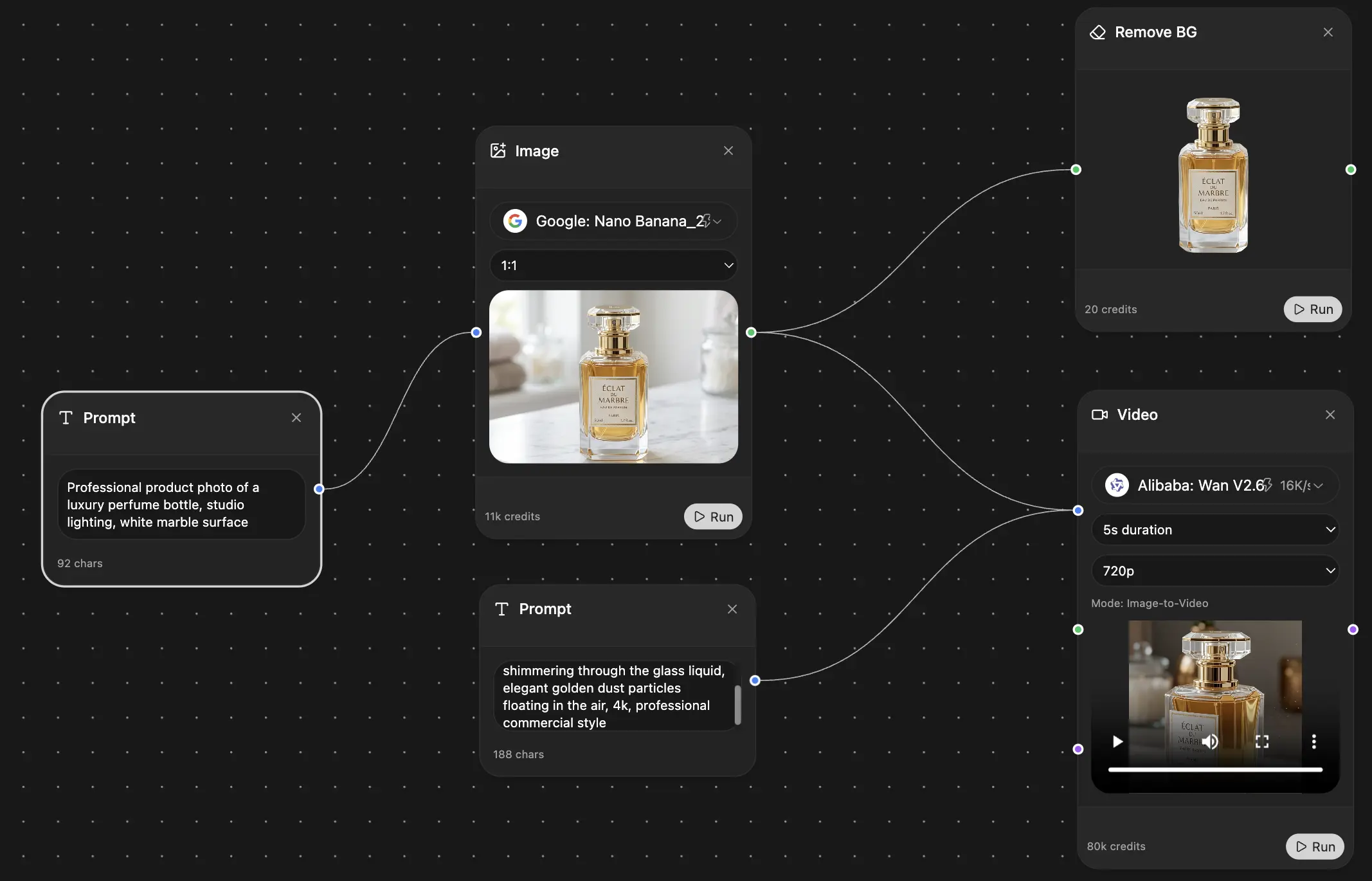
Your infinite AI canvas.
Chat, image, video & motion tools — side by side
Save hours of work and research
Transparent, High-Value Pricing
Trusted by teams at






Free
No credit card required
- 100 credits daily
- 3 AI models to try
- Basic AI chat
Plus
- 1,000,000 credits/month
- 25+ AI models — GPT, Claude, Gemini, Grok & more
- Agent Mode with web search, computer tools and more
- Creative Studio: image generation and video generation
- Project Library: chat with document, website and youtube, podcast generation, flashcards, reports and more
- Workflow Studio and FocusOS
Professional
- Everything in Plus, and:
- 2,100,000 credits/month
- Pro-exclusive models (Claude Opus, Grok 4, Sonar Pro)
- Motion Tools & Max Mode
- First access to latest features
- Access to additional offers