10 Best AI for Note Taking Tools in 2026
Tired of messy notes? We review the 10 best AI for note taking, from Notion to Otter. Find your perfect AI assistant and streamline your workflow in 2026.
Your Brain Is Full. Let's Find an AI to Help.
Remember that brilliant idea you had in the shower? What about the one useful insight buried somewhere inside a two-hour Zoom call, three Slack threads, and a PDF you swore you'd read later? Gone. Your brain didn't fail you. It just wasn't built to act like a filing cabinet with search.
That's why the best AI for note taking isn't really about notes anymore. It's about capture, recall, synthesis, and not having to play digital archaeologist every time you need one sentence from last week's meeting. Traditional note-taking still matters, but by itself it's a little like bringing a paper umbrella into a hurricane.
This category is also messier than most listicles admit. Some tools are amazing at meetings and mediocre at research. Some are brilliant for handwritten notes but weak for knowledge retrieval. Some are really AI wrappers around a notebook. Others feel like ten products hiding inside one dashboard.
I've spent enough time testing these tools to learn one thing fast. There is no single “best” app for everyone. There are specialists, and then there are platforms trying to replace the pile of specialists. If you want the best AI for note taking for your actual workflow, that distinction matters a lot.
1. Zemith

You open a meeting transcript, three PDFs, a YouTube tutorial, and a half-written note you started on your phone at 11:47 p.m. That mess is exactly why Zemith works for a certain kind of user. It is built less like a single note app and more like a central workspace for capture, synthesis, and follow-up.
That distinction matters in a market full of specialists.
A lot of tools on this list do one job well. One handles meeting transcripts. Another is great for research chat. Another shines for handwritten notes. Zemith goes after the bigger problem. It combines multi-model AI access, document chat, an AI Notepad, creative tools, coding help, a collaborative whiteboard, and mobile sync in one place. If your workflow regularly spills across five apps, consolidation is the feature.
I like it most for messy, mixed-input work. Drop in a PDF, URL, or YouTube link, then turn that source into a chat, summary, quiz, or audio-style recap. That is much closer to how real note taking works now. Notes are rarely just typed lines in a blank page. They are usually the middle step between raw information and something useful.
Its AI Notepad is also better than the usual “write for me” box. It can clean up rough bullets, rephrase clunky text, expand thin ideas, and keep those notes tied to a wider project. For researchers, students, marketers, and founders, that connection is a big deal. Good notes are only half the job. Finding and using them later is the part that usually falls apart. If you care about turning scattered notes into a usable system, this guide on building a knowledge base that people actually use fits the way Zemith is designed.
Practical rule: If your notes regularly turn into content, study material, project docs, or code, an all-in-one workspace usually serves you better than a meeting bot with a transcript tab.
There is a cost argument too. Zemith's Everything Included plan is listed at $14.99 per month billed yearly, and there is a free tier. For anyone paying for several AI tools at once, that bundle can be the whole reason to choose it.
The trade-offs are real. Usage is credit-based, so heavy users should check limits before treating it like an infinite resource. And if you need the newest niche feature from a single model provider on day one, the native app may get it first.
Still, Zemith earns the top spot here for one simple reason. It answers the question hanging over this whole category: how do you get the benefits of all these note-taking specialists without managing ten subscriptions and a browser full of tabs?
2. Notion

Notion is what happens when notes, docs, wikis, tasks, and databases all move into one apartment and somehow mostly get along. Add Notion AI and AI Meeting Notes, and it becomes a serious option for teams that want structured knowledge, not just transcripts.
The strongest reason to pick it is context. If your notes already live beside projects, SOPs, and team docs, Notion's AI can work with that structure instead of starting from scratch every time. It's especially useful for people building internal systems, not just capturing raw information. If that's your lane, this guide on how to build a knowledge base pairs nicely with the way Notion is often used.
What it gets right
Notion AI can summarize, draft, autofill databases, and generate meeting notes without requiring a bot to join the meeting. The no-bot approach is more important than it sounds. Plenty of teams hate the awkward “mystery robot joined your call” moment.
Its search and agent features are also compelling if your notes are part of a larger company memory. You're not just asking “what happened in this meeting?” You're asking “how does this connect to the project doc, task database, and previous decisions?”
- Best for structured teams: Works well when your notes need to feed projects, tasks, and living documentation.
- Less ideal for quick capture people: If you hate databases and setup, Notion can feel like being assigned homework by your own note app.
Notion is powerful. It's also a bit of a rabbit hole. Some people open it to write one note and resurface two hours later color-coding a dashboard they did not need.
3. Microsoft OneNote + Microsoft 365 Copilot
If your company already lives inside Outlook, Teams, Word, and Excel, this combo is the practical choice. OneNote stays familiar, and Copilot adds the AI layer that turns a notebook into something more useful after the meeting ends.
This setup is less sexy than newer AI-native tools, but that's also its advantage. People already know how OneNote works. They don't need a week-long onboarding ritual involving templates, tags, and an existential crisis about folder structure.
Where Microsoft has the edge
Copilot can summarize and rewrite notes, create task lists, and pull context from other Microsoft 365 apps onto a OneNote page. That cross-app grounding is the whole story here. Your notes don't sit alone. They connect to the email thread, the Teams conversation, and the working document.
Microsoft also says AI summarizer and note-taking tools can reduce time spent on meeting documentation workflows by up to 40%. That aligns with why this stack works best for busy teams drowning in recurring meetings and follow-ups.
If you're mostly trying to tame documents and long pages after meetings, a separate AI document summarizer approach can also help you decide whether you need Copilot-level integration or just faster synthesis.
This is the “use what your company already pays for” pick, and sometimes that's the smartest move in the whole article.
The downside is licensing. Copilot value is real, but Microsoft pricing and permissions can feel like they were designed by people who enjoy mazes.
4. Google NotebookLM

NotebookLM isn't the best AI for note taking if what you mostly need is meeting transcription. It is one of the best if your main problem is reading too much stuff and remembering too little of it.
Its core strength is source-grounded work. Upload PDFs, Google Docs, Slides, or web pages, then ask questions and generate briefs based on those materials. That sounds simple, but it changes the quality of the output. Instead of vague chatbot confidence, you get notes and synthesis tied to what you provided.
Best use case
Researchers, students, analysts, and writers tend to love NotebookLM because it behaves more like a study desk than a meeting recorder. You can collect source material for a topic, ask for a comparison, pull a summary, and keep your thinking close to the original documents.
That also makes it useful for content prep. If your workflow starts with “I have five sources and one deadline,” NotebookLM can save your sanity. It's less about capturing the live moment and more about turning source piles into usable understanding.
- Great for research notes: Strong when you care about source fidelity and synthesis.
- Not great as an all-purpose workspace: It won't replace your broader task, project, or creation stack by itself.
If you spend more time reading than talking, NotebookLM deserves a hard look.
5. Mem

You jot down a meeting takeaway, paste in a useful email, save a PDF for later, and then trust the app to remember all of it better than you will. That is the Mem pitch in one sentence.
Mem is built for fast capture and retrieval. It suits founders, operators, consultants, and solo users who hate setting up folders, dashboards, and elaborate note systems they will abandon two weeks later. Drop things in, search later, ask the AI questions, move on with your day.
That simplicity is the appeal.
Its AI can search across notes, PDFs, and connected email, which gives Mem a strong “save now, find later” workflow. If your note-taking habit is messy but your recall needs are high, Mem makes a lot of sense. It also overlaps with tools people compare in the broader voice to text AI software category, especially if part of your workflow starts with spoken ideas that need to become searchable notes.
Why people stick with Mem
Mem works well when you want less maintenance. There is less temptation to turn your notes into a full-blown operating system, and that is a real advantage for people who just need quick capture, decent AI recall, and a clean interface.
The trade-off is scope. Mem handles capture and retrieval well, but it is still a specialist in a market full of specialists. It will not cover the full spread of needs if you also want project planning, document drafting, visual collaboration, meeting recording, and deeper workspace organization in one place.
That gap matters when you start stacking subscriptions. Mem can be a good fit on its own, but it also highlights the bigger pattern in this category. One tool handles recall, another handles meetings, another handles research, another handles handwritten notes. Platforms like Zemith are appealing for a simple reason. They combine more of those jobs in one command center, so you get the benefits without juggling ten different apps and ten different monthly charges.
6. Otter.ai

You join a "quick sync," someone shares three decisions in ten minutes, and by lunch nobody agrees on who owns what. Otter.ai exists for that exact mess.
Otter is one of the oldest and most recognizable meeting-note tools for a reason. It records conversations, transcribes them, separates speakers, and turns the raw audio into summaries and action items that people might read. If your workday runs on calls, it saves real cleanup time.
Where Otter fits best
Otter works best for teams that spend a big chunk of the week in Zoom, Teams, or Google Meet. Sales reps, recruiters, client-facing account teams, and operations leads usually get the clearest value because their notes start as conversations, not documents.
It is also a useful benchmark on price and features in the meeting-transcription category. If you are comparing meeting-first note takers, Otter is usually one of the products on the shortlist.
If your workflow starts with spoken input, it is smart to compare Otter against tools built for voice to text AI transcription and capture, because accuracy, speaker labeling, and handoff after the meeting matter more than a flashy workspace.
A few trade-offs show up fast once you use it for more than a week:
- Strong choice for meeting-heavy work: Reliable transcripts, useful summaries, and clear follow-up notes.
- Weakness to watch: Outside meetings, it feels narrow. It is not the place I would choose for research notes, project planning, or building a broader knowledge base.
That specialist focus is both the appeal and the limit. Otter does one job well. The problem starts when your stack already includes a tool for writing, another for docs, another for whiteboarding, and another for search. That is the bigger pattern in this market. Great specialists everywhere, but plenty of tab clutter and subscription creep. If you want meeting capture plus the rest of your note-taking workflow in one place, platforms like Zemith make more sense as a command center.
7. Fireflies.ai

Fireflies.ai sits a little closer to conversation intelligence than pure note taking. That distinction matters. If you just want transcripts, it's fine. If you want to analyze what gets said across teams and calls, it gets more interesting.
It offers transcription, AI summaries, topic tracking, tasks, analytics, and integrations. That makes it particularly appealing for sales, customer success, and product teams where calls aren't just records. They're data.
The practical trade-off
Fireflies is often better than simple meeting tools when managers want visibility into themes and trends, not just individual call notes. You can treat meetings as a searchable archive and a performance input, which is useful if your team learns from patterns across many conversations.
The catch is that some of its more advanced capabilities sit behind higher tiers or credit-based usage. That isn't automatically bad, but teams should understand the accounting before rolling it out widely.
A lot of people choose Fireflies because it gives them more than a transcript without pushing them all the way into a giant knowledge platform. That middle ground is real, and for the right team, it works.
8. Supernormal

Supernormal is one of the cleaner picks for teams that want AI meeting notes without tossing bots into every calendar invite. It leans into no-bot capture and credit pooling, which sounds unglamorous until you're the person managing AI access across a company.
That administrative angle is its hook. Some teams don't mind metered usage if they can share it flexibly and keep the costs predictable.
Who should care
Supernormal makes sense for organizations that want meeting capture plus some extra generation features from those notes. It can turn notes into presentations, images, and spreadsheets, which gives it a little more range than a basic notetaker.
The credit rollover is also practical for teams with uneven usage. Some months are chaos. Some months are mostly internal updates and coffee. Rollover helps smooth that out.
Supernormal is for teams that think about governance and budgets before they think about shiny demos. That's not boring. That's how tools survive procurement.
It still remains meeting-centric, though. If you need a fuller note-taking and research environment, this won't replace a broader workspace.
9. Tana Outliner + Tana AI

Tana is not for everyone. That's part warning, part compliment.
If you love outliners, structured notes, linked thinking, and building a real knowledge graph, Tana can feel brilliant. If you just want to write “call Bob Tuesday” and move on with your life, it may feel like someone handed you a spaceship to buy groceries.
What makes Tana different
Tana combines a networked outliner with AI features like bot-less meeting transcription, chat over notes and nodes, custom AI agents, and voice memos that auto-structure your thoughts. The deeper value comes from the structure itself. Good metadata and connected nodes give the AI better context than a pile of random pages.
This is one of the better choices for people who think in systems. Researchers, founders, PKM enthusiasts, and anyone who already likes outliners tend to get it quickly. Everyone else may need patience.
The biggest drawback is the learning curve. Tana can become powerful, but only if you invest enough time to make the structure work for you. It's not “open app, instant magic.” It's “build your graph, then enjoy the payoff.”
10. Goodnotes 6

Goodnotes 6 is the handwriting-first pick. If typing notes makes your brain shut off and a stylus still feels more natural, it allows AI to meet ink without forcing you into a fully typed workflow.
That matters more than many AI roundup posts admit. There's a huge difference between note taking in a live lecture, a brainstorming session, and a quiet desk review. Goodnotes is strongest when your ideas start as scribbles, diagrams, annotations, and quick handwritten fragments.
Why pen-first users still need AI
Goodnotes AI adds summarization, study support, handwriting extraction and search, plus math assistance. For students and professionals who work visually, that's a nice layer on top of an already strong handwriting experience.
This is also where the underserved in-person angle deserves attention. One review notes that 40% of users report in-person meetings as their biggest note-taking challenge, which explains why tools built around real-world capture and non-virtual workflows keep gaining interest. Even if Goodnotes isn't an in-room recorder, it fits the same broader reality. Not all note taking happens on Zoom.
If you're still refining your own style, these effective note-taking methods are worth pairing with any AI tool, especially a pen-first one.
- Best for tablet and stylus users: Excellent when handwriting is part of how you think.
- Less ideal for meeting automation: If you want transcription-heavy workflows, another tool will do more.
Goodnotes is proof that the best AI for note taking doesn't always start with a microphone. Sometimes it starts with a pen.
Top 10 AI Note-Taking Tools Comparison
The Big Choice. A Dozen Tools or One Command Center?
Monday starts with a client call. By Tuesday you are pulling quotes from a research doc, hunting for a handwritten sketch from last week, and trying to remember which AI app summarized the meeting correctly. By Friday, the core problem is no longer note-taking. It is tool sprawl.
That is the pattern across this category. These products are not competing on one axis. They each solve a different slice of the job.
Otter.ai handles meeting capture well. Goodnotes owns the handwriting-first workflow. NotebookLM is useful when your notes need to stay grounded in a source set. Tana rewards people who like structured, linked thinking and can tolerate setup time. Notion fits teams that already run projects, docs, and wikis in one place. Fireflies and Supernormal are stronger when meetings feed sales, support, or team reporting. Mem is appealing for quick capture and retrieval without much system design.
The business side reflects that split. Analysts expect the AI note-taking market to keep growing, and that tracks with what buyers are doing in practice. Teams are no longer asking whether AI notes work. They are comparing transcription quality, privacy rules, source grounding, integrations, and how much cleanup a tool still leaves behind.
That shift shows up in third-party reviews too. One 2025 comparison video review ranked Bluedot highly for bot-free capture, speed, and broad meeting integrations. A separate review of free tools highlighted tl;dv for high transcription accuracy, multilingual support, and GDPR-focused architecture with EU data residency. The takeaway is practical. Buyers care about friction now. They want fast capture, clean output, and fewer privacy headaches.
So the decision is not "Which app has AI?" Nearly all of them do. The decision is whether to assemble a stack of specialists or keep the workflow in one place.
A specialist stack can be the right answer. If all you need is meeting transcripts, Otter or Fireflies may be enough. If you live on an iPad with an Apple Pencil, Goodnotes makes more sense than forcing a general-purpose workspace to behave like a notebook. Best-in-class tools usually win on one narrow job.
The trade-off is coordination. Notes end up in one tool, recordings in another, source docs somewhere else, and the writing or follow-up happens in a fourth tab. Context gets lost during every handoff. Subscription costs creep up. So does the mental overhead.
Zemith makes the strongest case in that exact situation. It combines the jobs people keep splitting across separate tools: notes, document chat, research, writing, coding, and creation in one workspace. That does not make every specialist obsolete. It does mean many people can stop paying for a transcription app, a research assistant, a note organizer, and a drafting tool separately.
Less tab switching helps. Fewer disconnected workflows help more.
If your workflow is stable and narrow, pick the specialist that matches it. If your week moves between meetings, docs, research, brainstorming, and output, a command center is usually the cleaner setup. Zemith fits that second camp well because it answers the question hanging over this whole list: how do you get the upside of all these tools without managing ten different subscriptions?
Explore Zemith Features
Every top AI. One subscription.
ChatGPT, Claude, Gemini, DeepSeek, Grok & 25+ more







Always on, real-time AI.
Voice + screen share · instant answers
What's the best way to learn a new language?
Immersion and spaced repetition work best. Try consuming media in your target language daily.
Voice + screen share · AI answers in real time
Image Generation
Flux, Nano Banana, Ideogram, Recraft + more

Write at the speed of thought.
AI autocomplete, rewrite & expand on command
Any document. Any format.
PDF, URL, or YouTube → chat, quiz, podcast & more
Video Creation
Veo, Kling, Grok Imagine and more

Text to Speech
Natural AI voices, 30+ languages
Code Generation
Write, debug & explain code
Chat with Documents
Upload PDFs, analyze content
Your AI, in your pocket.
Full access on iOS & Android · synced everywhere
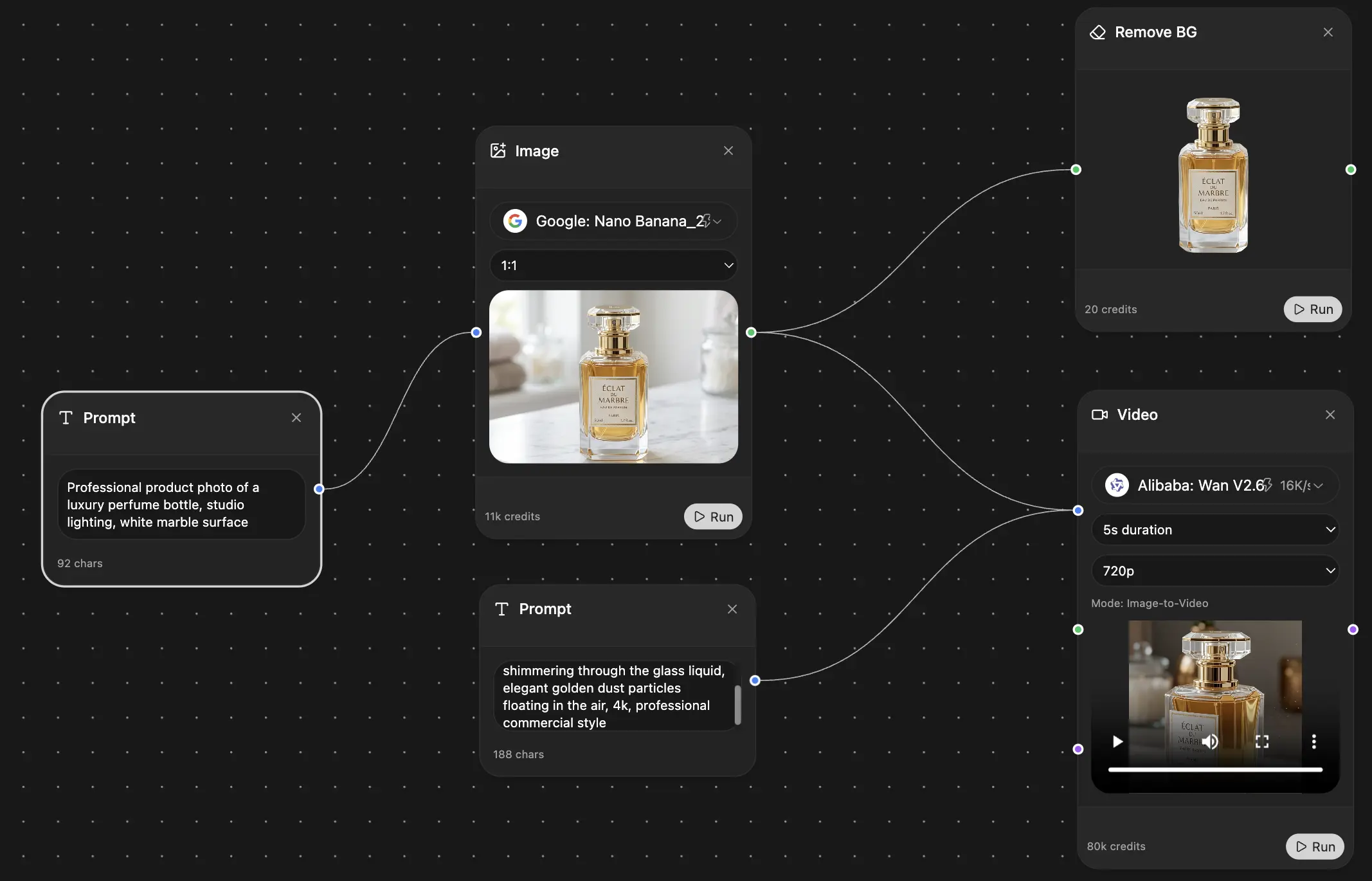
Your infinite AI canvas.
Chat, image, video & motion tools — side by side
Transparent, High-Value Pricing
Free
No credit card required
- Limited daily usage
- Selected AI models to try
- Limited features
Plus
- Choose from multiple leading models — GPT, Claude, Gemini and Grok.
- 25× more usage than Free.
- Create and edit images with Creative Studio.
- Connect your favorite apps and get work done in one place.
- Research the web and turn sources into clear answers.
- Turn documents, websites and YouTube into podcasts, flashcards and reports.
- Build repeatable workflows and stay focused with FocusOS.
Professional
- Everything in Plus, and:
- Unlock every model on Zemith, including GPT 6 Astra, Claude Opus and Sonar Pro.
- 50× more usage than Free.
- Create more with the full Creative Studio toolkit.
- Let agents work in the background — run Cloud tasks and schedule recurring work.
- Push further on complex work with Max Mode.
- First access to new features.
Trusted by teams at






What Our Users Say
Great Tool after 2 months usage
"I love the way multiple tools they integrated in one platform. Going in the right direction."
— simplyzubair
Best in Kind!
"The quality of data and sheer speed of responses is outstanding. I use this app every day."
— barefootmedicine
Simply awesome
"The credit system is fair, models are perfect, and the discord is very responsive. Quite awesome."
— MarianZ
Great for Document Analysis
"Just works. Simple to use and great for working with documents. Money well spent."
— yerch82
Great AI site with accessible LLMs
"The organization of features is better than all the other sites — even better than ChatGPT."
— sumore
Excellent Tool
"It lives up to the all-in-one claim. All the necessary functions with a well-designed, easy UI."
— AlphaLeaf
Well-rounded platform with solid LLMs
"The team clearly puts their heart and soul into this platform. Really solid extra functionality."
— SlothMachine
Best AI tool I've ever used
"Updates made almost daily, feedback is incredibly fast. Just look at the changelogs — consistency."
— reu0691