Logo Search by Image: A 2026 Detective's Guide
Logo search by image - Stuck with a mystery logo? Learn how to perform a logo search by image using reverse search, AI, and expert techniques to find any brand
You’re probably here because a logo is taunting you.
It’s on a blurry backpack in a travel photo. It’s tucked into the corner of a YouTube frame. It’s printed on a coffee cup in a client’s mood board, and now everyone in the room wants to know whether it’s an actual brand, a dribbble special, or a legal landmine wearing nice typography.
That’s the game with logo search by image. Sometimes it’s easy. Sometimes it feels like forensic work for people who zoom to 500% and mutter, “enhance,” even though real life doesn’t work like a crime show.
The good news is that logo hunting is much better than it used to be. Public visual trademark search took a huge step forward when WIPO launched the first free public image-based trademark search in 2014, letting people upload a logo and search over 4 million images from 15 collections. That moment mattered because it pushed logo search beyond text labels and into actual visual matching.
So yes, you can get much farther today than “I tried Google and gave up.”
Your Mission Should You Choose to Accept It
A logo search usually starts with one annoying little visual clue.
You spot a mark on a bag, a shoe tongue, a storefront reflection, or a half-covered product in a client screenshot. It looks familiar, but not familiar enough. Then the rabbit hole opens. Outdoor brands love triangles. Coffee brands love circles. Startup logos love pretending they invented the lowercase sans serif.

Why logo hunts get messy fast
Logo search fails for predictable reasons. The mark is blurry. Part of it is hidden by a fold, thumb, or zipper. The brand uses an abstract symbol with no text, which means you cannot brute-force your way through it with a keyword search and good intentions.
That changes the job. You are no longer “searching an image.” You are collecting signals and choosing the fastest path to a match.
Some searches are easy wins. A clean, front-facing logo on a product shot often folds in a few minutes with a reverse image search. Others need more discipline. If the mark is warped, tiny, or buried in background clutter, isolate it first. A quick background removal workflow for cleaner logo crops can save a lot of wasted searches.
The workflow that actually works
The reliable approach is tiered. Start with the cheap, obvious move. Escalate only when the evidence says you need to.
- Tier 1: Grab the easy match. Use broad reverse image search to find public web copies, reseller listings, social posts, or design references.
- Tier 2: Improve the evidence. Crop hard, straighten the angle, and make alternate versions if the logo is faint or distorted.
- Tier 3: Switch to logo-aware tools. Use detectors that can handle symbols, partial marks, and text fragments instead of relying on one generic image engine.
- Tier 4: Bring in AI. For ugly cases, obstructed logos, low resolution, mixed text and symbol marks, AI can combine visual cues, OCR, and context faster than manual guesswork.
- Tier 5: Verify the result. A likely match from the web is research. It is not clearance.
That sequence matters because each step costs more time. Running every image through advanced tooling from the start feels clever right up until you waste half an hour solving a problem that Google Lens could have handled in twenty seconds.
The detective mindset
Good logo hunting is pattern recognition with taste.
Look at the shapes first. Then look at the environment. A badge on hiking gear points you in one direction. A foil-stamped mark on skincare packaging points you somewhere else. Letter fragments, color pairings, icon style, and product context all help narrow the field long before you have a perfect match.
I treat each unknown logo like a layered puzzle. Easy cases fall fast. Hard cases need escalation. The trick is knowing when to stop poking at a weak lead and move up the stack to something stronger, especially when a tool like Zemith can handle the ugly, real-world images that make ordinary logo search tap out.
Garbage In Garbage Out Prep Your Image
Most failed searches are not tool failures. They’re input failures.
If the logo is tiny, bent around fabric, drowned in background clutter, or half-hidden behind a water bottle, your search engine is being asked to identify a suspect from a potato-quality witness sketch. Clean it up first.

What to fix before you search
One analysis noted that commercial AI tools detect logos at 77% in isolated contexts but only 54% in visually busy environments, which is a blunt reminder that clutter wrecks recognition performance, as summarized in Eden AI’s review of logo detection APIs.
That means prep work isn’t cosmetic. It changes whether the logo is even detectable.
Here’s the quick cleanup routine I’d use:
Crop aggressively
Don’t search the whole photo if the logo occupies a tiny corner. Cut out everything that isn’t helping.Make a second version
Keep one crop natural. Then make another with boosted contrast or sharper edges. Some tools respond better to realism, others to a cleaner silhouette.Straighten the angle
If the logo sits on a tilted sign, product box, or folded shirt, rotate it closer to upright.Try black-and-white
If the color palette is muddy or lighting is awful, a grayscale version can make the shape easier to read.Remove the background when possible
If the logo sits on a noisy surface, isolate it. A good walkthrough on how to remove image background is useful here, especially when fabric texture or desk clutter keeps stealing attention from the mark.
The messy cases nobody talks about enough
Real-world logo search is rarely a clean PNG on white.
You’ll run into:
- Wrinkled fabric where the mark stretches or folds
- Glare from packaging, windows, or laminated signs
- Low resolution from screenshots and cropped social posts
- Partial obstruction from hands, straps, stickers, or bad framing
- Odd perspective when the logo is shot from the side instead of head-on
When that happens, don’t obsess over restoring the image perfectly. Create multiple search candidates instead. One tightly cropped version. One higher-contrast version. One that preserves more surrounding context.
The best search input is not always the prettiest one. It’s the one that gives the algorithm the clearest signal.
A quick visual walkthrough helps if you want to see the cleanup mindset in action:
A simple prep checklist
If your first search fails, don’t immediately switch platforms. Fix the image first. That boring step is often the difference between “nothing found” and “oh, there it is.”
The First Pass With Reverse Image Search
This is the cheap, fast, no-drama part of the workflow. Run the image through the big public search tools before you get fancy.
They’re not perfect, but they’re very good at spotting obvious matches, reused graphics, product photos, and pages where the same logo already appears online. If the brand is even moderately visible on the web, this first pass can solve the case in minutes.

Which free tool to use first
The answer depends on what you’ve got.
If you want a wider research workflow around this step, a guide on deep search for free pairs nicely with reverse image search because it helps you keep digging after the first visual hit.
How to use them like a grown-up detective
Don’t upload one image once and call it a day.
Try these variations:
- Use the isolated crop first: This works best when the logo is clear and distinct.
- Then try the full scene: Sometimes the product, setting, or nearby text gives the engine more context.
- Search alternate edits: Your sharpened or contrast-boosted version may trigger different results.
- Check visually similar results, not just exact matches: A logo may appear on different products, signs, mockups, or reseller listings.
What each tool is actually good at
Google Lens is the strongest starting point for logos found in the wild. If the mark appears on a shoe, bottle, backpack, storefront, or piece of tech, Google often uses surrounding cues well. It’s especially handy when the logo and the object belong together.
TinEye shines when you suspect the exact image or asset has circulated online. If someone lifted a logo from a website, brand deck, marketplace listing, or old press kit, TinEye often exposes the trail quickly.
Yandex has a knack for visual similarity that can surface alternate contexts and non-English results. When a logo search by image feels oddly international, Yandex deserves a turn.
Use the tools in parallel, not in sequence with blind faith. They don’t fail in the same way.
Where reverse image search falls short
These tools struggle when the logo is:
- heavily stylized
- only partly visible
- tiny inside a larger frame
- warped by fabric or perspective
- abstract enough to resemble a thousand unrelated icons
That’s when you stop asking, “Where else has this image appeared?” and start asking, “What can detect the logo itself?”
Level Up With Specialized Logo Detectors
When reverse image search whiffs, the logo may still be detectable. You just need systems built for logo detection, not just image matching.
That difference matters. Reverse image search tries to find related images. Specialized detectors try to identify the presence of logos as objects, shapes, or text-bearing marks inside an image. That’s a much better fit when the logo is small, embedded, or altered by real-world conditions.
Why dedicated logo models matter
Modern detectors improve because they train on logo-specific data. A major example is LogoDet-3K, described in an ACM publication as the largest fully annotated dataset of its kind, with 158,652 images, 3,000 logo categories, and nearly 200,000 manually annotated logo objects, as detailed in the LogoDet-3K paper.
That kind of dataset gives models a fighting chance with logos that aren’t just giant clean brand marks pasted onto white backgrounds.
Your best specialist move is often OCR
A surprising number of logos include text, or at least text-like clues.
If a mark contains a brand name, initials, a slogan fragment, or stylized letters, OCR can rescue the search even when visual matching fails. In practice, that means:
- extracting readable text from the logo
- searching the text alone
- searching the text with product or industry terms
- cross-checking the text against likely brand categories
This works especially well when the icon is generic but the lettering is distinctive. A boring shield becomes useful the second you can read two letters hidden inside it.
A practical escalation stack
If the free tools came up empty, use this order:
Run OCR on the crop
Look for letters, numbers, monograms, or partial words.Describe the shapes manually
Is it a bird, mountain, hexagon, wave, sunburst, monoline badge, serif monogram?Search by text plus category
A logo on a backpack should be searched differently from a logo on skincare packaging.Use image analysis tools that can label visual features Broader AI image tooling becomes useful. A solid overview of artificial intelligence image analysis helps if you want to understand how these systems classify shapes, scenes, and embedded brand elements.
Push the image into your own workflow or app stack
If you’re building internal brand-monitoring or verification tools, API-first services matter. The documentation for Saaspa.ge integration is worth a look if you need to connect search or image analysis steps into a broader product flow.
What works better than people expect
Text-bearing logos usually crack faster than abstract symbols. So do marks with unusual geometry or strong negative space.
What works worse than people expect? Generic minimalist branding. If the logo is “a rounded geometric thing with confidence,” congratulations, you’ve got half the startup ecosystem as false leads.
Specialized logo search works best when you combine machine detection with human description. One sees patterns. The other notices intent.
Unleash AI for the Toughest Cases
Some logo searches stop being searches.
They become analysis jobs.
That happens when the mark is blurry, partial, obscured, or too niche for standard tools to match with confidence. In those cases, a single detector often gives you a shrug disguised as a result. That’s why tougher cases benefit from a multi-model approach that extracts clues instead of demanding an instant ID.

Why one-shot detection often disappoints
Logo detection can look brilliant in controlled conditions and messy in the wild. Research summarized in a medical and computer-vision review reported up to 98.93% precision under ideal conditions, while commercial vision tools tested across more diverse scenarios averaged 68.9% logo detection accuracy, according to the published analysis on logo detection performance.
That gap is the whole story.
If one model misses the mark, the useful move isn’t always “try harder.” It’s “ask different models different questions.”
Turn the logo into searchable language
Here’s how AI helps when direct identification fails:
Describe the geometry
Circular crest, angular fox head, interlocking letters, asymmetric leaf, monoline wave.Extract design style
Minimalist, retro, streetwear, luxury serif, industrial, outdoorsy, corporate-tech.Infer likely category
Apparel, coffee roaster, sports team, SaaS, skincare, automotive, nonprofit.List visual details separately
Colors, border style, icon plus wordmark, icon-only, badge shape, text placement.
That descriptive layer gives you better search terms than “unknown logo on cap.”
If you’re evaluating broader options for this kind of workflow, a comparison of selecting computer vision platforms can help you see where pure detection tools stop and more flexible analysis workflows begin.
The multi-model playbook
A strong approach looks like this:
If you want a practical way to convert an image into better search prompts, image to prompt workflows are especially handy for this exact problem.
What the tough cases usually need
Hard logo searches rarely crack from one lucky upload. They crack when you combine:
- better crops
- descriptive AI analysis
- OCR
- category clues
- repeated searches using smarter wording
That’s the secret sauce. Not one magical detector. A sequence of clue extraction steps.
And yes, this is the point where logo search by image starts to feel less like “reverse search” and more like creative intelligence work. Which is, indeed, a lot more fun.
Verify Your Find and Dodge Legal Bullets
Finding a likely logo match is not the finish line. It’s halftime.
A web result can tell you who seems to use the mark. It can’t reliably tell you whether that use is registered, disputed, abandoned, regional, or unrelated to the exact goods and services you care about. That’s how people go from “pretty sure” to “why is legal emailing me.”
A match is not a clearance result
This is the trap.
Free search tools are useful for discovering usage, finding websites, checking products, and uncovering visual relatives. They are not built to answer the actual trademark question: can this mark create a conflict in the places and categories that matter for your project?
That gap hits smaller teams the hardest. As noted in Elephant Mark’s discussion of reverse logo search workflows, startups and freelancers often face real IP risk because traditional trademark search tools are expensive, while free logo search tools are better at finding usages than registered marks.
What to verify before you trust your result
Use a short verification checklist.
- Brand identity: Does the logo consistently appear with the same company name, product line, and website?
- Category fit: Is the brand operating in the same market as your use case, or just sharing a similar-looking symbol in a different lane?
- Official presence: Can you find the mark on official pages, packaging, social profiles, or retailer listings?
- Trademark context: Are there registered marks or pending applications that look close enough to raise concern?
- Geographic scope: A mark can be irrelevant in one place and a headache in another.
The practical research habit
Cross-reference your logo find with multiple signals, not one source. Search the brand name, the likely product category, any visible text from the mark, and relevant trademark databases where available.
This is also where source quality matters. If you’re going to rely on a result for business decisions, use a framework for judging what’s trustworthy. A guide on how to evaluate information sources is useful when you’re sorting official records, marketplace pages, blogs, random image boards, and scraped directory junk.
If the only place a “brand” appears is on repost accounts and mockup galleries, treat it like a rumor, not a verified identity.
A sensible business rule
If you’re identifying a logo for curiosity, a strong probable match may be enough.
If you’re naming a brand, designing a new mark, comparing competitors, or checking infringement risk, don’t stop at image matches. Verify the owner, the context, and the trademark environment. Search is discovery. Clearance is due diligence.
That distinction saves time, embarrassment, and expensive redesigns.
Your Lingering Logo Search Questions
Some logo hunts get weird fast, so here’s the rapid-fire version.
Frequently asked logo search questions
If you remember one thing, make it this: the best logo hunters don’t just search. They prepare, compare, analyze, and verify.
If you want one place to do the hard parts, from image analysis and prompt generation to deep research and source checking, Zemith is built for exactly that kind of work. It’s a practical home base for messy logo investigations when bouncing between separate tools starts wasting your afternoon.
Explore Zemith Features
Every top AI. One subscription.
ChatGPT, Claude, Gemini, DeepSeek, Grok & 25+ more







Always on, real-time AI.
Voice + screen share · instant answers
What's the best way to learn a new language?
Immersion and spaced repetition work best. Try consuming media in your target language daily.
Voice + screen share · AI answers in real time
Image Generation
Flux, Nano Banana, Ideogram, Recraft + more

Write at the speed of thought.
AI autocomplete, rewrite & expand on command
Any document. Any format.
PDF, URL, or YouTube → chat, quiz, podcast & more
Video Creation
Veo, Kling, Grok Imagine and more

Text to Speech
Natural AI voices, 30+ languages
Code Generation
Write, debug & explain code
Chat with Documents
Upload PDFs, analyze content
Your AI, in your pocket.
Full access on iOS & Android · synced everywhere
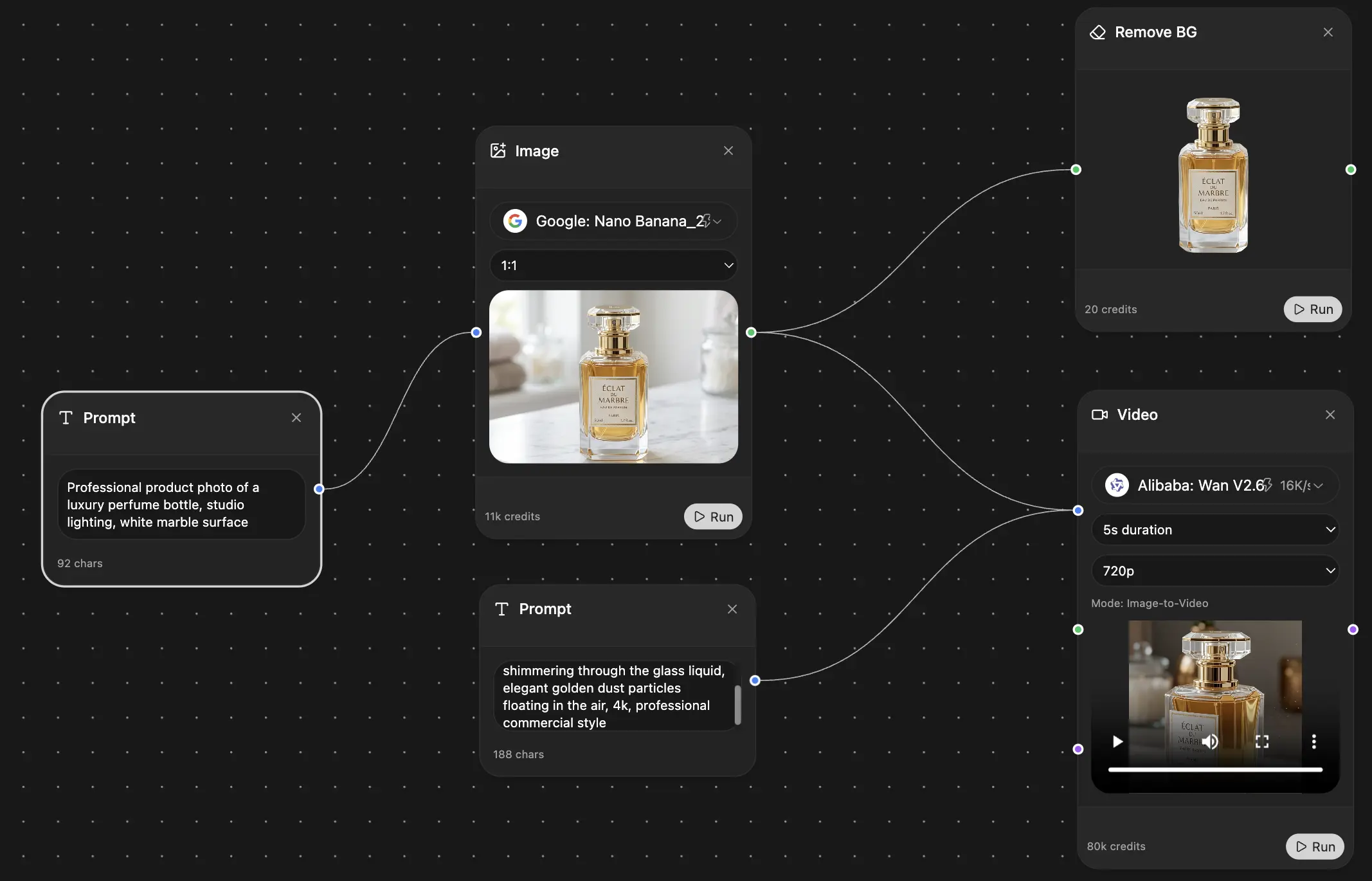
Your infinite AI canvas.
Chat, image, video & motion tools — side by side
Save hours of work and research
Transparent, High-Value Pricing
Trusted by teams at






Free
No credit card required
- 100 credits daily
- 3 AI models to try
- Basic AI chat
Plus
- 1,000,000 credits/month
- 25+ AI models — GPT, Claude, Gemini, Grok & more
- Agent Mode with web search, computer tools and more
- Creative Studio: image generation and video generation
- Project Library: chat with document, website and youtube, podcast generation, flashcards, reports and more
- Workflow Studio and FocusOS
Professional
- Everything in Plus, and:
- 2,100,000 credits/month
- Pro-exclusive models (Claude Opus, Grok 4, Sonar Pro)
- Motion Tools & Max Mode
- First access to latest features
- Access to additional offers
What Our Users Say
Great Tool after 2 months usage
"I love the way multiple tools they integrated in one platform. Going in the right direction."
— simplyzubair
Best in Kind!
"The quality of data and sheer speed of responses is outstanding. I use this app every day."
— barefootmedicine
Simply awesome
"The credit system is fair, models are perfect, and the discord is very responsive. Quite awesome."
— MarianZ
Great for Document Analysis
"Just works. Simple to use and great for working with documents. Money well spent."
— yerch82
Great AI site with accessible LLMs
"The organization of features is better than all the other sites — even better than ChatGPT."
— sumore
Excellent Tool
"It lives up to the all-in-one claim. All the necessary functions with a well-designed, easy UI."
— AlphaLeaf
Well-rounded platform with solid LLMs
"The team clearly puts their heart and soul into this platform. Really solid extra functionality."
— SlothMachine
Best AI tool I've ever used
"Updates made almost daily, feedback is incredibly fast. Just look at the changelogs — consistency."
— reu0691