
Best AI Coding Assistant in 2026: Complete Guide for Developers
Discover the best AI coding assistants in 2026. Compare GitHub Copilot, Claude, Cursor, ChatGPT & more. Find the perfect AI tool for your development workflow.
Best AI Coding Assistant in 2026: The Complete Developer's Guide
Choosing the best AI coding assistant in 2026 isn't as simple as it was two years ago. The market has exploded with options, each claiming to revolutionize your development workflow. With roughly 85% of developers now using AI tools regularly, the question isn't whether to use an AI coding assistant—it's which one fits your specific needs.
I've spent months testing the leading AI coding assistants, from industry giants like GitHub Copilot to newer contenders like Cursor and Claude Code. This guide breaks down what actually matters when choosing an AI coding tool and which options deliver real value for different development scenarios.
Why AI Coding Assistants Matter More Than Ever
The landscape of software development has fundamentally shifted. AI coding assistants are no longer limited to simple autocomplete or chat-based help. Modern AI tools understand entire repositories, make multi-file changes, run tests, and iterate on tasks with minimal human input.
The real advantage isn't just speed—it's reduced mental load. When AI handles context, repetition, and scaffolding, you can focus on design, correctness, and long-term thinking. Whether you're debugging a tricky legacy codebase or architecting a new microservices system, the right AI assistant amplifies your capabilities.
But here's the catch: there's no single "best" AI coding assistant for everyone. Developers evaluate tools based on where they want leverage—speed and flow inside the editor, control and reliability on large codebases, or greater autonomy for complex tasks.
Top AI Coding Assistants Compared
Let's examine the leading contenders in detail.
GitHub Copilot
GitHub Copilot remains the industry standard for in-editor AI assistance. Trained on billions of lines of code, it integrates directly into VS Code, JetBrains IDEs, and Neovim, suggesting completions as you type.
Strengths:
- Seamless IDE integration
- Excellent for autocomplete and inline suggestions
- Strong understanding of common patterns and frameworks
- Free for students, $10/month for individuals
Limitations:
- Context window limited to current file and open tabs
- Less effective for complex architectural decisions
- Can suggest outdated or deprecated patterns
Best for: Developers who want frictionless autocomplete without leaving their editor.
Claude (via Zemith)
Claude, particularly the Opus 4.5 model, has emerged as one of the strongest choices for professional programming work. It excels at understanding complex code, explaining reasoning, and handling large-scale refactoring.
Strengths:
- Exceptional at debugging and understanding legacy code
- 1 million token context window for massive codebases
- Strong code structure and comprehensive explanations
- Particularly excellent at front-end and CSS work
- Deliberate reasoning rather than hasty guesses
Limitations:
- Requires switching context to a chat interface
- Premium pricing at $20/month
Best for: Complex architectures, large projects, learning, and tasks requiring deep reasoning.
With Zemith, you get access to Claude alongside other leading models, letting you choose the right tool for each task without managing multiple subscriptions.
Cursor
Cursor represents a new breed of AI-augmented IDE. It's a full code editor (forked from VS Code) with AI deeply integrated into every aspect of the development experience.
Strengths:
- AI-native editor experience
- Agent mode for autonomous multi-file changes
- Excellent codebase understanding
- Tab completion feels natural and contextual
Limitations:
- Requires switching from your current IDE
- Learning curve for agent mode
- Can be aggressive with suggestions
Best for: Developers ready to commit to an AI-first editing experience.
ChatGPT
ChatGPT (GPT-5) remains the most versatile and flexible coding assistant available. It handles day-to-day development, problem-solving, and a wide variety of general tasks with consistent reliability.
Strengths:
- 95% coding correctness in benchmarks
- Fast and responsive
- Excellent at generating new code from scratch
- Strong reasoning across all task types
Limitations:
- Smaller 128K token context window
- Requires copy-pasting code to chat interface
- Can be overly eager to provide answers
Best for: Versatile, everyday coding tasks and rapid prototyping.
Google Gemini Code Assist
Gemini shines in multimodal workflows and offers deep Google Workspace integration. Its 1 million token context window handles large codebases well.
Strengths:
- Massive context window
- Strong UI/UX and visual design assistance
- Excellent for multimedia and cross-modal projects
- Deep Google ecosystem integration
Limitations:
- Slightly behind in pure text reasoning
- Less consistent code quality
- Best suited for Google Cloud users
Best for: Teams in the Google ecosystem and projects requiring visual/multimedia understanding.
Additional Notable Options
Cody (Sourcegraph): Indexes your entire codebase for context-aware answers. Excellent for navigating large, unfamiliar repositories.
Tabnine: Offers on-premise AI completion for enterprises with strict privacy requirements. Strong for regulated industries.
Amazon CodeWhisperer: Deep AWS integration makes it ideal for cloud-native development on Amazon's platform.
How to Choose the Right AI Coding Assistant
The best AI coding assistant depends on your specific workflow and priorities. Here's a decision framework:
Choose Based on Your Primary Need
For maximum IDE integration: GitHub Copilot
- You want suggestions without changing your workflow
- Autocomplete is your primary use case
- You're on a budget
For complex reasoning and large codebases: Claude (via Zemith)
- You work with legacy code or complex architectures
- You need thorough explanations, not just code
- You're handling files with thousands of lines
For an AI-first experience: Cursor
- You're willing to switch editors
- You want autonomous agent capabilities
- Multi-file refactoring is common in your work
For versatility: ChatGPT
- You need one tool that does everything reasonably well
- Rapid prototyping is your focus
- You switch between many languages and frameworks
Consider Your Tech Stack
Different assistants excel with different technologies:
- Front-end/CSS: Claude shows nuanced understanding of design principles
- AWS Development: CodeWhisperer integrates deeply with AWS services
- Google Cloud: Gemini Code Assist offers native integration
- Large Monorepos: Cody's codebase indexing shines here
Evaluate Context Handling
Context window size matters, but utilization matters more:
| Tool | Context Window | Quality |
|---|---|---|
| Claude | 1M tokens | Maintains reasoning throughout |
| Gemini | 1M tokens | Good, but can lose focus |
| ChatGPT | 128K tokens | Excellent memory features |
| Copilot | File-based | Limited but efficient |
Practical Tips for Using AI Coding Assistants
Getting the most from any AI coding assistant requires understanding how to work with these tools effectively.
Write Clear Prompts
The quality of AI output directly correlates with input quality. Instead of "fix this code," try:
This function should validate email addresses but returns false positives
for addresses with plus signs. Here's the current implementation:

[code]

Please fix the regex to properly handle plus signs in the local part.
Provide Context
AI assistants work better with context. Include:
- What the code should do
- What's currently happening
- Relevant constraints or requirements
- Error messages if debugging
Review and Understand
Never blindly accept AI-generated code. AI assistants can:
- Suggest deprecated APIs
- Miss edge cases
- Introduce subtle bugs
- Ignore your codebase's conventions
Always review suggestions and understand why they work.
Use Iterative Refinement
AI assistants excel at iteration. If the first response isn't quite right:
- Point out specific issues
- Ask for alternative approaches
- Request explanations for unclear parts
The Future of AI Coding Assistants
AI coding tools continue evolving rapidly. Current trends suggest:
More autonomous agents: Tools increasingly handle multi-step tasks independently—running tests, fixing failures, and iterating until success.
Better codebase understanding: Semantic understanding of entire repositories is becoming standard, not premium.
Tighter IDE integration: The line between code editor and AI assistant continues to blur.
Specialized models: Expect more tools optimized for specific languages, frameworks, or development styles.
FAQ
Which AI coding assistant is best for beginners?
Claude and ChatGPT are excellent for beginners because they explain their reasoning clearly. Claude particularly shines when you need to understand why code works, not just what to write. GitHub Copilot is also beginner-friendly for basic autocomplete.
Can AI coding assistants replace developers?
No. AI assistants are productivity multipliers, not replacements. They handle boilerplate, catch errors, and speed up routine tasks. But design decisions, architecture, understanding business requirements, and creative problem-solving remain human domains.
Are AI coding assistants secure for proprietary code?
Most commercial AI assistants offer enterprise tiers with data privacy guarantees. Tabnine offers fully on-premise options. Always review your chosen tool's privacy policy and consider your organization's requirements.
How much do AI coding assistants cost?
Most premium tiers cost 20/month (Claude, ChatGPT, Gemini). GitHub Copilot is 10-19/month depending on tier. Many offer free tiers with limitations. Zemith provides access to multiple models under one subscription.
Which AI is best for front-end development?
Claude consistently outperforms competitors on CSS and visual design tasks. It demonstrates nuanced understanding of design principles and their implementation in code. For UI/UX mockup work, Gemini's multimodal capabilities are also strong.
Conclusion
The best AI coding assistant in 2026 is the one that fits your workflow, tech stack, and priorities. GitHub Copilot delivers unmatched IDE integration. Claude excels at complex reasoning and large codebases. Cursor offers an AI-native editing experience. ChatGPT provides reliable versatility.
For most developers, having access to multiple AI assistants provides the most flexibility. Different tasks call for different tools—use Claude for that complex refactor, Copilot for quick completions, and ChatGPT for general questions.
The key is starting somewhere and iterating. Pick one tool, use it consistently for a week, and evaluate honestly. The productivity gains from any modern AI coding assistant far outweigh the learning curve.
Try Zemith to access Claude and other leading AI models in one platform—your AI-powered assistant for chat, coding, and more.
Explore Zemith Features
Every top AI. One subscription.
ChatGPT, Claude, Gemini, DeepSeek, Grok & 25+ more








Always on, real-time AI.
Voice + screen share · instant answers
What's the best way to learn a new language?
Immersion and spaced repetition work best. Try consuming media in your target language daily.
Voice + screen share · AI answers in real time
Image Generation
Flux, Nano Banana, Ideogram, Recraft + more

Write at the speed of thought.
AI autocomplete, rewrite & expand on command
Any document. Any format.
PDF, URL, or YouTube → chat, quiz, podcast & more
Video Creation
Veo, Kling, Grok Imagine and more

Text to Speech
Natural AI voices, 30+ languages
Code Generation
Write, debug & explain code
Chat with Documents
Upload PDFs, analyze content
Your AI, in your pocket.
Full access on iOS & Android · synced everywhere
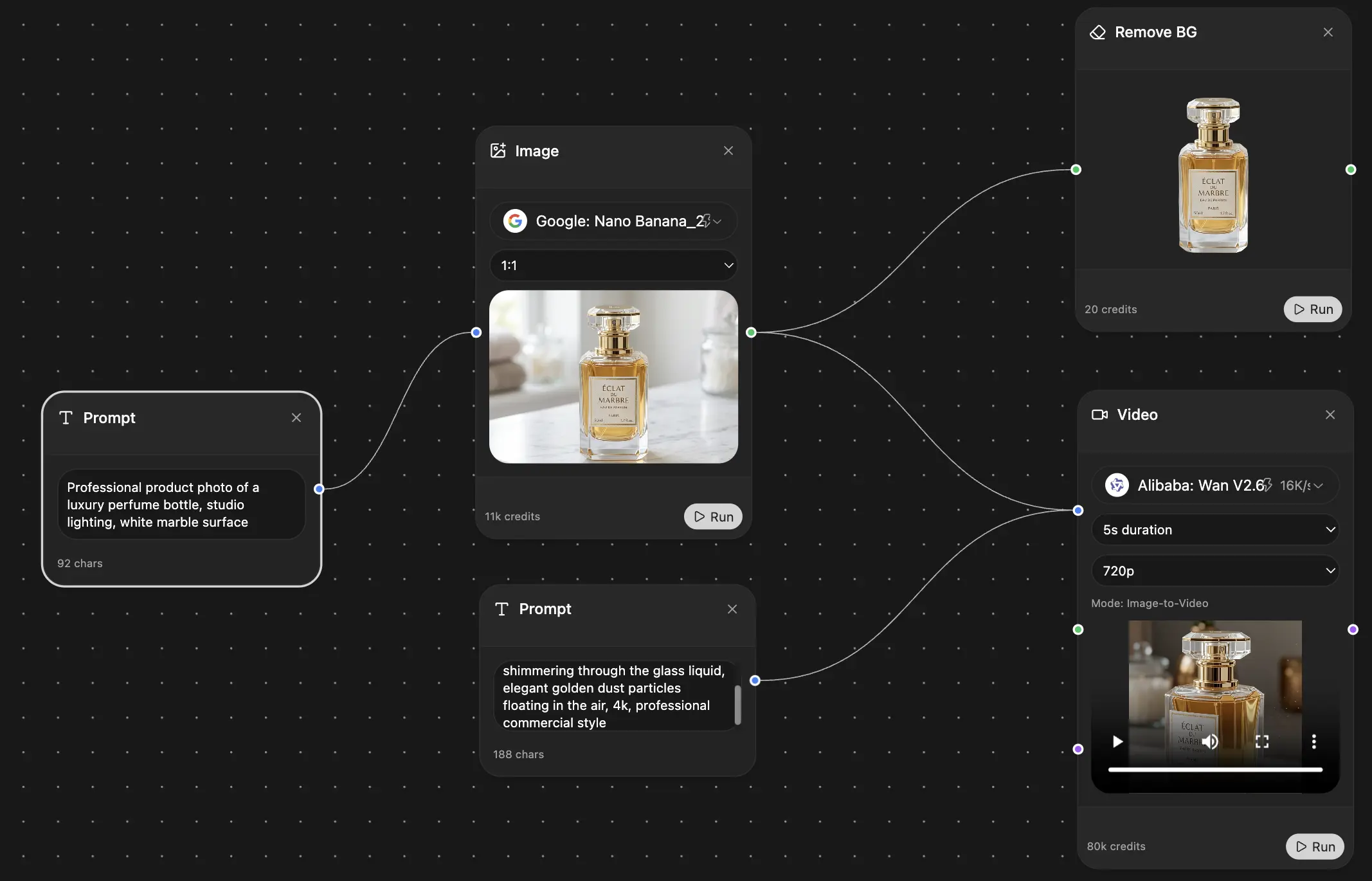
Your infinite AI canvas.
Chat, image, video & motion tools — side by side
Save hours of work and research
Transparent, High-Value Pricing
Trusted by teams at






Free
No credit card required
- 100 credits daily
- 3 AI models to try
- Basic AI chat
Plus
- 1,000,000 credits/month
- 25+ AI models — GPT, Claude, Gemini, Grok & more
- Agent Mode with web search, computer tools and more
- Creative Studio: image generation and video generation
- Project Library: chat with document, website and youtube, podcast generation, flashcards, reports and more
- Workflow Studio and FocusOS
Professional
- Everything in Plus, and:
- 2,100,000 credits/month
- Pro-exclusive models (Claude Opus, Grok 4, Sonar Pro)
- Motion Tools & Max Mode
- First access to latest features
- Access to additional offers