
How to Use AI Agents: A Practical Guide for 2026
Learn how AI agents work, what they can actually do in 2026, and how to start using them today. Real examples, tool breakdowns, and honest limitations.
How to Use AI Agents: A Practical Guide for 2026
TL;DR
The short version: AI agents are AI systems that take action, not just answer questions. They browse the web, write and run code, fill forms, and complete multi-step tasks with minimal input from you.
Key findings:
- A chatbot answers questions. An agent gets things done.
- Claude Computer Use and ChatGPT Agent Mode are the two leading general-purpose agents in 2026
- Coding agents (Claude Code, Cursor, Copilot Agent) are the most reliable category right now
- No-code tools like n8n and Lindy let you build custom agents in 15-60 minutes, no coding required
- Gartner predicts 40% of enterprise apps will embed AI agents by end of 2026
- Don't give agents unsupervised control over email, payments, or anything hard to undo
Most people using AI are still stuck in chatbot mode. They type a question, get an answer, copy it somewhere useful. Repeat 50 times a day.
That's fine. But it's slow. And it misses what AI can actually do now.
AI agents are different. You tell them what you want done. They figure out how to do it, use the tools to do it, and bring you the result. No babysitting required.
This guide explains what agents actually are, what they can do in 2026, which ones are worth using, and how to get started without breaking anything.
Chatbot vs. Agent: What's the Difference?
Here's the clearest way to think about it:
A chatbot tells you how to book a flight. An agent books the flight.
Chatbots are reactive. They wait for your input, generate a response, and stop. Every step requires you.
Agents are proactive. You give them a goal. They decide what steps to take, use tools to execute those steps, check the results, fix mistakes, and keep going until the job is done.
That's the core shift: from AI that informs you to AI that works for you.
How AI Agents Actually Work
Under the hood, every agent runs on a loop:
- Perceive -- understand the input (your goal, a message, a file, an event)
- Plan -- decide what steps to take to reach the goal
- Act -- use connected tools to execute each step
- Reflect -- check the output, catch errors, decide what to do next
- Repeat -- keep going until the job is done
The key word is "tools." Tools are what turn a chatbot into an agent. Without them, an AI can only talk. With tools -- a web browser, a terminal, file access, APIs, email -- it can act.
Most agents are built on top of a powerful language model like Claude or GPT-4 that handles the reasoning. The model decides what to do. The tools let it do it.
Memory matters too. Short-term memory handles the current session. Long-term memory, stored in a database, lets the agent remember context across sessions so it gets smarter about your workflow over time.
What AI Agents Can Actually Do Right Now
Research the Web
Research agents are among the most useful you can run today. Give one a question or a topic, and it searches the web, reads multiple sources, cross-checks facts, and returns a structured report. Tasks that used to take a few hours of manual browsing now take minutes.
Perplexity's Deep Research, ChatGPT with browsing, and Claude all handle this well. For research-heavy workflows, the Perplexity vs ChatGPT comparison breaks down which fits your needs.
Control Your Computer
This is where it gets genuinely interesting.
Claude Computer Use lets Claude look at your screen, decide what to click or type, act on it, take another screenshot, and repeat. As of March 2026, Claude scores 72.5% on OSWorld -- a benchmark testing real computer tasks across apps like Google Drive and Excel. That's up from 28% in February 2025.
One real example: a user asked Claude to research pricing across five competitor sites, fill the data into a spreadsheet, and flag the best value option. Claude opened each site, pulled the numbers, and filled in the sheet. No web scraping script, no manual copying.
ChatGPT Agent Mode (built directly into ChatGPT as of August 2025, after the standalone Operator was deprecated) operates via a virtual browser. For pure web automation tasks, it hits 87% success rates on benchmarks vs. Claude's 56%. If reliability on browser tasks is your priority, ChatGPT Agent Mode currently has an edge.
Google's Project Mariner (Gemini-based) and Microsoft's Copilot Agents round out the main options, especially for enterprise users.
Write, Run, and Debug Code
Coding agents are the most mature agent category in 2026. They have the lowest failure rates and most reliable outputs of any agent type.
Claude Code, Cursor, GitHub Copilot Agent, and Devin can write code, execute it, read the error output, fix the bugs, and iterate without you stepping in. They handle multi-file codebases and extended debugging sessions well. If you're a developer, these are worth using immediately.
Automate Recurring Workflows
Beyond one-off tasks, agents can run ongoing workflows: monitoring your inbox and drafting replies, processing new files as they arrive, summarizing Slack threads each morning, or pulling weekly data into a report.
If you want to start automating the repetitive parts of your day, the guide to automating daily tasks with AI covers the practical setup in detail.
How to Start Using AI Agents Today
You don't need to write code to start. Here's a practical progression.
Step 1: Try an Agent-Enabled Chat Tool
If you have ChatGPT Plus, toggle on Agent Mode. If you use Claude Pro, try a multi-step request with web search enabled. Get a feel for how agents handle tasks differently from a standard chat response.
Give it something concrete: "Research the top 5 project management tools for a 3-person team, compare pricing, and put it in a table." Watch how it searches, synthesizes, and structures the output without you guiding each step.
Step 2: Build a Simple Agent with No-Code Tools
Once you understand what agents can do, platforms like n8n, Lindy, or Dify let you build custom agents for your specific workflow. No Python required.
A good first agent: one that monitors your email inbox, extracts action items from messages, and adds them to a to-do list. Setup takes 15-60 minutes. The payoff starts immediately.
Step 3: Connect More Tools
The more tools your agent can access, the more it can do. Common integrations:
- Web search (for research and fact-checking)
- Google Drive or Notion (for reading and writing files)
- Calendar (for scheduling tasks)
- Slack or email (for sending and processing messages)
- Databases (for data lookup and storage)
Start with one or two integrations. Confirm the agent handles them reliably before adding more.
Step 4: Build for One Specific, Repeated Task
The agents that actually stick are built for a specific, repeated task. Not "a general assistant" -- something like "summarize my Monday morning Slack threads into a 5-bullet briefing every week."
For solopreneurs and freelancers, the highest-ROI use cases tend to be lead research, proposal drafting, content repurposing, and client communication drafts. The AI tools for solopreneurs guide covers the best setups for those workflows.
What Agents Still Can't Do Well
Fully autonomous operation is still risky. Don't let an agent send emails, make purchases, or take consequential actions without a human review step. The failure modes are unpredictable and the consequences are real.
Long chains of steps. Agents degrade on tasks requiring 10 or more sequential decisions. The more steps, the more chances for small errors to compound. Keep tasks focused.
Login and authentication walls. Both ChatGPT Agent Mode and Claude Computer Use pause and hand back control when they hit a login screen, CAPTCHA, or payment form. You still handle those.
Unfamiliar interfaces. Agents work well on standard web patterns. A custom enterprise app with a non-standard UI will trip them up.
Anthropic put it plainly: computer use "is still early compared to Claude's ability to code or interact with text." That's an honest summary of where every general-purpose agent sits right now.
FAQ
What's the best AI agent for beginners? ChatGPT Agent Mode is the easiest starting point. It's built into the app you probably already have, and the browser tasks it handles are reliable enough to trust from day one.
Do I need to know how to code to use AI agents? No. No-code tools like n8n and Lindy handle most automation use cases without any coding. Coding agents like Claude Code are specifically for software development, but using an agent doesn't require building one.
Are AI agents safe? For research, summarization, and drafting tasks, yes. For tasks that send messages, make purchases, or modify important files, keep a human in the loop. Don't hand agents credentials for high-stakes accounts.
How is an AI agent different from an AI chatbot? A chatbot generates a response and waits. An agent takes a goal, figures out what steps are needed, uses tools to execute those steps, and iterates until the work is done. The chatbot talks about action. The agent takes it.
What's the best coding agent in 2026? Claude Code handles large codebases and long debugging sessions well. Cursor is the preferred choice for developers who want an AI-native IDE. GitHub Copilot Agent is the most frictionless option if you're already in GitHub's ecosystem.
The Bottom Line
AI agents are past the proof-of-concept phase. Telus has 57,000 employees saving an average of 40 minutes per AI interaction. McKinsey estimates the productivity gains could unlock $2.9 trillion in economic value by 2030. Those are live deployments with real numbers, not projections about the future.
The practical starting point is simple: pick one repeated task you do every week, find an agent that can handle it, and spend 30 minutes setting it up. The first one teaches you more than any amount of reading.
Zemith's AI agents are built for practical, task-focused work -- research, writing, coding, and workflow automation across the tools you already use. Try it free and see what you can hand off.
Explore Zemith Features
Every top AI. One subscription.
ChatGPT, Claude, Gemini, DeepSeek, Grok & 25+ more








Always on, real-time AI.
Voice + screen share · instant answers
What's the best way to learn a new language?
Immersion and spaced repetition work best. Try consuming media in your target language daily.
Voice + screen share · AI answers in real time
Image Generation
Flux, Nano Banana, Ideogram, Recraft + more

Write at the speed of thought.
AI autocomplete, rewrite & expand on command
Any document. Any format.
PDF, URL, or YouTube → chat, quiz, podcast & more
Video Creation
Veo, Kling, Grok Imagine and more

Text to Speech
Natural AI voices, 30+ languages
Code Generation
Write, debug & explain code
Chat with Documents
Upload PDFs, analyze content
Your AI, in your pocket.
Full access on iOS & Android · synced everywhere
Your infinite AI canvas.
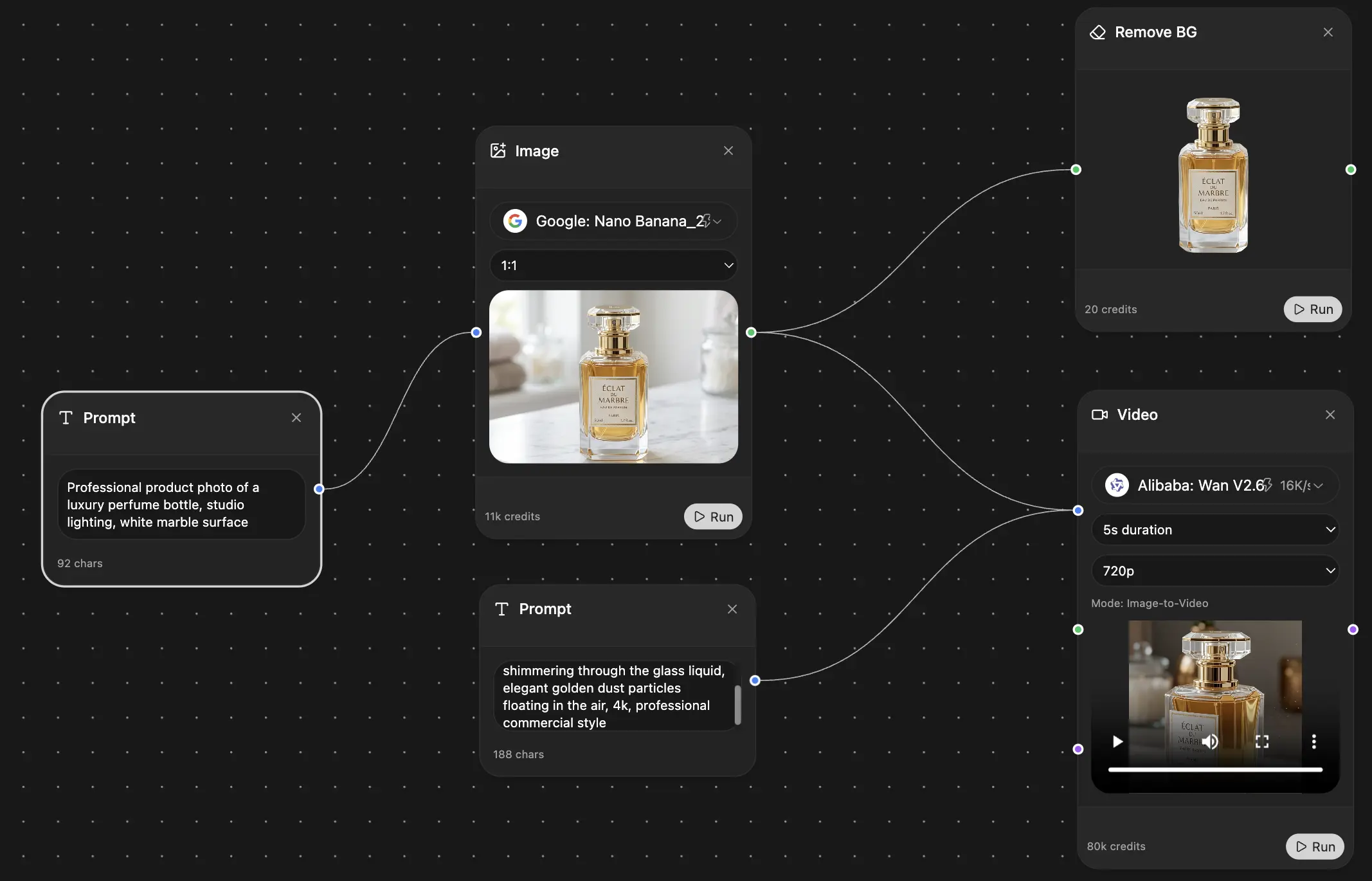
Chat, image, video & motion tools — side by side
Transparent, High-Value Pricing
Free
No credit card required
- Limited daily usage
- Selected AI models to try
- Limited features
Plus
- Choose from multiple leading models — GPT, Claude, Gemini and Grok.
- 25× more usage than Free.
- Create and edit images with Creative Studio.
- Connect your favorite apps and get work done in one place.
- Research the web and turn sources into clear answers.
- Turn documents, websites and YouTube into podcasts, flashcards and reports.
- Build repeatable workflows and stay focused with FocusOS.
Professional
- Everything in Plus, and:
- Unlock every model on Zemith, including GPT 6 Astra, Claude Opus and Sonar Pro.
- 50× more usage than Free.
- Create more with the full Creative Studio toolkit.
- Let agents work in the background — run Cloud tasks and schedule recurring work.
- Push further on complex work with Max Mode.
- First access to new features.
Trusted by teams at