Voice Chat AI: Your Guide to Talking with Tech in 2026
Curious about voice chat AI? Our guide explains how it works, its best use cases, and how tools like Zemith's AI Live Mode can boost your productivity.
You're probably doing one of these right now. Dictating a thought into your phone while walking. Trying to answer a message with one hand because the other is holding coffee, a backpack, or a chaotic grocery bag that's one apple away from disaster.
Typing is still useful. It's just not always the fastest way to think.
That's why voice chat AI feels different from the older “computer, set a timer” kind of voice tools. It's less about barking commands at a gadget and more about having a fluid back-and-forth with software that can follow what you mean. For a lot of people, that shift is the interesting part. Voice becomes an interface for research, writing, brainstorming, customer support, and everyday work, not just a novelty for asking about the weather.
Tired of Typing? Let's Talk About Voice Chat AI
You are halfway through a walk, a good idea shows up, and your hands are busy. In that moment, voice feels less like a novelty and more like the fastest path from thought to action.
With voice chat AI, you speak the way you would to a helpful collaborator. You can ask a rough question, add context, correct yourself, and keep going without opening three tabs or tapping out every sentence. That shift matters because it moves voice from simple commands into actual conversation.

A useful way to frame it is this: older voice tools worked like remote controls. You pressed the right verbal button and hoped the system recognized it. Voice chat AI works more like a live assistant that can keep track of context. If you say, “Turn that into an email,” it should know what “that” refers to. If you say, “Make it friendlier,” it should revise the same idea instead of starting over.
That makes voice AI interesting for more than quick consumer tasks. The same core technology behind assistants like Siri can now help with drafting, brainstorming, studying, support workflows, and creative work. You can even branch into audio production tasks, such as using tools that , which shows how fast voice interfaces are expanding beyond simple question-and-answer apps.
What people usually mean by voice chat AI
At a basic level, voice chat AI is software that lets you speak naturally, converts your speech into something the model can understand, and returns a response that fits the conversation. Sometimes the reply is spoken aloud. Sometimes it appears as text. Often it does both.
The important part is continuity. The system is not just hearing isolated words. It is trying to follow the thread of the exchange, including your intent, the earlier message, and the task you are working on.
Why the difference clicks so fast
A few everyday situations make the value obvious:
- During a commute: you talk through meeting notes and ask for a clean follow-up email draft.
- While cooking: you outline an article idea without touching a flour-covered keyboard.
- During study time: you ask for a simpler explanation, then have the AI quiz you on the topic.
For readers comparing products, this roundup of gives a practical sense of how these tools show up in real use.
The big idea is simple. Voice chat AI shrinks the gap between having a thought and doing something with it. That is why it feels different from old-school voice commands, and why platforms like Zemith matter. They package the underlying speech and language systems into one place you can use for work, not just demos.
How Your Words Become the AI's Voice
The easiest way to understand voice chat AI is to think of it as a relay race. Three runners touch the same conversation, very fast, often so fast you barely notice the handoffs.

Runner one hears you
The first runner is automatic speech recognition, usually shortened to ASR.
Its job is simple to describe and hard to do well. It listens to your audio and turns it into text. If you say, “Summarize this article and give me three questions to ask in a meeting,” ASR tries to capture those words accurately, even if you mumble a little or your dog decides this is the ideal time to become a background vocalist.
Runner two figures out what you mean
The second runner is the language model.
Once your speech becomes text, the model interprets intent, keeps track of context, and decides how to respond. This part matters because conversation isn't just about individual words. If you say, “Make that shorter,” the AI has to know what “that” refers to.
According to Quiq, a voice-chat AI system is typically built as a low-latency pipeline where ASR converts audio to text, a language model handles intent and response generation, and text-to-speech renders the reply. Quiq also notes that this setup reduces friction because the system can interpret natural language and maintain state across conversations, as described in its guide to .
Runner three speaks back
The final runner is text-to-speech, or TTS.
This takes the AI's response and turns it into audio. Good TTS sounds clear, natural, and appropriately paced. Bad TTS sounds like a GPS device from a timeline where joy was discontinued.
If you're curious how synthetic voice quality is produced on the audio side, tools that can be a useful hands-on reference because they show how text gets shaped into spoken output.
Practical rule: If a voice system feels awkward, the problem often isn't “AI” in general. It's usually one weak handoff in the pipeline.
Why low latency matters
A voice system can be smart and still feel bad to use.
If there's a long pause after every sentence, people stop talking naturally and start performing for the machine. They shorten their phrasing. They wait too long. They lose their train of thought. The whole interaction turns into a weird interview with a toaster.
That's why low latency is such a big deal. Good voice chat AI has to process speech, reason over it, and answer quickly enough that the exchange still feels conversational.
For readers who want a broader foundation before building or choosing tools, Zemith's explainer on does a nice job of placing voice inside the larger category of human-like software interaction.
More Than Just Asking for the Weather
The fastest way to underestimate voice chat AI is to compare it only to smart speakers.
Yes, you can ask a voice system for a joke. You can also use it to work through a dense PDF, outline a report, rehearse an interview, or turn a rough spoken idea into something publishable.
Productivity when your hands are busy and your brain is full
Voice is great at catching thoughts before they evaporate.
Say you've just left a meeting. Instead of typing fragmented notes into your phone, you can talk through what happened while the details are still fresh. “Pull out the decisions, list the open questions, and draft a follow-up.” That's a much more natural move than trying to thumb-type while crossing a parking lot and pretending you're coordinated.
Research that feels like discussion
A useful voice workflow isn't just “read this aloud to me.”
It's more like having a patient study partner. You can ask for a summary of a paper section, then follow with, “What assumption is doing the heavy lifting here?” or “Explain that sentence like I'm smart but tired.” That last prompt is stronger than it looks.
Writing without the blank page fight
A lot of writers think better out loud than on a blinking cursor.
Voice lets you draft in motion. You can ramble first, organize second. For first drafts, that's often a feature, not a bug. Spoken language tends to be more relaxed and less self-censoring, which is helpful when you need momentum more than perfection.
If that turns into audio-first content work, a workflow like shows how voice-driven creation can move beyond notes and into publishable media.
Why businesses care too
This isn't just a personal productivity trend. In customer service, conversational AI is becoming operational infrastructure. Zendesk says AI is expected to play a role in 100% of customer interactions in the future, and AI chatbots can handle up to 80% of routine questions, which shows how central these systems have become for enterprise support in Zendesk's roundup of .
That matters because voice uses the same foundation. If an organization already trusts conversational systems to handle routine text interactions, spoken interactions are the next obvious layer for support, intake, routing, and assistance.
- For teams: Voice can capture decisions, summarize calls, and reduce repetitive status updates.
- For solo creators: It can turn walks, commutes, and random bursts of inspiration into usable material.
- For researchers and students: It can make dense information feel discussable instead of static.
Choose Your Voice AI Adventure
People usually enter voice chat AI through one of three doors. None of them is universally right. The best choice depends on whether you want convenience, control, or a middle ground that doesn't require a weekend of API documentation and emotional resilience.
Path one for the plug and play crowd
This is the easiest entry point.
You open Siri, Google Assistant, or another consumer app and start talking. It's quick, familiar, and fine for reminders, simple questions, and basic hands-free tasks. The tradeoff is that these tools usually aren't built for deeper project context, specialized workflows, or custom logic.
Path two for the DIY builder
This path is for developers and technical teams.
You combine speech tools, models, and app logic into your own workflow. That can mean stitching together ASR, a model for reasoning, and TTS, or working with more integrated realtime capabilities. The upside is control. You can design the prompt flow, data handling, output format, and human handoff logic around your exact use case.
The downside is obvious. You own the setup, the testing, the debugging, the latency surprises, and every awkward edge case where the user says something messy like a real human.
Path three for the power user
This path is for people who want advanced AI features without building the stack themselves.
An all-in-one workspace can make more sense if your real goal is productivity, research, writing, or collaboration, not assembling infrastructure. In that category, Zemith is one example because it combines document work, research tools, projects, a library for organizing files and chats, and AI Live Mode in the same environment. That setup is useful when voice is only one part of a broader workflow rather than the whole product.
How to get started with voice chat AI
The smartest starting point is the one that matches your actual job. Don't build infrastructure if what you really need is faster note capture and better research flow.
A simple decision filter helps:
- Choose consumer apps if you mostly need reminders, quick lookups, or basic commands.
- Choose a custom build if your team needs structured outputs, specific integrations, or workflow control.
- Choose an integrated workspace if your work crosses notes, files, conversations, and collaboration.
Your Superpowered Workflow with Zemith AI Live Mode
A voice feature gets much more useful when it knows what you're working on.
That's the difference between asking a generic assistant a disconnected question and having a conversation inside a workspace that already contains your files, notes, and project context.

Take a researcher with two papers, a meeting tomorrow, and not enough patience for another tab explosion.
They upload their material into a project library. Then they start talking. “Summarize the methodology section from the first paper.” After that: “Compare it with the second paper and tell me where the assumptions conflict.” Then: “Turn that into five discussion questions for a lab meeting.”
Why this workflow feels different
The useful part isn't just that the AI talks back.
It's that the conversation stays tied to the material. Your questions can become iterative instead of isolated. You don't have to keep re-pasting excerpts or re-explaining what file matters. That cuts friction in a way text chat alone often doesn't, especially when you're thinking aloud.
For work-heavy use cases, that pattern is close to what many people want from an . Less “do a party trick.” More “help me move this project forward.”
Native realtime models change the feel
A lot of modern voice systems are shifting away from separate speech and text components toward more integrated realtime models.
OpenAI's voice mode, for example, uses natively multimodal models and offers nine distinct output voices. For subscribers, sessions start with GPT-4o and fall back to GPT-4o mini after daily GPT-4o limits are reached, according to OpenAI's . The practical takeaway is that model choice affects latency, turn-taking, and the natural feel of the conversation.
That matters inside a work platform because responsiveness changes how willing people are to use voice as part of their daily process. If the interaction is clunky, they fall back to typing. If it flows, voice becomes another serious input method.
Here's a quick look at how a live workflow can feel in practice:
A simple way to use it tomorrow
Try this with any project you already have:
- Upload one useful source. A PDF, draft, notes file, or meeting transcript.
- Ask for compression first. Get a summary before asking deeper questions.
- Use follow-ups out loud. Ask for contradictions, examples, objections, or next steps.
- Turn output into action. Have the AI convert the conversation into an outline, checklist, or email draft.
That's when voice stops being a novelty and starts acting like a working interface.
Is This Voice AI Any Good? A Checklist
You ask a voice AI to capture an idea while you are walking, then refine it once you are back at your desk. If it mishears a name, forgets your constraint, or takes too long to answer, the whole interaction stops feeling helpful. A good voice system is not just pleasant to listen to. It has to hold up under normal, messy use.

Start with whether it understands real humans
The first test is simple. Speak the way you speak.
That means your normal pace, your accent, your filler words, and a room that is not studio quiet. Voice AI often looks polished in demos because the audio is clean and the prompt is short. Real use is different. People interrupt themselves, change direction mid-sentence, and mention product names, file titles, or uncommon terms. A useful system handles that without falling apart.
Fairness matters here too. If a tool works well for one speaking style and struggles with another, the problem is not just annoyance. It limits who can rely on it for work.
Use this checklist
A strong voice AI usually gets the basics right across six areas:
- Speech recognition: Test background noise, faster speech, and words the model is unlikely to know in advance, such as names, jargon, or mixed-language phrases.
- Response speed: Ask a follow-up right after the answer begins. Good systems recover quickly and keep the flow of conversation intact.
- Memory across turns: Refer back to something you said earlier without repeating it. The model should keep enough context to stay coherent.
- Voice quality: Listen for rhythm, emphasis, and whether the voice stays comfortable over several minutes. One nice sentence proves very little.
- Data handling: Read how recordings, transcripts, and account data are stored or used. Clear documentation is a good sign. Vague language usually is not.
- Workflow fit: Check whether the tool can work with your files, notes, or projects. That is the difference between a fun demo and a daily interface.
One quick stress test reveals a lot. Ask the AI to summarize your request, then add a new constraint and ask for a revision. That checks listening, memory, and response control in under a minute.
Don't ignore audio quality tests
Synthetic speech quality deserves its own check because natural wording can still sound off when timing, tone, or emphasis is wrong. If you want a sharper ear for that, is a useful reference. It gives you examples that make the uncanny parts easier to notice.
It also helps to separate two layers that often get blurred together. One layer is hearing you correctly. The other is speaking back in a believable way. A voice assistant can be strong at one and weak at the other, which is why transcription quality still matters so much in practice. If you want a clearer picture of that input side, this guide to is a helpful companion.
For readers comparing consumer-style assistants with tools you might incorporate into a workflow, that is the essential checklist mindset. Do not ask only, "Does it sound impressive?" Ask, "Can I trust it to hear me, keep up with me, and turn speech into useful work?"
The Future Is Talkative and What To Do Next
Voice AI is heading toward something more interesting than prettier speech.
The frontier is context-sensitive interaction, not just fluency. Research is increasingly focused on voice presence and contextual awareness, along with the tradeoff between end-to-end speech models for natural interaction and text-based LLM setups for more reliable structured tasks, as discussed in Sesame's research on .
That's a useful lens for anyone building with this technology. Sometimes you want a free-flowing conversational experience. Sometimes you want stricter control because the task involves forms, checklists, or high-stakes data collection. Knowing the difference is part of becoming fluent in voice chat AI.
If you're planning to build a product around these ideas, it also helps to study how teams approach so you can map the voice layer to the actual job the app needs to do.
Voice is no longer just an accessory to software. In many workflows, it's becoming a first-class interface.
If you want to try that style of workflow in one place, gives you a practical way to combine voice conversations with documents, projects, research, writing, and creative tools inside a single workspace. If typing is slowing you down, start talking and see what your workflow feels like when the interface can keep up.
Explore os Recursos do Zemith
Toda IA top. Uma assinatura.
ChatGPT, Claude, Gemini, DeepSeek, Grok e 25+ mais








Sempre ativa, IA em tempo real.
Voz + compartilhamento de tela · respostas instantâneas
Qual é a melhor maneira de aprender um novo idioma?
Imersão e repetição espaçada funcionam melhor. Tente consumir mídia no seu idioma-alvo diariamente.
Voz + compartilhamento de tela · IA responde em tempo real
Geração de imagens
Flux, Nano Banana, Ideogram, Recraft + mais

Escreva na velocidade do pensamento.
Autocomplete IA, reescrita e expansão por comando
Qualquer documento. Qualquer formato.
PDF, URL ou YouTube → chat, quiz, podcast e mais
Criação de vídeo
Veo, Kling, MiniMax, Sora + mais

Texto para fala
Vozes IA naturais, 30+ idiomas
Geração de código
Escreva, depure e explique código
Chat com documentos
Faça upload de PDFs, analise conteúdo
Sua IA no bolso.
Acesso completo no iOS e Android · sincronizado em todo lugar
Sua tela infinita de IA.
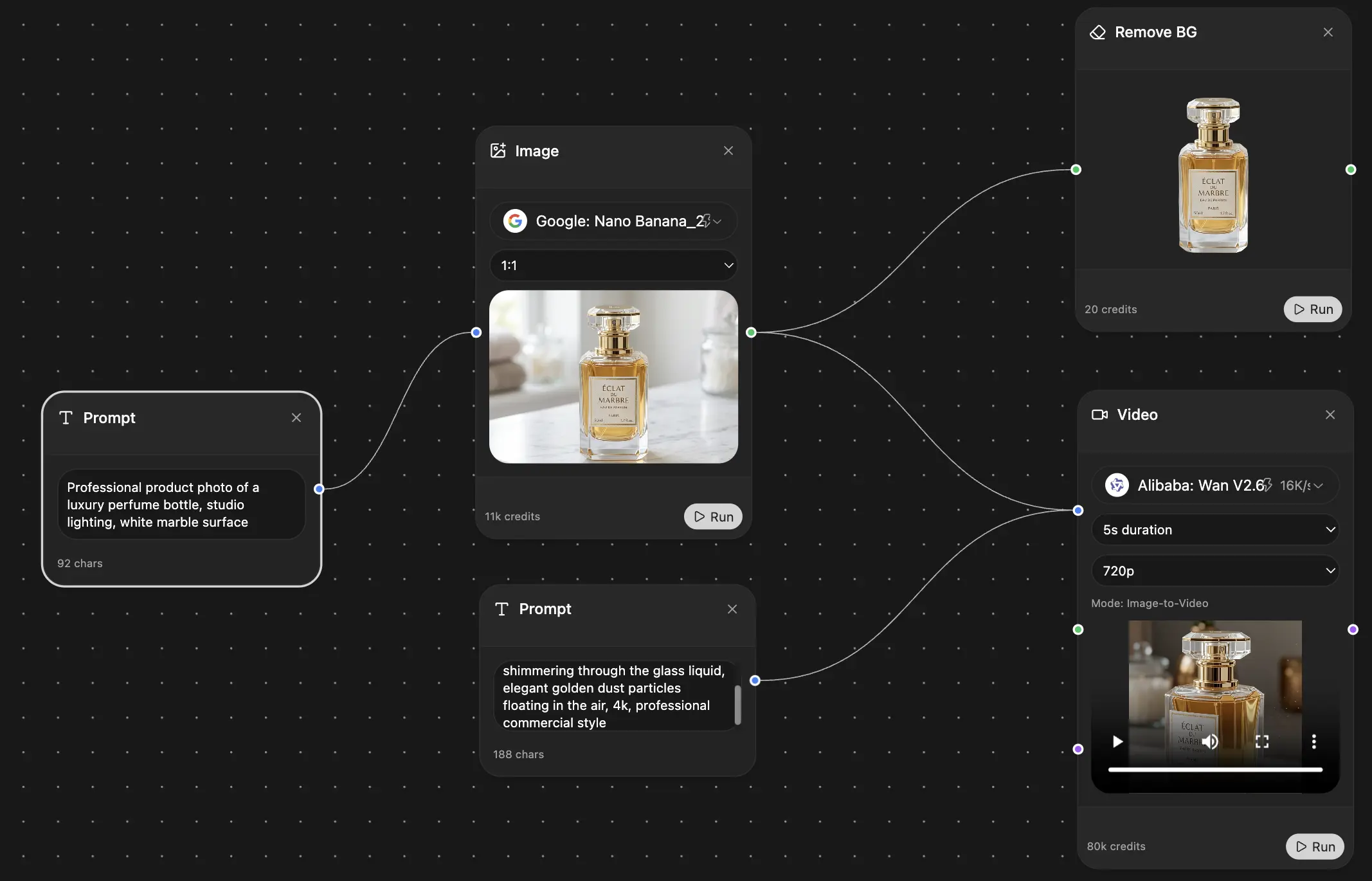
Chat, imagem, vídeo e ferramentas de movimento — lado a lado
Economize horas de trabalho e pesquisa
Preços diretos e acessíveis
Adotado por equipes na






Grátis
Sem necessidade de cartão de crédito
- 100 créditos diários
- 3 modelos de IA para experimentar
- Chat de IA básico
Plus
- 1.000.000 créditos/mês
- 25+ modelos de IA — GPT, Claude, Gemini, Grok e mais
- Agent Mode com busca na web, ferramentas de computador e mais
- Creative Studio: geração de imagens e vídeos
- Project Library: converse com documentos, sites e YouTube, geração de podcasts, flashcards, relatórios e mais
- Workflow Studio e FocusOS
Professional
- Tudo no Plus, e:
- 2.100.000 créditos/mês
- Modelos exclusivos Pro (Claude Opus, Grok 4, Sonar Pro)
- Motion Tools e Max Mode
- Primeiro acesso aos recursos mais recentes
- Acesso a ofertas adicionais
O Que Nossos Usuários Dizem
Great Tool after 2 months usage
"I love the way multiple tools they integrated in one platform. Going in the right direction."
— simplyzubair
Best in Kind!
"The quality of data and sheer speed of responses is outstanding. I use this app every day."
— barefootmedicine
Simply awesome
"The credit system is fair, models are perfect, and the discord is very responsive. Quite awesome."
— MarianZ
Great for Document Analysis
"Just works. Simple to use and great for working with documents. Money well spent."
— yerch82
Great AI site with accessible LLMs
"The organization of features is better than all the other sites — even better than ChatGPT."
— sumore
Excellent Tool
"It lives up to the all-in-one claim. All the necessary functions with a well-designed, easy UI."
— AlphaLeaf
Well-rounded platform with solid LLMs
"The team clearly puts their heart and soul into this platform. Really solid extra functionality."
— SlothMachine
Best AI tool I've ever used
"Updates made almost daily, feedback is incredibly fast. Just look at the changelogs — consistency."
— reu0691