Augmented Reality Chemistry: A Guide for 2026
Explore augmented reality chemistry! This guide explains what it is, how it works, and its impact on learning. See use cases, tools, and how to get started.
You're probably here because a student, a textbook, or your own brain has had the same chemistry meltdown.
You stare at a flat drawing of a molecule and think, “Yes, I see the lines. No, I do not feel enlightened.”
That's the everyday problem with chemistry. So much of it is three-dimensional, but we teach it on flat paper and flat screens. Then we act surprised when students mix up geometry, bonding, polarity, chirality, and half the periodic table's personality traits.
Augmented reality chemistry is one of the first tools I've used that makes this feel less like translation and more like seeing. When a student can hold up a phone or tablet and rotate a molecule over their desk, the jump from abstract symbol to physical understanding gets smaller. The molecule stops being a weird stick drawing and starts acting more like a tiny LEGO sculpture with rules.
And that matters whether you're teaching intro chem, building classroom demos, or tinkering with educational software on a Sunday because that's your idea of fun. No judgment. It's mine too.
Tired of Flat Chemistry Textbooks
A student once pointed at a textbook diagram of methane and asked me, “So is this flat, or is the book lying to me?”
Fair question. Chemistry textbooks do heroic work, but they ask beginners to perform mental gymnastics way too early. A wedge bond here, a dashed bond there, and suddenly students are expected to imagine a full 3D shape from a handful of symbols. Some can do it quickly. Many can't. That's not laziness. That's a visualization bottleneck.

When the model finally clicks
The shift happens fast when the molecule leaves the page.
A student scans a card, or opens an app, and suddenly a 3D structure appears on the desk. They walk around it. They rotate it. They look at bond angles from the side instead of guessing from a drawing. That little moment of “ohhh” is what teachers chase all semester.
Augmented reality chemistry works because it doesn't ask students to imagine the whole structure from scratch. It gives them a scaffold. They can still learn the symbolic language, but now they have something concrete to attach it to.
Why this feels different from another app
A lot of edtech promises magic and delivers extra login screens. AR can definitely become that if it's used badly. But when it's used for a real chemistry pain point, especially spatial concepts, it feels practical.
Think of molecular geometry, stereochemistry, crystal structures, ion arrangements, reaction pathways. These are not naturally flat ideas. Asking students to master them with only 2D diagrams is a bit like teaching someone to assemble furniture from a blueprint and never letting them touch the parts.
If you're teaching students who already feel intimidated by chemistry, pairing AR activities with strong study support can help. Something as simple as structured problem breakdowns, like the ideas in this guide to , can make the tech feel less flashy and more useful.
What Is Augmented Reality Chemistry Really
Augmented reality chemistry is digital chemistry content layered onto the physical environment through a phone, tablet, or headset. You're still looking at your desk, your lab bench, or your worksheet. AR adds the molecule, animation, label, or interaction on top of that actual scene.
I like to explain it as a magic camera filter for chemistry. Instead of turning you into a dog with floppy ears, it turns your desk into a molecular workspace. Science has come so far.
Two common ways it works
Most classroom AR chemistry experiences fall into two buckets.
Marker-based AR uses a trigger image. That could be a printed card, a worksheet icon, or a textbook page. When the camera recognizes the marker, it places a 3D model on top of it.
Markerless AR places objects directly into space without a printed trigger. You tap your screen and drop a molecule onto a desk or floor, then move around it.
Here's the practical difference:
- Marker-based AR is easier to control in class. Everyone scans the same image and gets the same result.
- Markerless AR feels more flexible and modern. It's great for exploration, but classroom setup can be a little messier.
- Marker-based systems are useful when you want students to connect a printed formula, structure, or lab sheet to a visual model.
- Markerless systems are handy when scale and placement matter, such as laying out multiple molecules across a table.
Why students understand more when they can move the model
The big win is spatial reasoning. Students stop treating structures like static drawings and start interacting with them as objects.
One study reported that after an AR intervention, students showed 22% higher accuracy in identifying functional groups and 35% better recall of stereochemistry in chiral molecules in .
AR helps when students can inspect shape, orientation, and relationship instead of decoding all of that from a flat sketch.
That's why augmented reality chemistry fits so well with contextual teaching. Students learn better when the representation connects to a meaningful task, not just a definition on a slide. That same idea shows up in broader teaching practice too, which is why pair naturally with AR activities.
A simple mental model
If this still feels fuzzy, use this classroom analogy:
A structural formula is the recipe card. An AR model is the actual dish rotating on the table.
Both matter. The card teaches notation. The rotating model teaches form. Chemistry students need both, especially when the shape affects the behavior.
From Virtual Titrations to Safer Labs
Augmented reality chemistry gets fun when it leaves the “look at this molecule” stage and starts doing work.

In the classroom, I don't think of AR as a single tool. I think of it as a format. You can use that format to teach structure, reactions, procedures, and safety. That's a much bigger deal than “students can spin caffeine around with their fingers,” although to be fair, that's also delightful.
A study of the ARLabs platform found that 70% of students viewed AR as a viable alternative to conventional methods for learning chemical compounds, and 53% strongly agreed that AR is more engaging than traditional lectures in . Those numbers tell me students aren't just tolerating the tool. They're buying into it.
Virtual titrations without the cleanup
A classic use case is the virtual lab.
A student points a tablet at a printed station card and sees a burette, flask, indicator, and guided steps layered over their physical workspace. They can practice the sequence, identify equipment, and get feedback before touching actual chemicals. That lowers stress for beginners and reduces the “I have no idea what I'm doing but I'm smiling so the instructor won't notice” phase.
It also means you can rehearse hazardous or resource-heavy procedures more safely. Virtual acid spills are excellent because they do not require mopping. Chemistry teachers everywhere may now exhale.
Molecule building as a group activity
AR also works well for collaborative structure work.
Give small groups a set of molecular markers or a shared tablet task. Ask them to assemble functional groups, compare isomers, or sort molecules by geometry. Instead of each student guessing from a diagram, they negotiate what they're seeing out loud. That classroom talk matters.
I've seen students explain polarity more clearly when they can point to the arrangement and say, “No, look, the shape makes the dipoles pull unevenly.” That beats a memorized sentence every time.
For teachers looking for classroom-ready tools before building their own, curated lists of can save a lot of trial and error.
Safety training that feels more real
Safety instruction is another strong fit.
You can create simulations for spill response, PPE checks, waste sorting, and hazard recognition. A trainee scans a location or sign and gets an overlay showing what to inspect or what decision to make next. That turns safety from a poster-reading exercise into a rehearsal.
If you're designing chemistry safety lessons, it also helps to pair AR scenarios with practical resources students or staff can use outside the simulation. For instance, if you're discussing airborne risk and exposure planning, a tool that helps teams can support the safety side of the lesson in a grounded way.
A quick visual example helps here:
Accessibility matters too
Not every school has a full lab. Not every student can attend in person. Not every institution can run every experiment they'd like to.
AR doesn't replace physical lab work, and I wouldn't want it to. But it does widen access. A student can inspect models at home, rehearse procedures before lab day, or repeat an activity without consuming materials. That makes augmented reality chemistry more than a novelty. It becomes a bridge.
The Pedagogical Magic Behind AR Chemistry
The reason AR works in chemistry isn't mysterious. It lines up with how people learn difficult, spatial ideas.
Chemistry constantly asks students to connect three different worlds. There's what they can see in the lab, what's happening at the particle level, and the symbols we use to represent both. Students often get stuck because those worlds don't automatically connect.
It links the visible and invisible
A strong AR lesson can show a beaker or apparatus in front of the learner while also overlaying ions, electrons, or molecular changes that normally stay invisible. That makes the hidden layer of chemistry easier to discuss.
A 2024 study on an AR redox reaction lab reported student knowledge scores rising from a pre-test average of 10.7% to 59.2% post-intervention, with attitudes toward chemistry also improving in . That's a strong reminder that the “coolness” of AR can support actual understanding when the lesson design is solid.
It turns passive viewing into active learning
Students remember more when they do something meaningful with content.
Rotating a molecule, selecting a reactive site, tracing electron movement, or assembling an ionic compound asks the learner to make decisions. That's active learning, not decorative technology. The body gets involved too. Hands, eyes, and movement all participate in the thinking process.
Practical rule: If students only watch the AR model, the lesson is weak. If they must manipulate, compare, predict, or explain, the lesson gets stronger.
That's why AR chemistry pairs nicely with broader . The tool matters less than the task.
It reduces one common beginner mistake
Beginners often memorize labels without understanding relationships.
They can recite “tetrahedral” but still not recognize why bond angles matter. They can define chirality but struggle to see why mirror images behave differently. AR nudges them toward relational thinking because the structure is present in space, not hidden in notation.
Here's the shortest version I can give as a chemistry professor who enjoys tiny floating molecules a little too much:
- Macroscopic level means what students can observe.
- Microscopic level means atoms, ions, and molecules doing their secret business.
- Symbolic level means formulas, equations, and diagrams.
- AR helps because it can place those levels close together in one experience.
That's the pedagogical magic. Not magic-magic. More like good instructional design wearing sci-fi glasses.
How to Build a Simple AR Chemistry Experience
If you've only used AR as a consumer, here's the fun part. You can build a basic chemistry experience without needing a giant team, a giant budget, or a giant caffeine dependency. Although caffeine still helps.

Start with one tiny learning goal
Most first AR projects fail because the creator tries to build the Marvel Cinematic Universe of chemistry.
Don't do that. Pick one learning objective that benefits from 3D interaction. Good starter ideas include molecular geometry, functional group identification, ionic bond formation, or a reaction mechanism checkpoint.
A useful test is this question: Does the concept become clearer when a learner can place, rotate, or compare it in space? If the answer is yes, AR is probably worth trying.
Use a four-step workflow
1. Plan the experience
Write a one-page brief.
Include the topic, the target learner, the device you'll use, the trigger method, and the one action the student must perform. Keep the action simple. Rotate the molecule. Tap the hydroxyl group. Match the model to the formula.
Hands-on learning often sticks because learners manipulate ideas, not just read them. If you want a broader classroom perspective on that principle, this piece on is a useful companion read.
2. Create or source the 3D model
You need a 3D asset for the molecule or lab object.
You can model in Blender, use chemistry visualization exports, or start with open educational assets if your use case allows it. Keep the visual style clear. Ball-and-stick models are often easiest for beginners. Space-filling models can be great later, but they can also turn “helpful” into “blob potato” very quickly if students are new.
3. Build the AR layer
Choose a framework based on your comfort level. Here's a quick comparison.
Choosing Your AR Development Toolkit
If you're an educator with limited coding experience, a browser-based prototype or Unity template is usually the gentlest starting point.
4. Add one interaction that matters
Interactivity is the whole game.
Don't stop at “display molecule.” Add a prompt or action. Let the student tap atoms for labels, reveal bond angles, compare isomers, or answer a short checkpoint before moving on. A tiny decision point can turn a neat demo into a real lesson.
A pseudo-code sketch
You do not need perfect production code to understand the logic. Here's a stripped-down example for a marker-based AR chemistry app:
when user_taps("oxygen_atom"): show_text("Oxygen is more electronegative than hydrogen")
when user_presses("quiz_button"): ask("What is the molecular shape of water?")
That's it. Notice what's happening. Detect a target. Load a model. Place it. Add interaction. Add feedback.
Keep the design boring in the best way
A chemistry AR app doesn't need fireworks.
Use readable labels. Limit floating buttons. Make atom colors consistent. If the student can't tell whether they're looking at a carbon or a shadow, the design is working against the lesson. Good educational AR often looks calm.
Build the smallest version that proves the learning idea. Fancy features can wait until version two.
For educators or student developers moving quickly, a rapid prototype can save weeks of wandering. This overview of fits this kind of project well because it pushes you to test the core interaction early instead of polishing the wrong thing.
The Hype Versus The Reality
I like augmented reality chemistry a lot. I also think it's easy to oversell.
Yes, AR can make molecular structure easier to grasp. Yes, it can support safer practice and more active lessons. But no, it is not an automatic upgrade just because a molecule floats above a desk like a tiny science ghost.
Where the hype gets ahead of the classroom
The first problem is access.
Not every student has a compatible device. Not every school has reliable bandwidth, current hardware, or the time to troubleshoot apps during a forty-minute class. If the technology setup eats the lesson, students remember the glitch, not the chemistry.
The second problem is weak pedagogy. Some AR content is all spectacle and no cognitive purpose. A spinning benzene ring with dramatic music is fun for about eleven seconds. After that, students need a task.
The evidence gap is still real
There's also a research issue worth taking seriously.
A 2024 review noted that AR for molecular visualization “still is not widely adopted” in part because educators often lack enough quantitative evidence on learning outcomes to justify investment over cheaper 2D tools, as described in .
That doesn't mean AR fails. It means schools and instructors want stronger proof before they commit time, money, and curriculum space. That's reasonable.
The better question to ask
Instead of asking “Is AR the future of chemistry education?” I think the smarter question is:
- Which chemistry topics benefit most from AR
- Which students need that support most
- Which classroom setups can sustain it
- Which AR activities outperform a good diagram, model kit, or simulation
That's a much healthier lens.
The future is probably a blend. Some concepts will still work best with whiteboards, kits, and paper problem sets. Some will shine in augmented reality chemistry. The job isn't to worship the shiny thing. The job is to match the tool to the learning problem.
Your First AR Chemistry Project
If you want to move from curious reader to creator, start embarrassingly small. That's not an insult. That's excellent design advice.
A perfect first project is this: create a marker-based AR card for H2O. When a student scans the card, a 3D water molecule appears. Let them rotate it, tap oxygen, and answer one question about shape or polarity.
That single project teaches almost everything you need:
- Trigger logic from the printed marker
- 3D model placement in real space
- Simple interaction through taps or buttons
- Learning feedback through one quiz prompt
If you want inspiration before building, look at classroom AR chemistry tools like MoleculAR or ARChem, then study developer communities around platforms such as Vuforia and Unity. You don't need to copy anyone exactly. You just need to observe what makes an experience usable.
It also helps to keep an eye on broader so your chemistry project fits the way students already learn across devices, not just inside a single novelty app.
The big takeaway is simple. Don't wait to build the perfect immersive lab. Build the tiny molecule that teaches one idea well.
If you're planning an AR chemistry lesson, researching tools, drafting app logic, or organizing notes for your first prototype, is a practical place to do it. You can keep your research, writing, brainstorming, and coding support in one workspace instead of bouncing between ten tabs and three half-finished documents.
探索 Zemith 功能
所有顶级AI。一个订阅。
ChatGPT、Claude、Gemini、DeepSeek、Grok 及25+模型







始终在线,实时AI。
语音 + 屏幕共享 · 即时回答
学习一门新语言的最佳方式是什么?
沉浸式学习和间隔重复效果最好。尝试每天消费目标语言的媒体内容。
语音 + 屏幕共享 · AI 实时回答
图像生成
Flux、Nano Banana、Ideogram、Recraft + 更多

以思维的速度书写。
AI自动补全、改写和按命令扩展
任何文档。任何格式。
PDF、URL或YouTube → 聊天、测验、播客等
视频创作
Veo、Kling、MiniMax、Sora + 更多

文字转语音
自然AI语音,30+语言
代码生成
编写、调试和解释代码
与文档对话
上传PDF,分析内容
口袋里的AI。
iOS和Android完整访问 · 随处同步
你的无限AI画布。
聊天、图像、视频和动态工具 — 并排展示
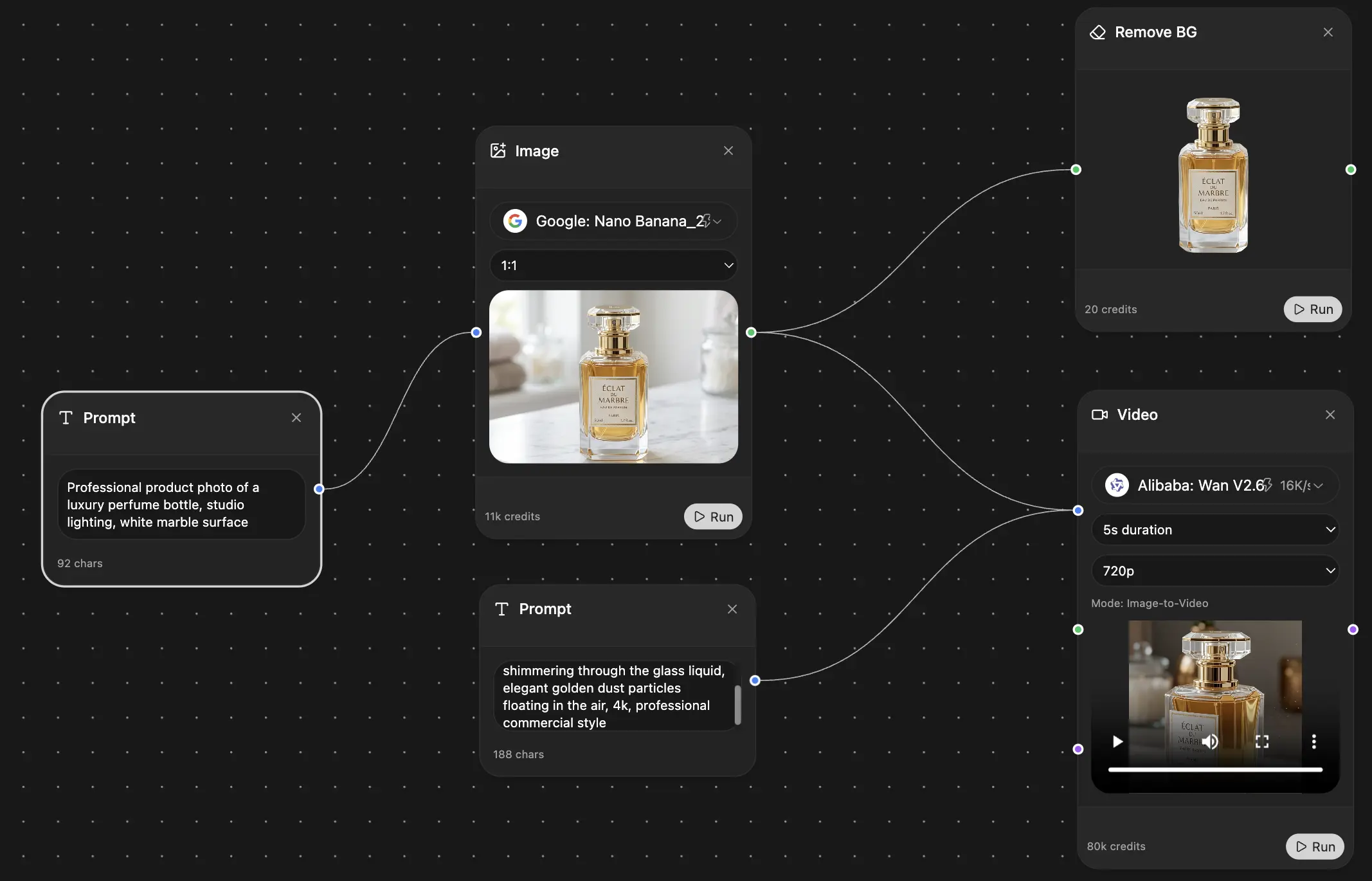
节省数小时的工作和研究时间
简单、经济实惠的定价
受信赖的企业团队






免费
无需信用卡
- 每日100积分
- 3个AI模型试用
- 基础AI聊天
增强版
- 1,000,000积分/月
- 25+个AI模型 — GPT、Claude、Gemini、Grok等
- Agent Mode:网页搜索、计算机工具等
- Creative Studio:图像生成和视频生成
- Project Library:与文档、网站和YouTube对话,播客生成、闪卡、报告等
- Workflow Studio和FocusOS
专业版
- 包含增强版所有功能,以及:
- 2,100,000积分/月
- Pro专属模型(Claude Opus、Grok 4、Sonar Pro)
- Motion Tools和Max Mode
- 优先使用最新功能
- 访问额外优惠
用户评价
Great Tool after 2 months usage
"I love the way multiple tools they integrated in one platform. Going in the right direction."
— simplyzubair
Best in Kind!
"The quality of data and sheer speed of responses is outstanding. I use this app every day."
— barefootmedicine
Simply awesome
"The credit system is fair, models are perfect, and the discord is very responsive. Quite awesome."
— MarianZ
Great for Document Analysis
"Just works. Simple to use and great for working with documents. Money well spent."
— yerch82
Great AI site with accessible LLMs
"The organization of features is better than all the other sites — even better than ChatGPT."
— sumore
Excellent Tool
"It lives up to the all-in-one claim. All the necessary functions with a well-designed, easy UI."
— AlphaLeaf
Well-rounded platform with solid LLMs
"The team clearly puts their heart and soul into this platform. Really solid extra functionality."
— SlothMachine
Best AI tool I've ever used
"Updates made almost daily, feedback is incredibly fast. Just look at the changelogs — consistency."
— reu0691