English to Cebuano: Master Natural Translation
Master English to Cebuano translation. Learn grammar, pronunciation, and use our AI workflow for natural phrasing. Get the 2026 guide.
You type a simple sentence into a translator. Something innocent like “Can you help me with this?” You hit copy, say it out loud, and get the kind of polite smile that means, “I appreciate the effort, but absolutely not.”
That's the English to Cebuano experience for a lot of people.
The annoying part is that the words often look close enough. The disaster happens in the flow. The sentence feels stiff, too direct, too literal, or just built in a way no one would naturally say. I've made that mistake myself, and yes, bad translator output has a special talent for making you sound like a robot who recently learned manners.
Cebuano deserves better than that. It's not some tiny local side language people can safely fake their way through. It's a major language used for daily life, work, travel, and real relationships. If you want your message to land well, dictionary lookups alone won't save you. You need a workflow.
Maayong Buntag Welcome to Real Cebuano Translation
A lot of people arrive at English to Cebuano translation with the same assumption. “I'll translate the words, keep the sentence, and I'm done.” Then reality walks in wearing slippers and says, “Nope.”
That's because Cebuano is far too important, and far too alive in daily use, for lazy word swapping. Cebuano is spoken by over 26 million people, representing more than 22% of the Philippine population, which makes it a major language for business, travel, and personal connection in the region, as noted in this .
If your goal is to:
- talk with family
- serve Cebuano-speaking customers
- translate a message for work
- travel without sounding painfully textbook
then “close enough” isn't close enough.
What usually goes wrong
Most translation tools are decent at grabbing surface meaning. They're much worse at handling:
- natural sentence shape
- social tone
- spoken rhythm
- context
That's why a translated sentence can be technically understandable and still feel off. It's the language version of wearing a suit to the beach. Nothing is broken, but everybody notices.
Practical rule: If a Cebuano sentence feels like English in disguise, it probably needs restructuring, not just better vocabulary.
I also think many learners use the wrong benchmark. They aim for “grammatically possible” when they should aim for “something a real person would say.” Those are not always the same thing.
For everyday translation work, I like borrowing a trick from broader digital translation habits. If you've ever had to quickly convert web content before cleaning up the language, this guide on shows the same basic lesson: machine translation is a starting point, not the finish line.
A better target
You don't need to become a linguist overnight. You just need a repeatable process:
- Figure out the meaning of the English line
- Reshape it into Cebuano-friendly structure
- Check how it sounds in actual speech
- Adjust tone based on who you're talking to
That's the difference between “translated” and “natural.”
Why Your Translation Sounds Weird The Grammar Shift
The biggest reason English to Cebuano translation goes sideways is grammar order. English usually likes Subject-Verb-Object. Cebuano often leans verb-first. So when you keep the English structure and just replace the words, you get something that may be understandable but oddly stiff.

A simple way to think about it: translating English straight into Cebuano is like building a Lego castle with IKEA instructions. You do have all the pieces. They're just being assembled in the wrong order.
Cebuano often uses a verb-first structure, and the essential skill is learning to rebuild the sentence around the action, not just replacing each English word one by one, as explained in this guide to .
English logic versus Cebuano logic
Look at the sentence:
- English: I eat rice.
A learner may try to mirror that exact structure in Cebuano. But natural Cebuano often wants the action up front:
- Cebuano pattern: Eat I rice.
That doesn't mean every sentence must be forced into one formula. It means the language often organizes information differently. English asks, “Who did it?” Cebuano often starts with, “What happened?”
That's why direct output from many tools sounds robotic. The machine found the words but missed the sentence logic.
The helper words people ignore
Cebuano also uses markers like ang, sa, and ug. These aren't decorative extras. They help signal roles in the sentence.
A beginner-friendly way to treat them:
You don't need to master every grammar label to use them better. You just need to notice that Cebuano uses these markers to organize meaning. English relies more heavily on word order. Cebuano gives more structural clues inside the sentence itself.
If you only translate vocabulary and ignore markers, your sentence may still stand up. It just won't walk naturally.
A practical fix for clunky output
When a translation sounds weird, don't ask, “Is this the right Cebuano word?” Ask these instead:
- What's the action? Put that first if the sentence wants it.
- Who or what is the focus? That affects the markers.
- Am I translating meaning or preserving English word order? Those are often competing goals.
If you want to see the same issue in another language pair, this breakdown of is useful because it shows how direct word swaps often fail once sentence structure changes.
That little shift in mindset saves a lot of grief. And a lot of awkward conversations.
Pronunciation Tips to Not Sound Like a Tourist
You can have a decent translation on screen and still lose the room the second you say it out loud. That's normal. Cebuano is friendly to learners in many ways, but pronunciation still matters because people are processing your speech in real time, not grading your effort.

Resources for Cebuano learners consistently stress that progress depends heavily on listening and speaking practice with conversational chunks, because text-only translation tends to fall apart in live dialogue, as discussed in this article on .
Rule one keeps your vowels clean
English speakers love turning vowels into little roller coasters. Cebuano usually wants cleaner, steadier vowel sounds.
Think:
- A as in “father”
- E as in “bet”
- I as in “machine”
- O as in “for” without the glide
- U as in “rule”
Don't over-English them. If you stretch or blend them too much, the word starts sounding foreign fast.
Rule two watch the stop in your throat
A lot of learners miss the glottal stop. That tiny catch in the throat can affect how natural a word sounds. It's one of those things native speakers do without announcing it like a grammar teacher with a whistle.
If you've ever said “uh-oh,” you already know the motion. Cebuano uses that kind of stop more than many English speakers expect. You may not nail it immediately, but hearing it and trying it will help a lot.
Rule three memorize chunks not isolated words
Single-word pronunciation drills help, but conversation runs on chunks. Learn phrases as one unit:
- Maayong buntag
- Salamat
- Wala ko kasabot
- Pwede palihog
That's far more useful than memorizing random nouns like a confused parrot with a phrasebook.
For speaking practice, voice-based tools can help you hear and repeat phrases in a more realistic rhythm. This post on using a isn't about Cebuano specifically, but the same lesson applies. Spoken language needs listening loops, not just text boxes.
Here's a quick listening aid before you practice aloud:
A tiny habit that works
Read one short Cebuano phrase aloud three times:
- slowly
- at natural speed
- as if you're saying it to an actual person
That third version is the one people forget. It's also the one that matters most.
High-Value Cebuano Phrases You Will Actually Use
Most phrase lists are packed with things no normal person says. You don't need “The horse is near the library.” You need “I don't understand,” “How much is this?” and “Please help me find the bathroom before this becomes a personal crisis.”
So let's keep this practical.
Everyday essentials
These are the phrases that do the heavy lifting in ordinary conversation.
A tip on salamat. It's already good on its own. You don't need to overbuild it every time. Save daghang salamat kaayo for moments when you want extra warmth.
Travel and navigation lines
Travel Cebuano isn't about sounding poetic. It's about getting where you need to go with minimal confusion.
Workplace and polite communication
A lot of English to Cebuano requests happen at work. Team chats, customer service replies, scheduling notes, simple instructions. In such contexts, tone matters a lot.
Quick habit: Build your own mini phrase bank from your actual life. Five lines you really use beat fifty lines you'll forget by lunch.
Don't memorize blindly
When you collect phrases, group them by situation:
- greetings
- money
- directions
- food
- work
- emergencies
And if you're using AI tools to help build those lists, this guide on has a useful parallel idea: keep refining phrases by context, not just by dictionary meaning.
That's how phrase study becomes usable instead of decorative.
Common Mistranslations and Cultural Gaffes to Avoid
Literal translation causes trouble. Cultural assumptions cause even more.
The biggest trap is thinking that if every word is “correct,” the sentence is safe. It isn't. Some lines sound too blunt. Some sound oddly formal. Some carry emotional weight you didn't intend. And some are just plain funny in the wrong way.

Words can be correct and still wrong
Take direct emotional statements. English often tolerates blunt phrasing more easily than Cebuano conversation does in some contexts. A machine may give you a line that's technically formed but socially too heavy.
Another classic problem is overusing direct question patterns. English speakers often ask things head-on:
- Why did you do that?
- What are you doing?
- Where are you going?
In Cebuano, depending on tone and relationship, a softer phrasing can sound more natural and more respectful.
Technical language gets risky fast
This gets even trickier in professional content. If you're translating IT instructions, engineering notes, or science-related material, literal output can preserve the words while losing the practical meaning.
Professional Cebuano translation guidance stresses that technical fields such as IT and engineering need subject-matter experts who preserve precision and cultural meaning, rather than relying on literal word conversion alone, as explained by this overview of .
That matters because technical language isn't just vocabulary. It's usage. A term that looks fine on paper can still confuse the reader if it doesn't match how people in that field communicate.
Some of the worst translation mistakes happen in sentences that are “almost right.” They slip past your eyes and fail in real conversation.
A short caution list
Watch for these habits:
- Over-literal affection: English phrases like “I love you” don't always map casually.
- Over-direct questions: A sentence can sound more confrontational than you intended.
- Dictionary obsession: One-word equivalence often misses tone and setting.
- False confidence with jargon: A technical term may need human review, even if the AI output looks polished.
One reason bad translation feels so sneaky is that it often reads fine to the person who wrote the original English. The problem only shows up when a Cebuano speaker hears the sentence and thinks, “No one says it like that.”
A Modern Workflow for Flawless English to Cebuano Translation
If you're still bouncing between one translator tab, one notes app, one dictionary, and one panic spiral, there's a better way.
Basic online translators are quick, but they often come with character limits, including free tiers that cap at 5,000 characters, and they usually don't include the editing and proofreading environment you need for larger or more complex text, as shown on .

The fix isn't “find one magical translator.” It's building a workflow that helps you draft, compare, refine, and verify.
Step one draft more than one version
Start with your English sentence and make it cleaner before translating. Remove fluff. Break long sentences into shorter ones. Clarify who is doing what.
Then generate more than one Cebuano draft if your tool allows it. Different outputs reveal different possibilities:
- one may be more literal
- one may sound more natural
- one may preserve tone better
An all-in-one workspace provides a solution. Zemith combines multi-model AI access, a Smart Notepad for rewriting, document chat, flashcard creation, and audio-based interaction in one place, which makes it practical for translation workflows where you want drafting and revision in the same environment.
Step two ask for restructuring not just translation
This is the move commonly skipped.
Don't just prompt:
- translate this into Cebuano
Also prompt:
- make this sound natural in everyday Cebuano
- check if the sentence should be verb-first
- rewrite this for a polite customer-service tone
- simplify this for spoken conversation
That changes the output dramatically because you're asking the AI to solve the actual problem, not just swap vocabulary.
Step three verify against context
If you're translating:
- a work message
- support instructions
- lesson content
- technical material
check whether the sentence fits the situation. Uploading notes, style guides, or your own phrase bank into one workspace helps keep your wording consistent.
A good comparison point is this article on , which highlights a similar truth: quality translation comes from revision decisions, not from the first draft.
Workflow rule: First draft for meaning. Second draft for naturalness. Third pass for context.
Step four turn finished output into practice material
Once you've got a solid Cebuano version, don't just send it and forget it. Save the useful lines.
Turn them into:
- flashcards
- a reusable phrase bank
- practice dialogues
- audio repetition drills
That way your translation work compounds. Each task builds your personal Cebuano library instead of disappearing into your clipboard history like every other internet mistake.
This workflow is much less glamorous than “paste and pray,” but it works better.
Beyond This Guide Resources for Deeper Learning
If you want your English to Cebuano skills to stick, you need regular contact with the language in more than one form. Not just reading. Not just translation. You want a mix of input, output, correction, and repetition.
What to keep using
A practical learning stack looks like this:
- A reliable phrase notebook: Save sentences you've needed, not random vocabulary.
- Native-speaker audio: Use YouTube lessons, interviews, or conversation clips so your ears adjust to pace and rhythm.
- Conversation practice: Language exchange communities help you test whether your sentences sound natural.
- Domain-specific vocabulary lists: If you work in customer support, education, health, or tech, build your own glossary by topic.
Study in a way you'll actually continue
The best plan is the one you won't abandon after three enthusiastic days. Short daily review usually beats dramatic weekend cramming.
If you're a student or you teach language learners, these are useful because they focus on building repeatable study systems rather than relying on motivation alone.
One smart long-term habit
Create a “natural Cebuano” folder with:
- corrected translations
- useful phrases
- pronunciation notes
- examples of awkward wording you fixed
That last one matters. Your mistakes are excellent teachers. Occasionally rude, but excellent.
And if you're doing deeper work such as lesson planning, business communication, or research-heavy language study, using an AI workspace that can organize notes, compare drafts, and chat with uploaded references makes the process much easier than scattering everything across tabs.
If you want one place to draft, refine, organize, and practice your English to Cebuano translations, is worth trying. It's especially useful when you need more than raw translation output and want a repeatable workflow for clearer, more natural communication.
探索 Zemith 功能
所有顶级AI。一个订阅。
ChatGPT、Claude、Gemini、DeepSeek、Grok 及25+模型








始终在线,实时AI。
语音 + 屏幕共享 · 即时回答
学习一门新语言的最佳方式是什么?
沉浸式学习和间隔重复效果最好。尝试每天消费目标语言的媒体内容。
语音 + 屏幕共享 · AI 实时回答
图像生成
Flux、Nano Banana、Ideogram、Recraft + 更多

以思维的速度书写。
AI自动补全、改写和按命令扩展
任何文档。任何格式。
PDF、URL或YouTube → 聊天、测验、播客等
视频创作
Veo、Kling、MiniMax、Sora + 更多

文字转语音
自然AI语音,30+语言
代码生成
编写、调试和解释代码
与文档对话
上传PDF,分析内容
口袋里的AI。
iOS和Android完整访问 · 随处同步
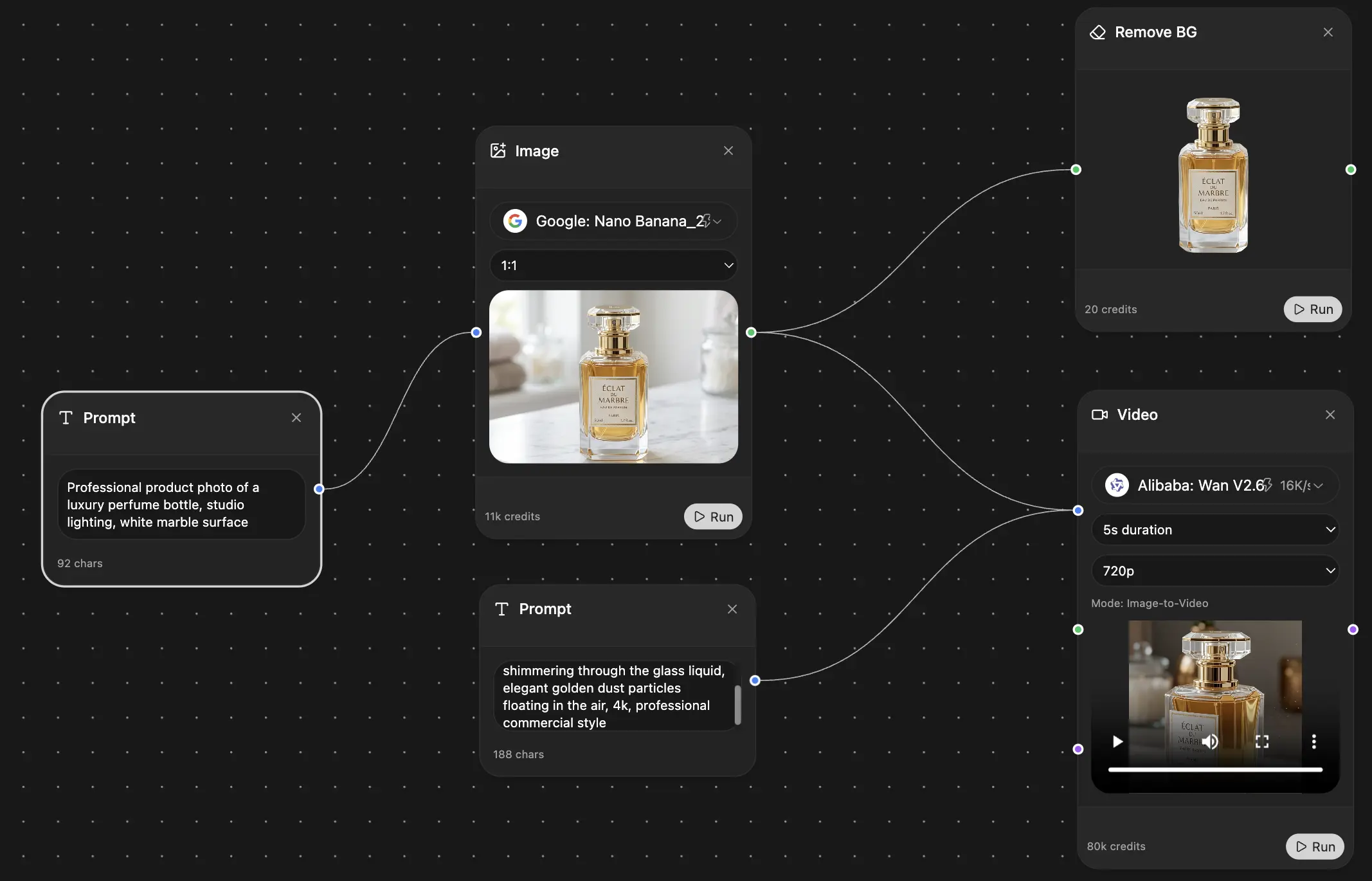
你的无限AI画布。
聊天、图像、视频和动态工具 — 并排展示
节省数小时的工作和研究时间
简单、经济实惠的定价
受信赖的企业团队






免费
无需信用卡
- 每日100积分
- 3个AI模型试用
- 基础AI聊天
增强版
- 1,000,000积分/月
- 25+个AI模型 — GPT、Claude、Gemini、Grok等
- Agent Mode:网页搜索、计算机工具等
- Creative Studio:图像生成和视频生成
- Project Library:与文档、网站和YouTube对话,播客生成、闪卡、报告等
- Workflow Studio和FocusOS
专业版
- 包含增强版所有功能,以及:
- 2,100,000积分/月
- Pro专属模型(Claude Opus、Grok 4、Sonar Pro)
- Motion Tools和Max Mode
- 优先使用最新功能
- 访问额外优惠
用户评价
Great Tool after 2 months usage
"I love the way multiple tools they integrated in one platform. Going in the right direction."
— simplyzubair
Best in Kind!
"The quality of data and sheer speed of responses is outstanding. I use this app every day."
— barefootmedicine
Simply awesome
"The credit system is fair, models are perfect, and the discord is very responsive. Quite awesome."
— MarianZ
Great for Document Analysis
"Just works. Simple to use and great for working with documents. Money well spent."
— yerch82
Great AI site with accessible LLMs
"The organization of features is better than all the other sites — even better than ChatGPT."
— sumore
Excellent Tool
"It lives up to the all-in-one claim. All the necessary functions with a well-designed, easy UI."
— AlphaLeaf
Well-rounded platform with solid LLMs
"The team clearly puts their heart and soul into this platform. Really solid extra functionality."
— SlothMachine
Best AI tool I've ever used
"Updates made almost daily, feedback is incredibly fast. Just look at the changelogs — consistency."
— reu0691