AI Reverse Acronym Builder: Craft Clever Backronyms
Unlock creative names! Use an AI reverse acronym builder to craft memorable backronyms. Get prompts, tips, and a full Zemith workflow.
You’ve probably done this dance before. The project is real, the deadline is rude, and the team chat has reached the naming phase where someone suggests “Project Nova,” someone else says “Synergy,” and one brave soul types “what about just calling it v2.”
That’s when a reverse acronym builder stops being a novelty and starts acting like a creative escape hatch.
A good backronym gives you a name that feels memorable first, then meaningful second. It’s a practical trick for naming products, internal teams, research initiatives, side projects, content series, and the occasional top-secret spreadsheet nobody is allowed to rename without committee approval.
What on Earth is a Reverse Acronym
A reverse acronym is the opposite of the usual acronym workflow.
Normally, you start with a phrase and shorten it into initials. With a reverse acronym builder, you start with the word you want, then build a phrase to match it. So instead of shrinking language, you’re reverse-engineering meaning into it.
That process is also called a backronym. The term itself is a portmanteau of “back” and “acronym” and appeared by 1983, according to the .

Why people use them
Because names have jobs to do.
A strong backronym can help a name feel:
- Memorable because it’s a real word people can say
- Intentional because the expansion signals purpose
- Shareable because teams can repeat it without sounding like they swallowed a legal brief
- Branded because it gives even an internal project a bit of identity
“EPIC” is easier to remember than “Experimental Platform Initiative for Coordination.” The trick is making the expanded phrase feel like it belongs to the word, not like it was dragged behind a bus.
A bad backronym looks clever on a slide and awkward in a sentence. A good one survives both.
A real example of the idea in action
One of the best modern examples is the U.S. Securities and Exchange Commission’s 2024 relaunch of EDGAR under the backronym “Everyone Deserves a Game Above Reproach.” That’s a clean illustration of why people use backronyms in the first place. The name keeps a recognizable label while shifting the meaning toward ethics and trust.
That is the core appeal. A reverse acronym builder doesn’t just generate words. It helps you attach a story to a name that already sounds right.
What works and what flops
The good ones usually have three qualities:
The word is easy to pronounce If people hesitate before saying it out loud, the spell breaks.
The phrase matches the context A cybersecurity tool shouldn’t expand into language that sounds like a wellness retreat.
The expansion sounds natural If one word exists only because you needed an “R,” people can tell.
What fails? Forced fillers, weird grammar, and trying too hard to be profound. “Integrated Neural Dynamic Optimization Workflow” might look fancy. It also sounds like a printer manual.
If you already like this kind of naming logic, this related guide on a is a useful companion because the same memorability principles apply.
Prompting AI for Unforgettable Backronyms
The difference between bland output and surprisingly usable output usually comes down to prompt quality.
If you type “make acronym for WAVE,” you’ll get a pile of vaguely inspirational mush. If you specify audience, tone, constraints, and domain language, the model starts acting less like a random slogan machine and more like a naming assistant.
What to tell the model
A reverse acronym builder works best when you give it guardrails.
Include these inputs:
The target word Example: SPARK, ATLAS, NEXUS
The domain Software, biotech, education, research, sales enablement, internal ops
The audience Investors, engineers, grant reviewers, customers, students
The tone Serious, witty, technical, punchy, optimistic, academic
Your rejection criteria No jargon, no cheesy words, no military tone, no forced grammar
The output format Ask for multiple options, short rationale, and ranked picks
That last one matters. If you don’t ask for options, the model tends to overcommit to its first decent idea.
Prompt patterns that get better results
Here’s a table I use when I want the AI to stop freelancing and start helping.
A valuable step often missed
Tell the AI what not to do.
That single move wipes out a lot of fluff. For example:
- Avoid motivational clichés
- Don’t use “solution,” “platform,” or “framework” unless necessary
- No awkward articles or prepositions just to make the letters fit
- Prefer active, concrete words over vague abstract nouns
You’re not only steering the model toward style. You’re stopping the common failure modes before they appear.
Practical rule: prompt for rejection as aggressively as you prompt for creation.
Compare styles across models
Different models tend to produce different kinds of naming output. Some lean polished. Some lean weirdly literal. Some are great at domain language but clunky at rhythm.
That’s why it helps to test the same prompt in more than one model and compare:
- one model for creative spread
- another for clean phrasing
- a third for technical relevance
If you want to sharpen that skill, this explainer on is worth reading. Good prompting isn’t magic. It’s structured direction.
A copy-paste prompt that usually behaves
Use this when you need a reliable first batch:
Generate 25 backronyms for the word “VECTOR” for an AI product aimed at research teams. Tone should be smart, modern, and credible. Avoid generic startup language, forced grammar, and empty buzzwords. Use terminology relevant to analysis, workflow, discovery, or modeling. Rank the 10 strongest options and explain briefly why each works.
That kind of prompt gives you range without giving the model enough freedom to wander into nonsense. Which, to be fair, AI loves almost as much as naming committees do.
Let AI Do the Heavy Lifting Generate Ideas in Bulk
Single-shot naming is overrated.
If you ask for one backronym at a time, you’ll spend most of your session reacting to output instead of exploring the naming space. The better move is bulk generation. Create a wide field, then cut ruthlessly.

That’s where AI becomes a real naming partner. By leveraging AI, creative ideation time for tasks like naming can be cut by as much as 90%, and adoption of AI productivity tools surged 300% from 2020-2025, driven by fast generation of large numbers of creative options, according to .
Why bulk beats browsing
A reverse acronym builder gets more useful when you treat it like a batch engine, not a slot machine.
Bulk generation helps because:
You spot patterns faster After 30 options, you can see which words keep sounding flat.
You uncover odd winners The tenth-best-looking idea often sparks the best final name.
You edit with taste, not panic A long list changes the mood. You stop clinging to mediocre options.
This matters more than people think. Naming gets easier once you’re choosing, not begging.
A simple bulk workflow that works
Use one running document or workspace and repeat this loop:
Pick one word target Example: BRIDGE
Ask for 30 to 50 expansions Split by tone if needed. Professional, technical, playful, and minimal.
Tag obvious keepers fast Don’t overthink. Mark anything with decent rhythm or strong meaning.
Issue a second prompt based on the survivors “Generate 20 more options in the style of 4, 9, and 14, but more concise.”
Create variants around promising word clusters If “Bridge for Research Intelligence and Data Governance Ecosystem” is close but bloated, ask for tighter versions using “research,” “integration,” and “governance.”
This is also a good moment to browse curated resources that track broader , especially if you’re comparing creative workflows across writing and naming tools rather than using a standalone generator.
Don’t stop at one batch
Many quit too early.
The first batch gives you the obvious outputs. The second and third batches get more interesting because now you can steer the AI using examples from its own responses. That recursive loop is where the quality jump happens.
Here’s a useful visual walkthrough before you run another round:
What to ask for in bulk
Try rotating these batch prompts:
Constraint batch Generate options with no filler words and no word longer than three syllables.
Audience batch Give me 20 options for enterprise buyers and 20 for technical users.
Style batch Create one set that sounds sleek and one set that sounds institutional.
Semantic batch Build around themes of trust, speed, research, automation, or clarity.
If you work in content, branding, or product writing, this article on connects nicely with the same “generate wide, refine hard” mindset.
The core lesson is simple. Don’t ask the AI for the answer. Ask it for the field of possibilities.
From AI Gibberish to Genius Sifting and Refining Your List
Raw output is not the finish line. It’s compost.
The reverse acronym builder gives you material. Your job is to turn that material into something a human being would use, say, remember, and defend in a meeting without sounding apologetic.

Start ugly and stay unfiltered for a minute
Early judgment kills good naming.
Expert methodologies for backronyms used in settings like research proposals show that starting with unfiltered brainstorming and then applying a mind map boosts the creation of natural-sounding options by 2.5x compared to judging ideas too early, according to .
That tracks with practice. If you reject ideas too soon, you miss hybrids. Sometimes option 7 has the right verb, option 19 has the right noun, and option 31 has the right overall mood.
The Three Ms test
When I’m sorting a list, I use three filters.
Memorability
Can someone recall it after hearing it once?
Short, pronounceable, image-rich words usually win here. Clunky strings don’t. If the expansion is decent but the base word is forgettable, that’s a problem you can’t patch with clever phrasing.
Meaning
Does the phrase fit the project?
Here, many AI-generated backronyms collapse. They sound polished but don’t reflect the product, team, or initiative. If the name implies one thing and the work does another, confusion arrives early and stays late.
Melody
Say it out loud.
If it sounds stiff, overpacked, or grammatically suspicious, cut it. The best backronyms have rhythm. They don’t feel assembled under duress.
Say the full expansion in one breath. If you naturally want to edit it while speaking, it isn’t ready.
A practical scoring sheet
You don’t need a giant workshop. A quick scorecard helps.
You can also mark candidates with lightweight labels:
- Keep if the structure works now
- Remix if one or two words need replacing
- Kill if it feels forced, generic, or tonally wrong
Mind maps beat linear lists
A plain list hides possibilities. A mind map reveals them.
Put the target word in the center, then branch related nouns, verbs, technical terms, benefits, and emotional cues. That lets you combine AI output with your own judgment instead of treating the generated list like sacred text.
For example, if your target is “LIFT,” one branch might hold action words, another might hold outcomes, and another might hold audience language. Suddenly you’re not choosing between complete options. You’re assembling better ones.
If you want better prompts for this review stage, this roundup of is useful because evaluation prompts are just as valuable as generation prompts.
What usually gets cut
The duds tend to fall into familiar buckets:
- Forced articles like “A,” “An,” or “The” jammed in to rescue a letter
- Corporate filler that says everything and nothing
- Over-technical wording that reads like a compliance manual
- Too-cute phrases that age badly by next Tuesday
A good final name often comes from editing, not selecting. That’s the hidden move. You don’t need the AI to hand you perfection. You need it to give you enough decent material to recognize it.
Next-Level Backronyms for Niche Projects
Generic backronyms are fine for brainstorming. They’re weak for serious work.
If you’re naming a developer tool, a research initiative, a consulting framework, or a customer-facing product, the reverse acronym builder needs context. Otherwise you’ll get broad, floaty expansions that sound like they belong to every category and therefore to none of them.

Feed the niche before you ask for names
Specialized naming gets better when the AI sees specialized material first.
For a niche project, give it inputs like:
- A product brief with audience, pain points, and positioning
- A proposal abstract for a grant or academic initiative
- Technical docs so the wording reflects the actual field
- Existing brand language to keep tone consistent
That changes the outputs fast. A reverse acronym builder for software naming should know whether you’re building around observability, agent workflows, retrieval, inference, or developer tooling. If it doesn’t, you’ll get “platform synergy” soup.
Industry-specific backronyms feel less fake
Naming quality isn’t just about sounding clever. It’s about sounding native to the field.
A few examples of what “native” looks like:
- For developer tools, words like runtime, orchestration, testing, inference, pipeline, schema
- For research projects, terms like methodology, analysis, collaborative, translational, evidence
- For marketing operations, language around attribution, engagement, lifecycle, segmentation, activation
The more domain-appropriate the vocabulary, the less the acronym feels reverse-engineered.
Naming instinct: if the phrase could fit a fintech app, a meditation course, and a data warehouse equally well, it’s too generic.
Don’t skip the safety pass
This is the part most generator tools barely touch, and it’s a real risk.
A major gap in most reverse acronym builder tools is the failure to address trademark safety. There were over 500,000 active trademarks in key business classes in the US alone as of 2025, and 15% involved acronyms, which makes collision risk significant, according to .
That doesn’t mean every clever name is taken. It means you should stop treating creative generation as the final step.
Your shortlist should get a basic safety review for:
- Trademark conflicts
- Existing company names
- Negative meanings in other contexts
- Confusing overlap with close competitors
- Social handle and domain availability
This first-pass idea development pairs nicely with a broader system for , especially if you’re moving from messy concepting into names that need to survive public use.
A practical niche workflow
For high-stakes naming, this sequence works well:
- Gather source material.
- Generate domain-specific expansions.
- Filter for naturalness and strategic fit.
- Rewrite the top few by hand.
- Run a basic availability and trademark screen.
- Test the finalists with real stakeholders.
That last step is underrated. A name can be semantically perfect and still land flat with the people who have to use it every day.
Your New Naming Superpower
A reverse acronym builder is easy to underestimate.
On the surface, it looks like a clever little naming gadget. In practice, it’s a serious workflow for turning a vague project into something people can remember, repeat, and rally around. The win isn’t just getting a catchy word. The win is getting a name that fits the work, sounds natural, and survives contact with actual humans.
That only happens when you treat naming as a process instead of a lightning strike.
Generate in bulk. Prompt with constraints. Refine with taste. Use domain language when the project is niche. Do a safety check before anybody gets emotionally attached to a name that belongs to someone else’s legal department.
That’s the whole game.
A lot of naming frustration comes from trying to be brilliant too early. Don’t. Start wide, get messy, edit hard, and let the best option earn its place. The AI can give you velocity. Your judgment gives the final name its spine.
And yes, this means you can finally retire “Project Phoenix” unless the thing is on fire and rising from ashes.
If you want one workspace that can handle the full backronym process, from prompting and bulk generation to refinement, research, and creative iteration, try . It’s a smart setup for turning naming chaos into a repeatable system.
探索 Zemith 功能
所有顶级AI。一个订阅。
ChatGPT、Claude、Gemini、DeepSeek、Grok 及25+模型








始终在线,实时AI。
语音 + 屏幕共享 · 即时回答
学习一门新语言的最佳方式是什么?
沉浸式学习和间隔重复效果最好。尝试每天消费目标语言的媒体内容。
语音 + 屏幕共享 · AI 实时回答
图像生成
Flux、Nano Banana、Ideogram、Recraft + 更多

以思维的速度书写。
AI自动补全、改写和按命令扩展
任何文档。任何格式。
PDF、URL或YouTube → 聊天、测验、播客等
视频创作
Veo、Kling、MiniMax、Sora + 更多

文字转语音
自然AI语音,30+语言
代码生成
编写、调试和解释代码
与文档对话
上传PDF,分析内容
口袋里的AI。
iOS和Android完整访问 · 随处同步
你的无限AI画布。
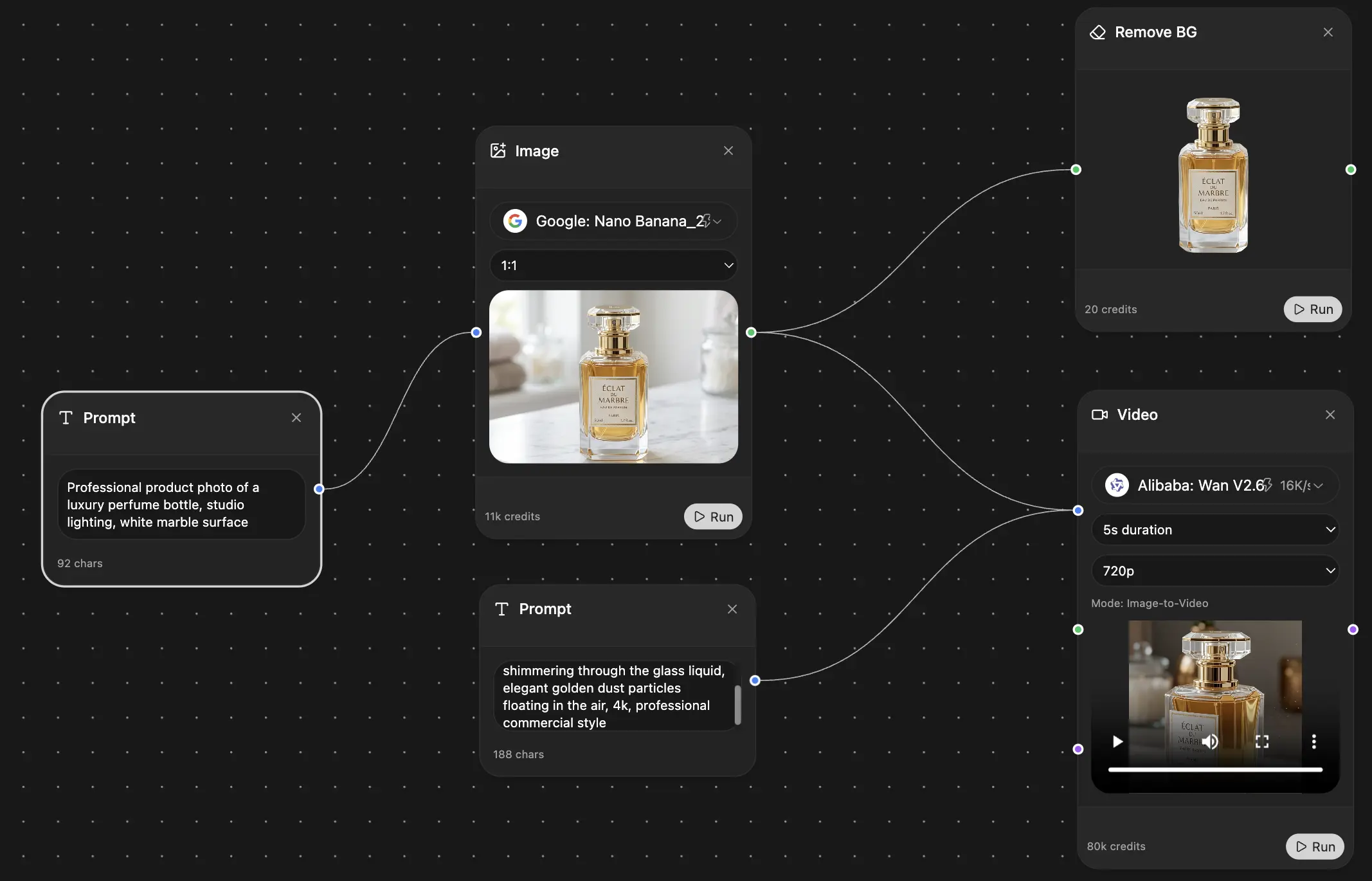
聊天、图像、视频和动态工具 — 并排展示
节省数小时的工作和研究时间
简单、经济实惠的定价
受信赖的企业团队






免费
无需信用卡
- 每日100积分
- 3个AI模型试用
- 基础AI聊天
增强版
- 1,000,000积分/月
- 25+个AI模型 — GPT、Claude、Gemini、Grok等
- Agent Mode:网页搜索、计算机工具等
- Creative Studio:图像生成和视频生成
- Project Library:与文档、网站和YouTube对话,播客生成、闪卡、报告等
- Workflow Studio和FocusOS
专业版
- 包含增强版所有功能,以及:
- 2,100,000积分/月
- Pro专属模型(Claude Opus、Grok 4、Sonar Pro)
- Motion Tools和Max Mode
- 优先使用最新功能
- 访问额外优惠
用户评价
Great Tool after 2 months usage
"I love the way multiple tools they integrated in one platform. Going in the right direction."
— simplyzubair
Best in Kind!
"The quality of data and sheer speed of responses is outstanding. I use this app every day."
— barefootmedicine
Simply awesome
"The credit system is fair, models are perfect, and the discord is very responsive. Quite awesome."
— MarianZ
Great for Document Analysis
"Just works. Simple to use and great for working with documents. Money well spent."
— yerch82
Great AI site with accessible LLMs
"The organization of features is better than all the other sites — even better than ChatGPT."
— sumore
Excellent Tool
"It lives up to the all-in-one claim. All the necessary functions with a well-designed, easy UI."
— AlphaLeaf
Well-rounded platform with solid LLMs
"The team clearly puts their heart and soul into this platform. Really solid extra functionality."
— SlothMachine
Best AI tool I've ever used
"Updates made almost daily, feedback is incredibly fast. Just look at the changelogs — consistency."
— reu0691