Ask AI Questions Better and Get What You Actually Want
Tired of lame AI answers? Learn how to ask AI questions with context, role, and format to get brilliant results. This guide makes prompt engineering easy.
If you want better answers from an AI, you have to learn how to ask better questions. The secret isn't magic; it's giving the AI clear context, a specific role to play, and a defined format for the answer. This simple three-part framework is the difference between a vague query that gets you nowhere and a powerful prompt that delivers a specific, useful, and actionable answer.
Why Your AI Questions Get You Terrible Answers

Let's be honest. Sometimes, asking an AI for help feels like shaking a Magic 8-Ball that’s stuck on "Reply hazy, try again." You know there's a universe of knowledge locked inside, but all you're getting back is generic, bland, or just plain wrong. Sound familiar?
Here's the good news: it's probably not the AI's fault. It’s how we're talking to it. We tend to treat these incredibly sophisticated tools like a simple Google search, just tossing out short, context-free questions and hoping for a flash of brilliance. That's like handing a world-class chef a single potato and expecting a three-course meal. You're gonna have a bad time.
From Vague Ideas to A-Plus Strategies
Think of an AI as an unbelievably smart and eager intern. It knows a little bit about everything, but it knows nothing about your specific project, your audience, or your goals. When you throw a vague request at it like, "Write a blog post about marketing," you’re going to get a C-minus essay. Every single time.
Why? Because the AI is forced to make a dozen assumptions. What kind of marketing? Who's it for? What's the point of the post? Without that vital info, it defaults to the safest, most generic answer it can think of. It’s playing it safe because you never gave it the playbook.
This is your first real step to stop being frustrated and start getting genuinely helpful answers. It's about learning the secret handshake that gets you past the generic fluff and into the inner circle where the truly great responses live.
To get that A-plus result, you just need to provide a better briefing. This is where that simple framework comes into play: give the AI a role, some context, and tell it what format you want. This small shift in how you ask AI questions about your business changes everything.
Let's try that marketing post again, but with a real prompt:
- Role: "You are a witty, slightly sarcastic copywriter for a SaaS startup."
- Context: "Our audience is small business owners who think AI is just a gimmick. The blog post needs to convince them otherwise by focusing on practical time-saving benefits."
- Format: "Write a 500-word blog post with a catchy, myth-busting title. End with a bulleted list of three key takeaways."
See the difference? You’ve turned a vague idea into a specific assignment. That's the core skill you need. A platform like Zemith.com is built to make this process intuitive, letting you apply these principles across tons of different AI models all in one place, so you get the best of all worlds.
Of course, knowing how much information an AI can even remember is also part of the game. You can learn more about this in our guide to the AI’s context window.
The Secret to Actually Getting What You Want from AI

Have you ever asked an AI for something and gotten a bland, useless response, only to see someone else get a stroke of genius? The difference isn't magic or a secret society. It's all in the prompt.
Think of it this way: a weak prompt is like mumbling a question to a stranger across a crowded room. A strong prompt is like giving a detailed briefing to a brilliant, hyper-focused assistant. The good news is, crafting great prompts is a skill you can learn, and it all boils down to a simple framework: Role, Context, and Format.
Get these three ingredients right, and you'll consistently turn your fuzzy ideas into sharp, actionable results.
The 3 Core Parts of a Killer Prompt
I like to think of these as the fundamental building blocks for any serious AI request. If you've been getting generic answers, it's almost certainly because one of these was missing.
Role: First, tell the AI who to be. An enthusiastic marketing guru? A cynical editor? A patient, encouraging teacher? Assigning a role instantly sets the tone, voice, and presumed expertise for the entire response.
Context: This is where you provide the "why" and the "what." Give it the backstory, explain who the audience is, and clearly state your goal. The more relevant details you provide, the less the AI has to guess. This is the part that turns a generic response into your response.
Format: Finally, tell the AI how you want the information back. A simple bulleted list? A JSON object for your app? A professional email draft? A markdown table? Don't leave it to chance. Specificity is your best friend.
To really level up, learning how to create and use custom AI prompts for repeatable tasks is a total game-changer. It’s the difference between asking for directions and having a custom-built GPS.
The best way to see the power of this is to compare a vague question with a well-structured prompt.
From Vague Questions to Powerful Prompts
Here’s a quick look at how these elements transform a simple request into a targeted command.
See the difference? You’ve gone from a fuzzy idea to a set of crystal-clear instructions. This is precisely the kind of detail that AI models thrive on.
With millions of people now using AI for everything from practical guidance to complex research, being able to prompt effectively is no longer a niche skill—it's a core competency for modern professionals.
Putting the Framework to Work on Zemith
On a platform like Zemith, this framework becomes your superpower. You’re not just choosing how to ask, but also who you're asking.
For a creative task like generating those Instagram captions, you might pick a model known for its creative flair, like Claude. But if you needed to analyze sales data for competing coffee machines, a more analytical model like Gemini would be the right tool for the job.
Zemith lets you pair the Role-Context-Format method with the ideal AI model, giving you a repeatable workflow for getting great results, every single time. Stop guessing and start getting the right answers.
This isn't just theory—it's a practical toolkit for your daily work. To really go deep on the mechanics, check out our full guide on what prompt engineering really is and start making it work for you.
Actionable AI Prompts for Your Profession
Alright, theory is great, but let's get practical. Knowing how to ask AI questions for productivity isn't just about getting an answer; it's about getting the right answer that actually makes your job easier. And these days, it’s a critical professional skill. With somewhere between 78-88% of companies now using AI in some capacity, being good at this is non-negotiable. If you're curious about this trend, you can read the full research on how AI became a competitive edge.
The secret is all in how you frame the question. I've pulled together a few of my favorite prompt recipes for different roles, all of which work beautifully on an integrated platform like Zemith.
For Developers Stuck in the Weeds
We've all inherited that one project—the one with zero documentation from a developer who's probably off-grid somewhere. Instead of losing a day trying to untangle spaghetti code, you can have the Zemith Coding Assistant take a look first.
Example Prompt:
"You are a senior Python developer specializing in clean code and documentation. I have this legacy function that calculates user discounts, but it's a mess. Explain what it does step-by-step, identify potential bugs or edge cases, and then generate full docstrings for it."
Just paste your gnarly function right after that prompt. This isn't just generating code; you're asking the AI to act as a code reviewer, debugger, and technical writer all at once. It saves you a massive headache and lets you get back to building something new.
For Marketers Drowning in Notes
You know the feeling. You just wrapped up a fantastic brainstorming session, but your whiteboard photos and scattered notes are pure chaos. Don't let those sparks of genius fizzle out. This is a perfect job for Zemith’s Smart Notepad.
Example Prompt:
"Act as a B2B content strategist with a friendly and authoritative tone. Below are my raw notes from a meeting about our new project management feature. Turn these bullet points into a 700-word blog post titled 'Tired of To-Do Lists? Here’s How to Actually Manage Your Projects.' The target audience is overworked startup founders. Structure it with an intro, three main body sections based on the notes, and a concluding call-to-action to try our new feature."
By giving the AI a specific role, audience, format, and goal, you can turn a jumbled mess into a polished article that’s nearly ready to publish.
For Researchers Seeking Deep Insights
Trying to run a competitor analysis can feel like falling down an endless rabbit hole of websites, annual reports, and press releases. Instead of spending days piecing everything together manually, use a tool that can synthesize information from across the web. With Zemith’s Deep Research feature, you can pull high-level insights using real-time data.
Example Prompt:
"You are a market research analyst. Conduct a comprehensive competitive analysis of the top three project management tools: Asana, Trello, and Monday.com. Focus on their pricing models, key features for enterprise clients, and recent user reviews from the last six months. Summarize your findings in a markdown table comparing the three, followed by a bulleted list of their biggest weaknesses."
A prompt like this delivers a strategic overview in minutes, not days. You can also check out our guide on other powerful questions to ask AI to supercharge your workflow for more ideas.
For Students Facing a Mountain of Reading
Have a massive 50-page PDF to get through before your exam tomorrow? Skip the all-nighter. Just upload it to the Zemith Document Assistant and let the AI become your study partner.
Example Prompt:
"You are a helpful study assistant. I've uploaded a PDF of my history textbook chapter on the Industrial Revolution. Please do the following:
- Provide a one-paragraph summary of the entire chapter.
- Generate 15 flashcards (front and back) covering the key people, dates, and inventions mentioned.
- Create a five-question multiple-choice quiz based on the content."
As you can see, asking smarter questions on a platform like Zemith doesn't just save you time—it gives you a serious advantage in whatever you're working on.
How to Fix Bad AI Answers (Without Tearing Your Hair Out)

It happens to all of us. You craft what feels like the perfect prompt, hit enter, and the AI spits back absolute gibberish. Or it confidently "hallucinates" a fact out of thin air. It’s easy to get frustrated and just close the tab, but hold on. Don't rage-quit your AI.
Learning to debug your conversation with an AI is one of the most valuable skills you can develop. It’s what separates a frustrating waste of time from a genuinely productive partnership. When you ask AI questions, a bad first answer isn't a dead end—it's just an invitation to dig a little deeper.
The Gentle Art of the Follow-Up
The biggest mistake I see people make is treating the AI's first response as the final word. It's not. Think of that first answer as a very rough first draft. Your job is to step in as the editor. This is often called iterative prompting, but it's really just having a conversation.
Instead of scrapping everything and starting from scratch, just build on what you have. Nudge the AI back in the right direction with a few simple, conversational follow-ups.
- "That's a decent start, but can you simplify this for someone who's never heard of it?"
- "Could you give me a specific example for your second point?"
- "Take out all the corporate jargon. I need this to sound more friendly and casual."
- "Actually, let's ignore the other parts and focus only on the social media ideas."
When an AI gives you a bad answer, it’s not being difficult—it’s asking for a better question. Your follow-up is your chance to give it one.
Spotting and Fixing What Went Wrong
Bad answers usually trace back to a few common issues with the original prompt. Vagueness is the number one culprit. If you ask for "marketing ideas," you're going to get a bland, generic list. A much better prompt would be, "Give me five low-budget marketing ideas for a new coffee shop that wants to attract local college students." See the difference?
Another classic mistake is giving the AI conflicting instructions. I've seen people ask for a "brief but comprehensive report." Those two things are opposites! Pick your priority—do you want it short, or do you want it comprehensive?—and make that clear.
Sometimes, the issue is simply asking for something an AI isn't built to do. Most general models can't pull real-time stock prices or summarize a YouTube video just from the URL. Knowing the tool's limitations will save you a world of headaches. Seeing how an AI can help rewrite text is a perfect example of how targeted, iterative refinement can produce fantastic results.
Finally, always remember to be the human in the conversation. AI models can, and absolutely do, make things up. This is where a tool like Zemith is a game-changer. Its Deep Research feature connects directly to the live web, letting you ask the AI to fact-check its own claims against up-to-date sources. This simple step can turn a questionable answer into a verified, trustworthy piece of information, all within the same workflow.
Your Daily AI Workflow for Maximum Productivity
Alright, you've got the hang of asking good questions and fixing wonky responses. But the real game-changer is weaving AI into your daily routine. It's less about one-off questions and more about having an ongoing conversation that actually moves your work forward. Forget just asking for things; think of it as building a repeatable habit that gives you back hours every single week.
Let’s imagine a real-world task: spinning up a full content campaign from scratch. I'll show you how to do it all inside Zemith, moving smoothly between tools instead of juggling a dozen different apps and subscriptions.
Start with Creative Brainstorming
Every great campaign starts with an idea, but staring at a blank screen is a total momentum killer. This is where I open up the Zemith Whiteboard. Think of the AI as your creative sidekick, ready to throw ideas on the wall with you.
Try a prompt like this to get the ball rolling:
"Act as a creative director. We're launching a new 'Focus Mode' feature in our productivity app. Let's brainstorm five unique marketing angles to target burned-out remote workers. Think outside the box—no boring 'boost your productivity' slogans."
The AI will start populating the board with concepts you can literally drag around, connect, and riff on. It’s a messy, visual, and genuinely creative way to start a project.
Move to Research and Analysis
Once you’ve landed on an angle you love, it's time for some quick recon. Instead of spending an hour digging through competitor blogs, I usually head straight to Zemith’s Prompt Gallery. Grabbing a pre-built template for competitor analysis saves a ton of time.
After the AI pulls the data, the next step is to make sense of it all.
Fire this into the Smart Notepad:
"Here is the competitor analysis for our 'Focus Mode' campaign. Summarize the top three opportunities and the biggest messaging gap we can exploit. Present it as a concise, three-bullet-point summary for our marketing team."
There’s a reason this step feels so powerful. A staggering 63% of all AI users globally use it primarily for research. As Exploding Topics' recent AI data shows, we’re all leaning on AI to help us find and synthesize information faster.
Generate Your Campaign Assets
This is where things get really cool. With a solid angle and fresh intel, you can start creating the actual campaign materials, all in one place.
- Blog Outlines: Ask the AI for a detailed post outline based on your angle and research findings.
- Social Copy: Have it draft a week’s worth of posts for Twitter, LinkedIn, and Instagram, tailored for each platform.
- Visuals: Pop over to the Image Generator and ask for something specific, like: "a minimalist illustration of a calm, focused person working at a desk surrounded by a bubble, blocking out digital noise."
Organize and Finalize
The final piece is pulling everything together. All those assets—the whiteboard scribbles, research notes, outlines, copy, and images—can be dropped into a dedicated Zemith Project. This gives you a single, organized hub for the entire campaign.
Following a flow like this shows how a platform like Zemith is more than just a chatbot. You’re not just asking isolated questions anymore. You're building a smarter, faster, and more connected workflow, which is exactly why integrated solutions are some of the best AI tools for productivity.
A Few Lingering Questions About Talking to AI
Still have a few things you're wondering about? Perfectly normal. Let's clear up some of the most common questions people have when they're trying to get better answers from AI.
Does It Really Matter Which AI Model I Use?
It absolutely does! Think of it like this: you wouldn't use a paintbrush to hammer in a nail. Each AI model has its own strengths. A creatively-focused model like Claude is fantastic for brainstorming and writing, while a powerhouse like Gemini is what you want for complex logic and chewing through data.
That’s where a platform like Zemith comes in handy. It gives you access to a whole toolbox of models, so you can just pick the right one for the job without having to juggle a bunch of different accounts. It’s about having the right tool, right when you need it.
How Long Should My Prompts Be?
There’s no magic number here. Honestly, clarity beats length every time. A short, super-specific prompt will almost always outperform a long, rambling one.
Just start with a clear command, give it the background info it needs, and tell it what format you want back. You can always refine and add more detail in your next message if the first attempt isn't quite right. The goal is to be direct and helpful, not just wordy.
This is a great way to visualize how AI fits into a typical daily workflow, from the initial spark of an idea to research and final creation.

It’s a good reminder that asking the AI a question is often just one small piece of a much bigger creative or analytical puzzle.
Is Prompt Engineering a Real Job?
For most of us? Nope. You don’t need to become a "prompt engineer" to get great results. Just learning the fundamentals—giving context, assigning a role, and asking for a specific format—is enough to make a massive difference.
Think of it less as a technical career and more as a new kind of digital literacy. It’s a skill, like getting really good at using a search engine, not a full-time profession.
Playing around with something like an AI Assistant Chat can give you a better feel for this. At the end of the day, it's all about making the tool work for you, not the other way around.
Ready to stop being frustrated by AI and start getting answers that actually help? Zemith puts all the best AI models and tools into one simple workspace. Start your free trial today at Zemith.com.
Explore Zemith Features
Every top AI. One subscription.
ChatGPT, Claude, Gemini, DeepSeek, Grok & 25+ more








Always on, real-time AI.
Voice + screen share · instant answers
What's the best way to learn a new language?
Immersion and spaced repetition work best. Try consuming media in your target language daily.
Voice + screen share · AI answers in real time
Image Generation
Flux, Nano Banana, Ideogram, Recraft + more

Write at the speed of thought.
AI autocomplete, rewrite & expand on command
Any document. Any format.
PDF, URL, or YouTube → chat, quiz, podcast & more
Video Creation
Veo, Kling, Grok Imagine and more

Text to Speech
Natural AI voices, 30+ languages
Code Generation
Write, debug & explain code
Chat with Documents
Upload PDFs, analyze content
Your AI, in your pocket.
Full access on iOS & Android · synced everywhere
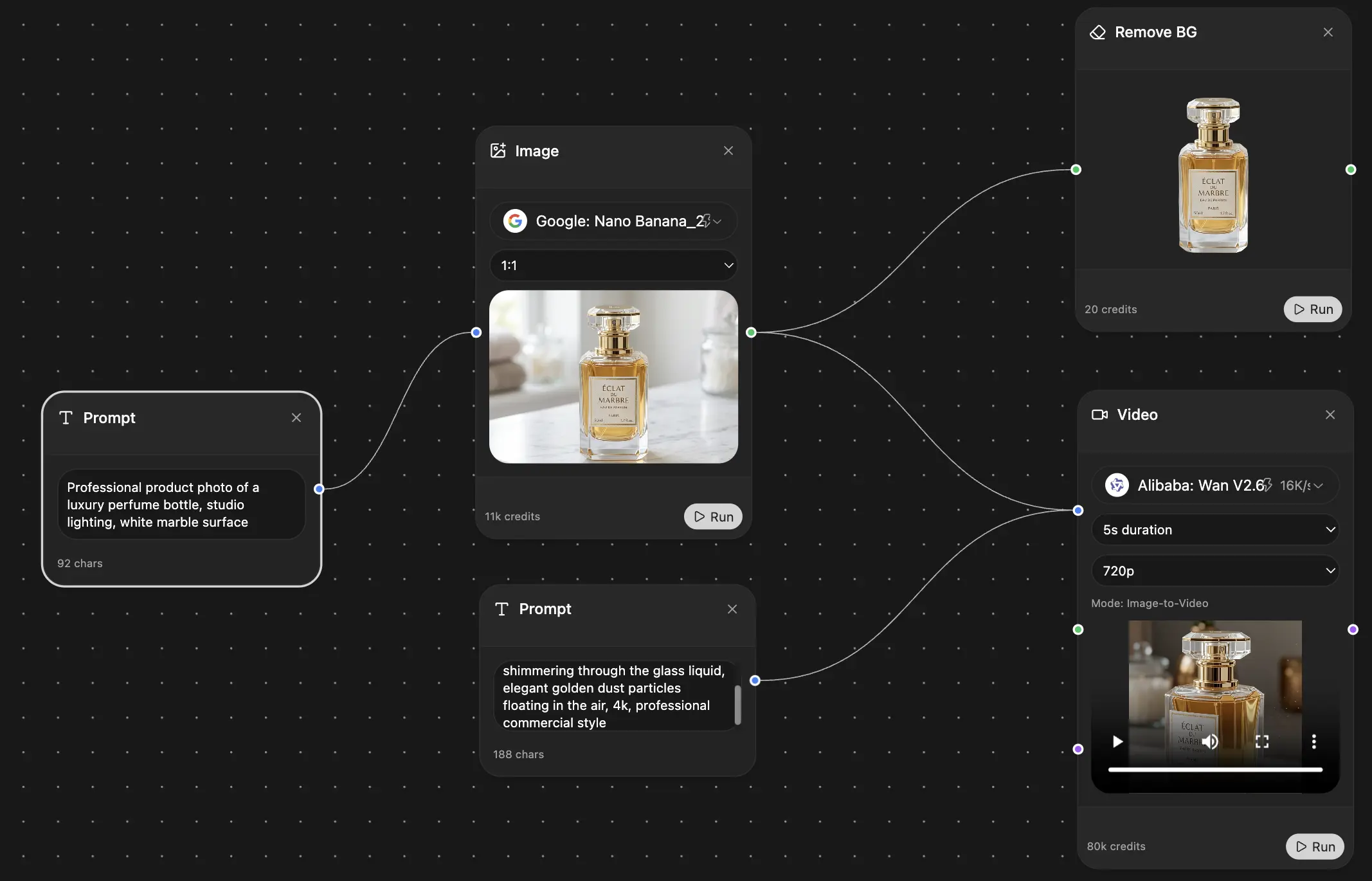
Your infinite AI canvas.
Chat, image, video & motion tools — side by side
Transparent, High-Value Pricing
Free
No credit card required
- Limited daily usage
- Selected AI models to try
- Limited features
Plus
- Choose from multiple leading models — GPT, Claude, Gemini and Grok.
- 25× more usage than Free.
- Create and edit images with Creative Studio.
- Connect your favorite apps and get work done in one place.
- Research the web and turn sources into clear answers.
- Turn documents, websites and YouTube into podcasts, flashcards and reports.
- Build repeatable workflows and stay focused with FocusOS.
Professional
- Everything in Plus, and:
- Unlock every model on Zemith, including GPT 6 Astra, Claude 5 Opus and Sonar Pro.
- 50× more usage than Free.
- Create more with the full Creative Studio toolkit.
- Let agents work in the background — run Cloud tasks and schedule recurring work.
- Push further on complex work with Max Mode.
- Unlimited GPT 5.4 Mini usage.
- First access to new features.
Trusted by teams at






What Our Users Say
Great Tool after 2 months usage
"I love the way multiple tools they integrated in one platform. Going in the right direction."
— simplyzubair
Best in Kind!
"The quality of data and sheer speed of responses is outstanding. I use this app every day."
— barefootmedicine
Simply awesome
"The credit system is fair, models are perfect, and the discord is very responsive. Quite awesome."
— MarianZ
Great for Document Analysis
"Just works. Simple to use and great for working with documents. Money well spent."
— yerch82
Great AI site with accessible LLMs
"The organization of features is better than all the other sites — even better than ChatGPT."
— sumore
Excellent Tool
"It lives up to the all-in-one claim. All the necessary functions with a well-designed, easy UI."
— AlphaLeaf
Well-rounded platform with solid LLMs
"The team clearly puts their heart and soul into this platform. Really solid extra functionality."
— SlothMachine
Best AI tool I've ever used
"Updates made almost daily, feedback is incredibly fast. Just look at the changelogs — consistency."
— reu0691