Perplexity vs Claude Which AI Tool Should You Use in 2026
An honest Perplexity vs Claude comparison. We dive into real-world use cases, performance, and pricing to help you pick the right AI (or a better alternative).
The core difference between these two AIs really comes down to their DNA. Think of Perplexity as a real-time AI answer engine—it's built from the ground up for accurate, cited research. On the other hand, Claude is a deeply creative conversational AI, designed for nuanced writing, brainstorming, and analyzing text. It's like comparing a librarian to a poet; both are brilliant with words, but you wouldn't ask the librarian to write you a sonnet.
So, the choice you make depends entirely on what you need most: fact-checked, up-to-the-minute information, or a thoughtful, human-like creative partner.
The AI Showdown: Perplexity vs. Claude
Alright, let's get to the main event. In one corner, you have Perplexity, the AI that acts like a meticulous research assistant who always shows their work. In the other, there's Claude, the creative conversationalist with a knack for prose. You’ve probably seen the buzz around both, but which one actually earns a spot in your daily toolkit? And more importantly, which one will help you get your work done without driving you bonkers?
This is your ringside seat for the ultimate Perplexity vs. Claude comparison. We're cutting through the marketing fluff with some real-world perspective to see which one is the research wizard and which is the creative genius.
A Tale of Two AIs
Before diving deep, it helps to understand what makes each of these tools tick. They might both be "AI," but they approach tasks from completely different angles.
Here’s a quick look at how Perplexity and Claude stack up against each other, highlighting their core philosophies and best uses.
Perplexity vs Claude At a Glance
Looking at the table, it’s easy to see their distinct roles. But what if the whole "one vs. the other" debate is asking the wrong question? The real winner is the person who doesn't have to choose.

This snapshot makes it clear: Perplexity has an edge in accuracy (92%), which is non-negotiable for research. But constantly jumping between a research tool and a separate creative tool is a major drag on productivity. It just breaks your flow. You ever try to tell a joke and forget the punchline? That's what switching between apps feels like for your brain.
Instead of juggling different tabs and subscriptions, what if you could access the best of both worlds in a single workspace? That’s the entire idea behind a multi-model platform like Zemith. It brings different AI models together, letting you tap into Claude's creativity and Perplexity-style research capabilities all in one place. Let's dig into how you can get these combined strengths without all the chaos.
Perplexity: Your Fact-Checking Speed Demon
Alright, let's talk about Perplexity. Think of it less like a chatbot and more like a super-powered research assistant who just read the entire live internet and can give you a fully-cited summary in seconds. That's its whole game.
At its core, Perplexity is an 'answer engine.' Its superpower is fetching real-time information from the web and, most importantly, showing you its work by citing its sources. This is a game-changer for anyone who needs to trust their information—journalists, researchers, students, or anyone who’s ever screamed, "But where did you get that from?!" at their screen.
This relentless focus on citation is the key differentiator when you put Perplexity vs. Claude. While Claude pulls from a fixed dataset, Perplexity is always out there scanning the web. This makes it the undisputed champ for any task that needs up-to-the-minute information.
Accuracy and Real-Time Information
So what does this look like in practice? Ask Perplexity something timely, like, "What were the key takeaways from the latest Federal Reserve meeting?" It won't just spit out an answer from its memory banks. Instead, it actively scours reputable news sites, synthesizes the main points, and gives you direct links to the articles it used.
This simple act immediately builds trust. The AI stops being a mysterious black box and becomes a transparent research partner. You can instantly check the sources yourself or go deeper down the rabbit hole. For those doing serious research, combining Perplexity's strengths with other specialized MUN AI tools for research can create an incredibly efficient workflow.
The user data tells a similar story. Based on G2 user ratings, people feel Perplexity has a slight edge in content accuracy, with 86% satisfaction versus Claude's 84%. Where it really shines, though, is in its ability to nail complex queries, scoring an impressive 87%. It's easy to see why it’s a go-to in fields like IT and consulting, where a fast, factual answer is worth its weight in gold.
Strengths for Fact-Based Work
Because of how it’s built, Perplexity is fantastic for specific jobs where getting the facts right is everything.
- Market Research: Need the latest buzz on consumer trends or what your competitors just announced? Perplexity can pull that for you in moments, with sources attached.
- News Summarization: It’s great for getting a quick, balanced overview of breaking news, digesting information from multiple outlets so you don’t have to.
- Academic and Technical Queries: When you ask it to explain a complex scientific theory or a historical event, you get answers grounded in verifiable sources, not just a model’s best guess.
Perplexity isn’t trying to be your creative buddy; it’s your on-demand analyst. Its mission is to deliver the most accurate, sourced answer as fast as possible, which is a fundamentally different goal than Claude's more conversational, creative approach.
The Not-So-Creative Sidekick
But here's the trade-off: that laser focus on facts can make Perplexity feel a bit… sterile. If you’re looking for a partner to brainstorm creative marketing angles or help you write an email with a bit of personality, its output can fall flat. It’s an engine for answers, not a muse for inspiration.
This is where you start to feel the pain of using single-purpose tools. You might jump over to Perplexity for your research, then have to copy and paste all that information back into another tool like Claude to do the actual writing. It’s a clunky process that completely breaks your flow.
That's precisely the kind of headache an integrated platform is designed to solve. For example, Zemith’s Deep Research feature gives you that same real-time, fact-checked power, but it’s built right into the same workspace where you can also spin up creative models like Claude. You get the best of both worlds without the constant tab-switching.
Meet Claude: Your Creative Collaborator

Alright, let's switch gears and talk about Claude. If Perplexity is the sharp analyst you hire for data, Claude is the creative partner you'd actually want to grab a coffee with to brainstorm. Developed by Anthropic, Claude was built from the ground up with a heavy focus on safety and ethics, which gives it a completely different feel.
It's less of a fact-checker and more of a thoughtful collaborator. Its real talent is in grasping nuance, holding onto context during long, winding conversations, and producing creative text that feels genuinely human. The perplexity vs claude debate isn't really about which one is "better"—it's about figuring out what kind of partner you need for the task at hand.
The Undisputed King of Context and Creativity
Claude’s superpower is its absolutely massive 200k token context window. That isn't just a big number on a spec sheet; it completely changes how you can use an AI. You can drop in a document the size of The Great Gatsby and ask it to analyze character development or summarize dense legal arguments without it losing the plot.
This ability to hold so much information in its short-term memory makes it a go-to for:
- Content Creators: Brainstorming entire blog series, drafting marketing copy, or rephrasing long-form articles into different formats.
- Writers and Authors: Getting nuanced feedback on chapters, fleshing out plot points, and busting through writer's block.
- Developers: Walking through a complex codebase or getting detailed, step-by-step debugging help.
Claude's real magic isn't just remembering what you said five prompts ago; it's understanding the flow of the entire conversation. It connects disparate ideas, builds on previous points, and collaborates in a way that feels surprisingly natural. It's a fantastic tool for untangling complex problems.
Where Claude Pulls Ahead
The user feedback backs this up. On G2, Claude scores an impressive 9.5/10 for natural conversation, leaving Perplexity's 8.6 in the dust. It also hits 93% for natural conversation and 90% in creativity, cementing its spot as the leader in these areas. For tasks that require multi-step reasoning, it also has the edge with an 8.7 rating versus Perplexity's 7.9. If you want to dive deeper into how this works, you can learn more about what conversational AI is and why context is so important.
And it’s not just for creative writing. Anthropic’s latest models are serious contenders in the coding world. The advanced Opus model, for instance, scored 72.5% on the tough SWE-bench coding benchmark, making it one of the best AI assistants you can have for development work. For more performance breakdowns, you can find in-depth comparisons about Claude vs Perplexity on Ajelix.
The Catch: A Beautiful Walled Garden
But here’s Claude’s Achilles' heel: it has no live access to the web. It operates in a "walled garden," which means its knowledge is limited to its training data up to a certain cutoff point. If you ask it about yesterday's stock market or the latest tech news, it will politely tell you it can't help. This makes it the wrong tool for any task that needs real-time information.
This is exactly why having access to multiple models is so powerful. On a platform like Zemith, you don’t have to choose. You can use a real-time tool like Perplexity to gather the latest facts and figures, then seamlessly bring that research into a project with Claude for the deep analysis, creative writing, or coding. This hybrid workflow lets you tap into Claude’s incredible depth without being held back by its one major limitation.
Alright, let's stop talking theory and see how these tools actually stack up in the real world. I put Perplexity and Claude through a few common tasks to see which one comes out on top when you actually need to get work done.
This isn't some generic feature list. It's a practical stress test based on the kind of stuff you and I do every day.
The Ultimate Use Case Showdown

Round 1: Market Research on the Fly
First up, a classic scenario: I need a quick, current snapshot of a market. I gave both the same prompt: "What are the latest trends in the direct-to-consumer (DTC) coffee market for 2026?"
Perplexity's Performance: Perplexity did exactly what it’s built for. It jumped into action, scanning the live web and pulling together a tight summary of current trends—subscription models, a big push for sustainable sourcing, and new cold brew tech. The best part? It cited its sources, giving me 5 different links from industry reports and recent news articles that I could use to verify everything. The answer was fast, factual, and immediately useful.
Claude's Performance: Claude, on the other hand, was stuck with its training data. It gave a decent, well-written overview of general DTC trends like personalization and brand storytelling. But it was all generic stuff. It couldn't talk about specific 2026 data or recent market shifts because it can't see the internet. The response felt like a chapter from a marketing textbook, not a fresh analysis.
The Winner: Perplexity, by a mile. When you need up-to-the-minute information, there’s just no competition. Its ability to find and synthesize current data with sources makes it the clear winner for research.
This brings up a huge workflow headache. You get the facts from Perplexity, but then what? You have to copy and paste them into another tool to actually write your report. An integrated platform like Zemith solves this by letting you do your deep research and then immediately use a model like Claude to draft content from those findings, all in one place.
Round 2: Writing a Witty Blog Intro
Next, I wanted to test their creative chops. I asked both to write a witty, engaging blog post intro for the topic, "Why procrastinators are secretly geniuses."
Perplexity's Performance: Perplexity’s attempt was… functional. It gave me a logically structured intro that defined procrastination and laid out the article's premise. But it had zero personality. It read like an encyclopedia entry, not a hook for a blog post. The "wit" was completely missing in action. It was so dry, you could use it to start a fire.
Claude's Performance: Claude absolutely nailed it. It kicked things off with a funny, relatable story about putting off a task, then cleverly connected it to the post's main idea. The tone was perfectly conversational and engaging—it understood the "witty" part of the prompt and delivered. It didn't just follow instructions; it added a creative flair that Perplexity couldn't even touch.
The Winner: Claude, no question. For any task that requires creativity, a specific voice, or a human touch, Claude is just in a different league.
Round 3: Multilingual Query Handling
Time for a more technical test. How do these tools handle content that isn't in English? I used a French query—"Comment créer un sitemap XML"—to see if they could find Google's own documentation on the topic.
This is where things get really interesting. My own recent tests have shown a massive gap in how different AI tools handle multilingual content. Search engines like Google and Bing have poured decades into this, but many AI platforms are still way behind.
- Perplexity: When I gave it the French query, the AI-generated answer was in French, but it linked me to the US English version of the documentation. Not very helpful if I'm trying to work with a French-speaking client.
- Claude: Initially, Claude couldn't provide any links. When I specifically pushed it for a source, it also pointed to the English version, failing to find the correct localized page.
The Winner: Neither. Both tools fell flat on this one, highlighting a pretty big blind spot for anyone working with global teams or audiences. It really drives home that the underlying search tech matters. For what it’s worth, some AI models built on stronger search systems do a much better job here. If you're comparing different options, it's worth checking our guide on Claude 3.5 Sonnet vs GPT-4o to see how various architectures stack up on complex tasks like this.
This whole showdown makes the core difference between Perplexity and Claude painfully clear. You go to Perplexity for facts and Claude for flair. The problem is, most real-world projects need both, which means you're stuck bouncing between two different tools.
Diving Into Cost and Privacy Policies

Alright, let's talk about two things that can make or break your decision: what you pay and what happens to your data. Choosing an AI without looking at these is like buying a house without checking the property taxes or who else has a key. You just don't do it.
Both Perplexity and Claude have pretty generous free tiers that are perfect for kicking the tires. But to really see what they can do, you'll want to go Pro. Conveniently, both platforms settled on the same magic number: $20 per month. What that twenty bucks actually buys you, though, is where the perplexity vs claude comparison gets really interesting.
What Do You Get for $20 a Month?
With a Pro plan on either platform, you get to break free from the usage limits of the free versions. But the kind of freedom you get is totally different.
Here's the deal with Perplexity Pro:
- A ton of "Copilot" queries: This is their star feature. You get over 300 of their most advanced, interactive searches every single day. For most of us, that's basically unlimited.
- Access to better models: You’re not just stuck with their default. You can choose to run queries on more powerful models like GPT-4 and Claude 3.
- File uploads: A huge win for anyone doing research. You can drop in PDFs, documents, or data and have the AI analyze them directly.
And on the Claude Pro side:
- Way more usage: You're guaranteed at least 5x more messages than you get on the free plan, and you get priority when their servers are getting slammed.
- The best of Anthropic: This is the main event. A Pro subscription is your only way to access their top-of-the-line model, Claude 3 Opus.
- First dibs on new features: Pro users are usually the first to get their hands on new tools and updates before they’re released to everyone else.
So, which one is right for you? If your day is filled with hundreds of deep-dive research questions, Perplexity’s "unlimited" Copilot is a no-brainer. But if your goal is to generate brilliant long-form content or get nuanced analysis, the raw power of Claude 3 Opus is worth every penny.
Feeling stuck? You're not the only one. We break down even more options in our guide to the best AI subscriptions of 2026.
The Real Cost Isn't $20—It's $40: Here’s the trap many people fall into. They need Perplexity for research and Claude for creative work, so they end up paying for two separate subscriptions. That’s $40 a month. This is exactly why an all-in-one platform like Zemith makes so much sense—you get access to multiple top models, including Claude, under one roof and one bill.
Who's Reading Your Prompts?
Now for the really serious stuff: data privacy. When you send a prompt, where does it go? For any professional or business, this is a deal-breaker.
Let's be clear: both Perplexity and Claude state they might use your conversations to train their models. The good news is that both give you a way to opt out, usually buried somewhere in your account settings. If you’re using these for work, finding that opt-out button should be your first move.
The main difference comes down to their paid and business tiers. Perplexity has a "Pro" mode that, once activated, stops your data from being used for training. Anthropic makes a similar promise for its business-level customers. On the free plans, though, your conversations are considered fair game for training unless you specifically tell them otherwise.
Ultimately, you have to read the fine print and decide which company's privacy policy you're more comfortable with. Before you start pasting sensitive client information or internal company data into any AI, make absolutely sure you know who's looking over your shoulder.
Why Settle for One When You Can Have Both?
After diving deep into the whole "Perplexity vs. Claude" debate, you might be trying to figure out which one to bet on. But honestly, that’s the wrong question. The real question is, why are you still forcing yourself to choose at all?
Let's be practical. Trying to juggle a dedicated research tool, a separate writing assistant, and maybe another AI for coding is just a mess. It’s like carrying around a separate hammer, screwdriver, and wrench when you could just grab a single, powerful multi-tool. It's clumsy, it gets expensive, and it absolutely kills your creative momentum.
This is where an integrated AI workspace like Zemith.com completely changes your approach.
The Unified AI Workspace You Actually Need
Zemith isn't another AI model—it's the toolbox that holds all the best tools. We built it from the ground up as a single workspace where you can access multiple top-tier models, including the powerhouse Claude 3.5 Sonnet, under one roof. Think of it as your mission control for getting real work done with AI.
This shift means you can stop asking, "Should I use Perplexity or Claude for this?" Instead, you start blending their unique strengths to get your work done faster and with better results.
- For In-Depth Research: Our built-in research functions give you that Perplexity-style power, pulling from the live web and providing sourced facts. You get up-to-the-minute information without ever leaving your project.
- For Creative and Analytical Tasks: When you're ready to write that blog post, summarize a dense report, or even get some help with code, you just pivot to Claude right in the same interface. All your research is already there, waiting for you.
- For Head-to-Head Comparisons: Not sure which model will nail the tone you're going for? In Zemith, you can run them side-by-side and see the outputs instantly. It's the best way to pick the perfect response for any given task.
You end up with the fact-finding rigor of an answer engine and the nuanced, creative power of a writing partner, all in one place.
It's not the subscription costs that kill your productivity—it's the constant context switching. Every time you copy-paste from one AI to another, you're breaking your flow. A truly integrated platform makes that friction disappear.
Stop Juggling Tabs, Start Building Momentum
Picture what this looks like in practice. You kick off a project in Zemith to research a new marketing strategy. You use the deep research feature to pull the latest 2026 industry stats and competitor moves, just like you would with Perplexity.
Once your facts are lined up, you don't open a new tab. You stay right where you are and bring Claude into the project. You can feed it your research notes and ask it to brainstorm five catchy headlines and draft a compelling intro. From there, you can use our Smart Notepad to refine that draft, turning raw bullet points into a polished article.
That’s what an efficient workflow feels like. No more browser tab chaos, no more paying for multiple subscriptions that do half the job. It's all about consolidating your AI toolkit so you can focus on what you're actually trying to accomplish.
The goal is to get past the limiting "A vs. B" mindset and embrace a "both, and more" approach. Why settle for a single tool when you can have the entire workshop? If you're ready to feel the difference, it's time to see what a unified AI platform can do for your workflow.
Answering Your Top Questions
Still trying to decide? I get it. When you're comparing Perplexity and Claude, a few key questions always come up. Let's tackle them head-on with some quick, straight-to-the-point answers to help you make the right call.
Which Is Better for Daily Use Perplexity or Claude?
Honestly, it really boils down to what you do all day. If your work involves a ton of research, fact-checking, or just keeping up with the news, Perplexity is your best friend. It's designed for exactly that—getting you quick, sourced answers.
But if your day is more about writing, brainstorming new ideas, or summarizing long reports, Claude is the better partner. Its creative chops and massive context window make it a fantastic sidekick for anything content-related. The real power move? Using a platform that gives you both so you don't have to choose.
Can Claude Search the Web Like Perplexity?
Nope, and this is a huge difference between the two. Claude can't access the live internet. Its knowledge is locked into the data it was trained on, which has a specific cutoff date.
This means if you ask Claude about breaking news or a new product that just launched, it will politely tell you it can't help. Perplexity, on the other hand, is built to browse the web and thrives on giving you real-time information.
What’s the Biggest Mistake People Make When Choosing?
The biggest mistake I see is people feeling like they have to pick just one and stick with it. The truth is, most of us need both factual research and creative assistance. Subscribing to two different tools isn't just expensive; it’s a productivity killer that has you constantly switching between tabs.
That’s precisely why integrated platforms like Zemith exist. We bring Perplexity-style research capabilities together with top-tier models like Claude in a single workspace. You can gather all your facts and then immediately start writing with a powerful AI, all without ever leaving your project. It’s all about having the right tool for the right step in your workflow, instantly.
Is One More Trustworthy Than the Other?
When it comes to trust, you have to follow the classic rule: "show your work." This is where Perplexity really shines. It builds trust by always citing its sources, which means you can click and verify its claims in seconds. For more on this, you can check out our guide on how to evaluate information sources.
Claude is incredibly capable, but it generates answers from its internal knowledge without providing direct, live links to back them up. That makes Perplexity the more transparent and reliable choice when you absolutely can't afford to be wrong.
Ready to stop switching tabs and start getting things done? With Zemith, you get access to Claude, powerful research tools, and a full suite of productivity features in one place. Explore how Zemith can upgrade your workflow today.
Explore Zemith Features
Every top AI. One subscription.
ChatGPT, Claude, Gemini, DeepSeek, Grok & 25+ more







Always on, real-time AI.
Voice + screen share · instant answers
What's the best way to learn a new language?
Immersion and spaced repetition work best. Try consuming media in your target language daily.
Voice + screen share · AI answers in real time
Image Generation
Flux, Nano Banana, Ideogram, Recraft + more

Write at the speed of thought.
AI autocomplete, rewrite & expand on command
Any document. Any format.
PDF, URL, or YouTube → chat, quiz, podcast & more
Video Creation
Veo, Kling, Grok Imagine and more

Text to Speech
Natural AI voices, 30+ languages
Code Generation
Write, debug & explain code
Chat with Documents
Upload PDFs, analyze content
Your AI, in your pocket.
Full access on iOS & Android · synced everywhere
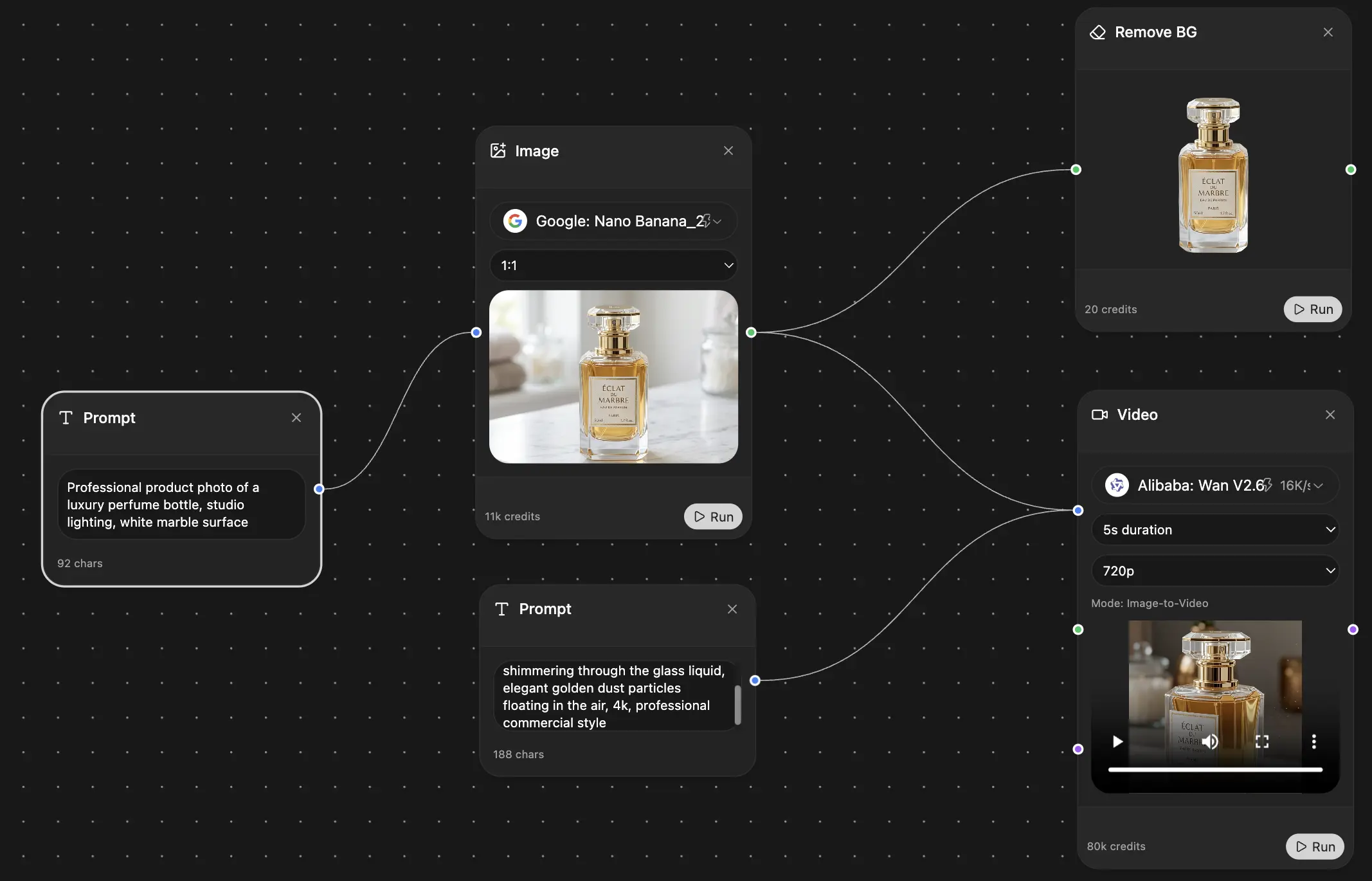
Your infinite AI canvas.
Chat, image, video & motion tools — side by side
Transparent, High-Value Pricing
Free
No credit card required
- Limited daily usage
- Selected AI models to try
- Limited features
Plus
- Choose from multiple leading models — GPT, Claude, Gemini and Grok.
- 25× more usage than Free.
- Create and edit images with Creative Studio.
- Connect your favorite apps and get work done in one place.
- Research the web and turn sources into clear answers.
- Turn documents, websites and YouTube into podcasts, flashcards and reports.
- Build repeatable workflows and stay focused with FocusOS.
Professional
- Everything in Plus, and:
- Unlock every model on Zemith, including GPT 6 Astra, Claude Opus and Sonar Pro.
- 50× more usage than Free.
- Create more with the full Creative Studio toolkit.
- Let agents work in the background — run Cloud tasks and schedule recurring work.
- Push further on complex work with Max Mode.
- First access to new features.
Trusted by teams at






What Our Users Say
Great Tool after 2 months usage
"I love the way multiple tools they integrated in one platform. Going in the right direction."
— simplyzubair
Best in Kind!
"The quality of data and sheer speed of responses is outstanding. I use this app every day."
— barefootmedicine
Simply awesome
"The credit system is fair, models are perfect, and the discord is very responsive. Quite awesome."
— MarianZ
Great for Document Analysis
"Just works. Simple to use and great for working with documents. Money well spent."
— yerch82
Great AI site with accessible LLMs
"The organization of features is better than all the other sites — even better than ChatGPT."
— sumore
Excellent Tool
"It lives up to the all-in-one claim. All the necessary functions with a well-designed, easy UI."
— AlphaLeaf
Well-rounded platform with solid LLMs
"The team clearly puts their heart and soul into this platform. Really solid extra functionality."
— SlothMachine
Best AI tool I've ever used
"Updates made almost daily, feedback is incredibly fast. Just look at the changelogs — consistency."
— reu0691