
How to Use AI for Small Business Marketing: A Practical Guide for 2026
Learn how to use AI for small business marketing in 2026. Cut content time by 75%, write better emails, and compete with bigger brands on a tight budget.
How to Use AI for Small Business Marketing: A Practical Guide for 2026
TL;DR
What you need to know: AI can handle the marketing tasks that eat your time — writing posts, drafting emails, finding keywords — so you can focus on running your business.
Key findings:
- 68% of U.S. small businesses now use AI regularly (up from 48% in mid-2024)
- AI-powered campaigns launch 75% faster and deliver 22% higher ROI on average
- Time savings: 20+ hours per month for businesses that adopt AI marketing tools
- Cost savings:
500–2,000/month compared to hiring freelancers for the same output- Best starting points: content creation, email subject lines, and keyword research
- You don't need a marketing agency — you need a few good prompts and an AI assistant
You don't have a marketing department. You have yourself, maybe one or two people, and a long list of things that need to get done before noon.
Writing three Instagram captions, drafting a newsletter, researching keywords for a blog post — these tasks take hours every week. Hours you could spend on actual work.
AI doesn't eliminate marketing. But it cuts the time it takes by a lot. Here's how to actually use it, without the fluff.
What AI Can and Can't Do for Marketing
Let's be honest upfront.
AI is good at generating drafts, brainstorming ideas, rephrasing text, and summarizing information. It does these things fast and cheaply.
AI is not good at knowing your specific customers, understanding your local market, or creating genuinely original ideas from nothing. It still needs your direction.
The way to think about it: AI is a junior writer who works 24/7, never complains, and needs you to review everything before it goes live. That's the relationship. You're the editor, not the passenger.
With that framing, here's where to start.
Start With Your Biggest Time Drain
Before picking any tool, answer this: where do you spend the most time on marketing?
Most small business owners land in one of three buckets:
- Content creation — blog posts, social captions, ad copy
- Email marketing — writing campaigns, subject lines, follow-ups
- Research and strategy — finding keywords, studying competitors, planning campaigns
Pick one. Start there. Don't try to automate everything at once.
Content Creation: From Brief to Published in Under an Hour
Writing is where AI saves the most time. A task that used to take three hours can take thirty minutes.
Here's a practical workflow for blog posts:
- Give the AI a topic and your target audience ("write an outline for a blog post about [topic] for [your customer type]")
- Review and edit the outline
- Ask it to draft one section at a time
- Edit for your voice and add specific examples from your business
- Ask it to write a meta description and a few social caption variations
The final product still needs your eyes on it. But you're editing, not staring at a blank page.
For social media, batch your content. Ask your AI assistant to generate 10 caption ideas for the week, then pick the three that fit. Takes fifteen minutes instead of ninety.
Good prompt for social captions:
Write 5 Instagram captions for a [type of business].
Our audience is [describe them].
Tone: [conversational/professional/funny].
Topic: [product launch/tip/behind the scenes].
Keep each under 150 characters.
Adjust and rerun until you get something usable. Most AI tools need 2-3 tries before the output matches your voice.
Internal linking tip: If you haven't read our guide on AI prompt engineering tips for beginners, it has a full breakdown on writing prompts that actually work — worth 10 minutes of your time before you start.
Email Marketing: Subject Lines, Sequences, and Personalization
Email is still the highest-ROI channel for most small businesses. AI makes it faster without making it generic — if you're deliberate about it.
Three places AI helps most:
Subject lines. This is probably the single fastest win. Write your email, then ask the AI to generate 10 subject line variations. Pick the best one. Subject lines are where open rates live or die, and testing options you wouldn't have written yourself is genuinely valuable.
Example prompt:
Write 10 email subject lines for an email about [topic].
The email is going to [describe audience].
Goal: get them to [desired action].
Mix of curiosity, direct, and question-based styles.
Welcome sequences. If you don't have an automated welcome sequence for new subscribers or customers, build one now. Ask AI to draft a 3-email sequence. First email: deliver what you promised. Second: share something useful. Third: make an offer or ask a question. Edit each to match your voice, then schedule them.
Follow-up emails. After a sale, after a quote, after someone abandons a cart — AI can draft these in minutes. They're awkward to write manually and easy to forget. Automate them with AI-written drafts.
One rule: always read every email before it sends. AI doesn't know your specific customers. It doesn't know that you just had a supply issue, or that a particular customer has complained before. You do.
SEO Research Without an Agency
Hiring an SEO agency costs 1,000–5,000 per month. For most small businesses, that's not realistic.
AI doesn't replace an SEO tool like Ahrefs or Semrush — but it can help you think smarter about keywords before you invest in paid research.
Start with this approach:
Ask your AI assistant to brainstorm what your potential customers might search for at different stages:
I run a [type of business] in [location/niche].
What would someone search for on Google when they:
- First realize they have this problem?
- Are comparing options?
- Are ready to buy or hire?
You'll get a list of keyword ideas organized by intent. From there, run them through a free tool like Google Keyword Planner or Ubersuggest to check actual search volumes.
Then ask AI to help you outline a blog post for your top keyword. You don't need to write it from scratch — let it draft, then add your expertise and specific knowledge on top.
This process beats guessing. And it costs you an hour, not a monthly retainer.
Social Media: Planning Without the Paralysis
Social media is the marketing task most small business owners feel worst about. You know you should post consistently. You rarely do, because coming up with content daily is exhausting.
AI solves the consistency problem, not the quality problem. Keep that distinction clear.
A practical system that works:
- Once a month, spend one hour with an AI tool generating 30 post ideas based on your business and audience
- Cut the list to the 12-15 you actually like
- Write rough captions for each (or ask AI to draft them)
- Schedule everything using Buffer or a similar tool
- Don't touch it again until next month
The result: you post 3-4 times per week without thinking about it daily. Your social presence looks active and consistent even when you're buried in actual work.
For image creation, Canva's Magic Studio generates decent social graphics from text prompts. It won't replace a designer for brand materials, but it works fine for regular posts.
Practical Prompts That Work
Here are a few more prompts worth saving for regular use:
Competitor analysis summary:
Here are [3-5] competitor websites for my business: [list URLs or describe them].
What marketing angles are they using?
What do they emphasize?
What are they missing that I could do better?
Customer testimonial into marketing copy:
Turn this customer testimonial into a short ad headline and two sentence description:
"[paste testimonial]"
Monthly newsletter outline:
Create an outline for a monthly newsletter for a [type of business].
Include: one helpful tip, one update from the business, one customer story or product highlight, and a call to action.
Audience: [describe them].
Product description:
Write a product description for [product name].
Target customer: [describe].
Key benefits: [list 3-5].
Tone: [conversational/professional].
Length: 100 words.
These prompts aren't magic. They're starting points. Edit the output. Add specific details only you know. That combination — AI speed plus your knowledge — is where the real advantage comes from.
For a deeper dive on the best AI tools to pair with these workflows, check out the breakdown of best AI tools for solopreneurs — most of them apply directly to marketing work.
What to Avoid
A few common mistakes when using AI for marketing:
Publishing without editing. AI writes generic content by default. Generic content doesn't rank, doesn't convert, and doesn't sound like you. Always add one specific example, one concrete detail, or one opinion the AI wouldn't have written.
Using it for everything immediately. Start with one channel. Get comfortable. Then expand. Trying to automate your entire marketing stack in week one almost always leads to dropping everything after two weeks.
Over-automating customer communication. AI-drafted emails are fine. Full AI autopilot on replies to customers is risky. Keep a human in the loop for anything that touches real customer relationships.
Ignoring your analytics. AI can help you create more content faster, but more isn't always better. Check what's working — open rates, clicks, traffic — and use that to guide what you ask AI to make more of.
FAQ
How much does AI marketing cost for small businesses?
Most useful AI tools have free plans that cover basic needs. ChatGPT, Claude, and Gemini all have free tiers. Paid plans for the tools worth upgrading to (like Claude Pro or ChatGPT Plus) cost 20/month. Canva Pro is 15/month. Buffer starts at 6/month. You can build a working AI marketing stack for under 50/month.
Do I need technical skills to use AI for marketing?
No. All the mainstream AI chat tools work in plain English. You type what you want, it responds. No coding, no setup. The learning curve is mostly about writing better prompts, which you get better at by doing it.
Will AI content rank on Google?
Google's official position is that it doesn't care whether content is AI-generated, as long as it's helpful and original. AI-only content often fails this test because it's generic. AI-assisted content — where you edit, add specifics, and bring real expertise — can rank well. The key is treating AI output as a first draft, not a finished product.
How long does it take to see results from AI-assisted marketing?
Content marketing takes time regardless of how you create it. Expect 3-6 months before organic search traffic from blog posts picks up meaningfully. Email improvements can show results within a few sends. Social media consistency usually shows engagement improvements within 4-8 weeks.
Which AI assistant is best for marketing?
For writing and marketing tasks, Claude and ChatGPT are the most useful. Claude tends to handle longer documents and editing tasks better. ChatGPT has more integrations with third-party tools. Both are worth trying — most people find one that fits their style better than the other. See the ChatGPT vs Claude 2026 comparison for a detailed breakdown.
Conclusion
You don't need a marketing team. You need good tools and a clear system.
Start with the one marketing task that eats the most time. Use AI to cut that time in half. Then expand from there.
The businesses seeing real results from AI marketing aren't using it to replace thinking — they're using it to speed up execution. They still decide what to say. AI helps them say it faster and more consistently.
That's the whole strategy. It's not complicated, and it's available to any business willing to spend a few hours learning the basics.
If you want an AI assistant that handles chat, writing, and research without juggling five different subscriptions, Zemith brings it all into one place — useful for solopreneurs who want one tool that covers most of what they need.
Explore Zemith Features
Every top AI. One subscription.
ChatGPT, Claude, Gemini, DeepSeek, Grok & 25+ more







Always on, real-time AI.
Voice + screen share · instant answers
What's the best way to learn a new language?
Immersion and spaced repetition work best. Try consuming media in your target language daily.
Voice + screen share · AI answers in real time
Image Generation
Flux, Nano Banana, Ideogram, Recraft + more

Write at the speed of thought.
AI autocomplete, rewrite & expand on command
Any document. Any format.
PDF, URL, or YouTube → chat, quiz, podcast & more
Video Creation
Veo, Kling, Grok Imagine and more

Text to Speech
Natural AI voices, 30+ languages
Code Generation
Write, debug & explain code
Chat with Documents
Upload PDFs, analyze content
Your AI, in your pocket.
Full access on iOS & Android · synced everywhere
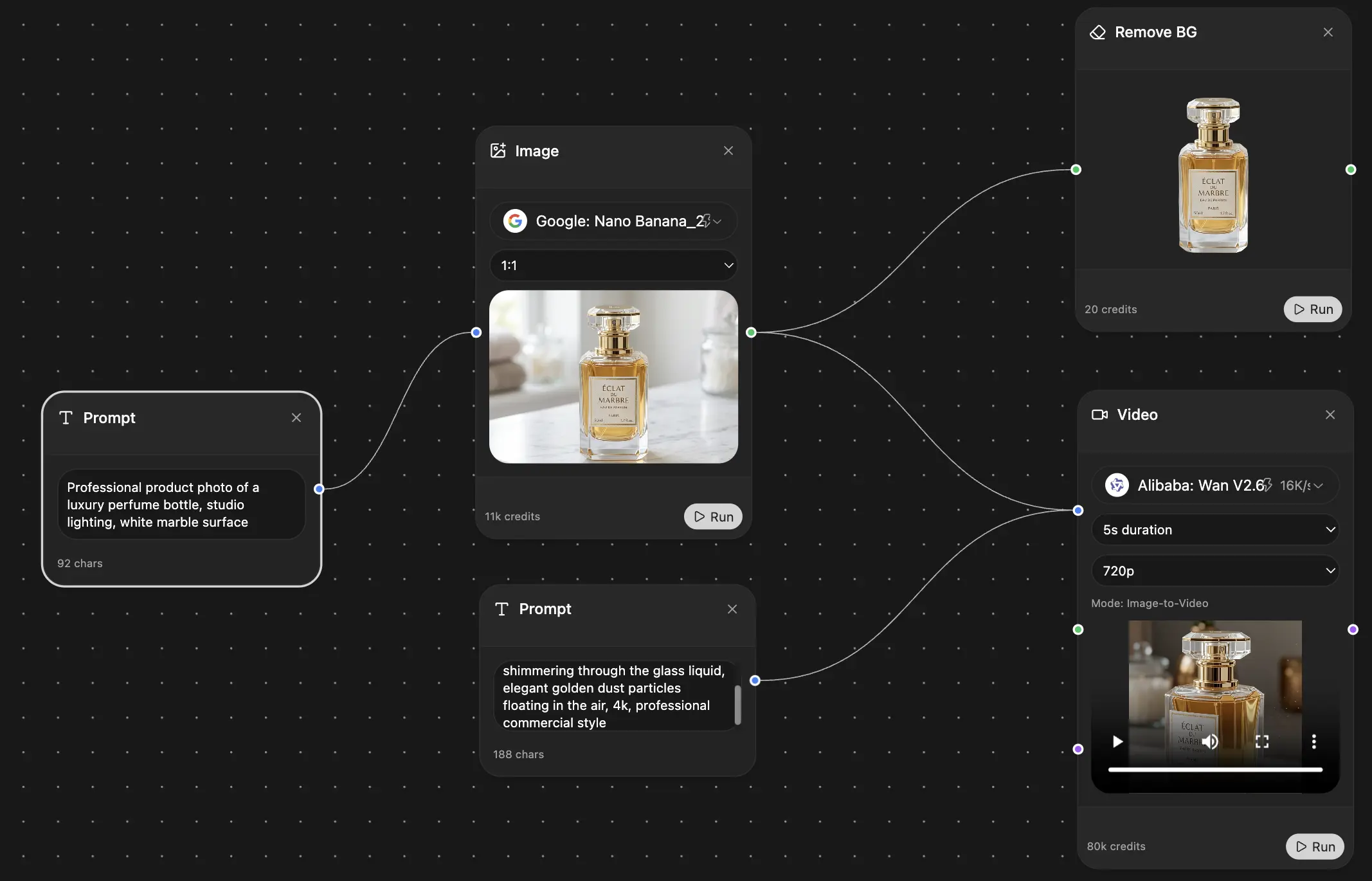
Your infinite AI canvas.
Chat, image, video & motion tools — side by side
Save hours of work and research
Transparent, High-Value Pricing
Trusted by teams at






Free
No credit card required
- 100 credits daily
- 3 AI models to try
- Basic AI chat
Plus
- 1,000,000 credits/month
- 25+ AI models — GPT, Claude, Gemini, Grok & more
- Agent Mode with web search, computer tools and more
- Creative Studio: image generation and video generation
- Project Library: chat with document, website and youtube, podcast generation, flashcards, reports and more
- Workflow Studio and FocusOS
Professional
- Everything in Plus, and:
- 2,100,000 credits/month
- Pro-exclusive models (Claude Opus, Grok 4, Sonar Pro)
- Motion Tools & Max Mode
- First access to latest features
- Access to additional offers