Your Day to Day Planner Online Isn't Working. Here's How to Fix It.
Discover day to day planner online tools that simplify your schedule, centralize tasks, and boost productivity; start organizing today.
If you’ve ever felt like your digital planner was personally out to get you, I get it. You're not alone. A day to day planner online is supposed to bring calm to the chaos, but most of the time, it just adds another layer of digital clutter. The reason they fail so often isn't about your lack of discipline—it's that most are just disjointed, digital copies of the same old paper systems that never really worked in the first place.
Why Your Digital Planner Keeps Failing You

Let's be honest, the cycle is painfully familiar. You find a shiny new planning app, dedicate an entire weekend to color-coding tasks and crafting the "perfect" workflow. A week later? You’re right back where you started, surrounded by a mess of sticky notes, a random thought scribbled on a napkin, and that nagging feeling you’ve forgotten something important. Did I leave the oven on? Probably not, but my planner won't tell me.
The problem isn't you. It's that most tools are just glorified digital filing cabinets, forcing you to work in disconnected silos.
The Chaos of a Fragmented System
Think about your current setup. You probably have one app for your calendar, another for your to-do list, a third for notes, and your actual work—the documents and files—lives somewhere else entirely. Your morning routine quickly turns into a digital scavenger hunt just to figure out what you’re supposed to do.
This constant app-switching creates a ton of mental friction. You’re trying to connect the dots between your schedule, your tasks, and the information you actually need to get the work done. It’s no wonder the system eventually falls apart. The effort to manage the planner becomes a bigger job than the tasks themselves. This constant mental whiplash is a huge productivity killer known as context switching. We've actually gone deep into the real cost of context switching in our detailed guide.
When Your To-Do List Becomes the Enemy
An endless, scrolling list of tasks without any context is more overwhelming than it is helpful. It doesn't point you to the project brief you need or remind you what was decided in that meeting last week. It's just a wall of obligations staring back at you, silently judging you for not being a productivity robot.
The goal of a planner isn’t to create a perfect, color-coded masterpiece. It's to create a living system that reduces the friction between your ideas and your actions. If your tool adds friction, it's failing.
If you’re drowning in chaotic task lists, learning to visualize your workflow can be a game-changer. For example, applying a system like a Kanban board to your tasks can help you Master Visual Workflow Management and finally regain control.
The demand for a better way is huge. The global market for digital planners is expected to hit $7,047.01 million by 2033, which just goes to show how many of us are searching for a true command center for our lives. You can check out more insights on this growing market on Cognitive Market Research.
This is exactly where an all-in-one workspace like Zemith.com comes in. By bringing your notes, documents, tasks, and even AI assistance into a single, unified space, it ends the digital scavenger hunt for good. It creates a seamless flow where your plan is directly tied to the work itself, building a system that actually sticks.
Find the Planning Method That Clicks With You
Before you even think about building the perfect day to day planner online, let's get real for a second. You have to be honest about how your brain is wired. Forcing yourself into a system that doesn't fit your natural style is like trying to text with your elbows—it’s not impossible, but it’s going to be frustrating and messy.
Choosing a planning method isn't about finding the "best" one out there. It's about finding the one that feels less like a chore and more like a secret weapon. If you're a creative, big-picture thinker trying to be a meticulous time-blocker, you'll just end up with a gorgeous planner that you never, ever look at. Let's find a blueprint that actually works for you.
What’s Your Planning Personality?
Most of us naturally lean into one of three main styles. See which one sounds most like you.
The Time-Blocker: You are the architect of your day. Every hour, maybe even every 15-minute chunk, has a specific job. This is gold for anyone who needs to carve out time for deep work—think freelance designers needing uninterrupted creative sessions or developers on a mission to squash bugs. You see your calendar as a game of Tetris, fitting every task into the perfect slot.
The Ruthless Prioritizer: You're basically the emergency room doctor of productivity. Your day is a constant flood of incoming tasks, and your superpower is knowing exactly what to tackle now, what to schedule for later, and what to set on fire (metaphorically, of course). Startup founders juggling a dozen "urgent" requests live and die by this method.
The Free-Flowing Task-Lister: The very idea of scheduling every minute of your day gives you hives. You just need a simple, clear list of what needs doing. For you, the sheer satisfaction of ticking things off is what it's all about. This approach is fantastic for people whose days are unpredictable but who still need to track what they've accomplished.
The most effective planning system is one you don't actively avoid using. If you dread opening your planner, the problem isn't your motivation—it's the system itself.
Find Your Perfect Planning Method
Still not sure which one fits? Here's a quick breakdown to help you decide. These are the big three, and understanding them is the first step toward building a system that doesn't just look good, but actually works.
No matter which one you lean toward, the key is to pick a lane. Start with one, see how it feels, and don't be afraid to adjust.
Bringing Your Method to Life in an Online Planner
A great planner isn't just a static list; it's a dynamic dashboard for your day.
For instance, a startup founder who thrives on prioritization can build a matrix right inside their Zemith workspace. They can create tags like 'Urgent & Important' and link each task directly to the relevant investor email or project brief stored in their Library. No more frantic searching for context when things get hectic.
Meanwhile, that freelance designer who loves time-blocking can create a template for "Creative Days" in Zemith's Smart Notepad. This template can automatically pull in their design files, links to client feedback, and even an inspirational mood board, all in one clean view.
Of course, to make any online planner stick, you need a solid foundation in learning how to stay organized. Think of it as the groundwork for building any good digital system. Mastering this is just one of the many productivity hacks for work that can completely change your daily grind.
At the end of the day, the goal is a planner that reflects how you think, not how some app developer thinks you should think. And hey, don't be afraid to mix and match. Maybe you’re a Time-Blocker in the morning for deep work and a Task-Lister in the afternoon for clearing out smaller items. The perfect system is the one that gives you clarity, not more digital noise.
Building Your All-In-One Planner With AI
Okay, enough talk. Let's roll up our sleeves and actually build a day to day planner online that works for you, not against you. The idea is to move beyond a glorified to-do list and create a single source of truth for your day inside a workspace like Zemith.
We're not just organizing tasks; we're connecting them to the actual work. Imagine your schedule linking directly to the documents, notes, and project files you need. No more tab-switching chaos.
Start with a "Brain Dump" in a Smart Notepad
We all know that morning feeling—a tidal wave of half-formed ideas, urgent reminders, and random thoughts. Trying to force that chaos into neat little boxes is a recipe for frustration.
Instead, just open up Zemith's Smart Notepad and let it all out.
Don't edit, don't filter. Just type. "Email Jen about Q3 report, need to draft the marketing proposal, ugh forgot to buy coffee, check in on the design team's progress for Project Titan."
Now for the magic. With one click, Zemith's AI can take that messy stream of consciousness and instantly organize it into a structured, prioritized to-do list. It’s like having an assistant who deciphers your mental shorthand and gives you a clear plan.
From there, you can decide how to tackle your day, whether you prefer time-blocking, focusing on priorities, or just working through a simple list.

This gives you the freedom to choose a structure that actually fits the kind of day you have ahead of you, instead of being locked into one system.
Tie Your Planner Directly to Your Work
A task that just says "Review project brief" isn't helpful. It’s an incomplete thought that forces you to spend the next ten minutes digging through folders and emails to find the actual document. This is where an all-in-one approach changes everything.
In Zemith, your planner is built right next to your 'Library'—your central hub for documents and notes.
When you create a task, you can link it directly to the relevant project brief, client feedback, or research doc. Suddenly, your tasks have context.
Your planner stops being a simple checklist and becomes a launchpad for actually getting things done. Every task is directly connected to the resources you need, so you can just click and go.
This kind of connected, AI-driven experience is exactly why the digital planner app market is projected to hit an incredible $14.33 billion by 2033. People are tired of disconnected tools. You can read more about the trends driving this growth over at Data Insights Market.
Let AI Handle the Heavy Lifting
Here’s a perfect real-world example. A client drops a dense, 20-page report in your inbox and needs your feedback by EOD. That’s an easy hour or two gone, right?
Not anymore. You can just upload that report to your Zemith Library.
From there, you can ask the AI Document Assistant to:
- Summarize the entire report into five key takeaways.
- Pull out all the action items and turn them into a checklist for you.
- Draft a reply email based on that summary and the action items it found.
What was a two-hour job just became a 15-minute task. The AI does the grunt work of reading and extracting, putting the crucial information right into your daily plan so you can focus on the high-level thinking. If you want to see more on how this works, our guide on the best AI productivity apps is a great place to start. This is what it means to build a system that truly works with you.
Automating Your Routine Tasks and Reminders
A great day to day planner online shouldn't just be a list of chores; it should be your secret weapon for getting things done with less friction. It's time to put your planner on autopilot and let it do some of the heavy lifting.
We're moving way beyond just setting a reminder for 'send weekly report' every Friday. We're talking about building a smart system that actually anticipates what you need.
The whole point is to free up your brainpower. Instead of wasting your best morning energy on repetitive admin, you can build smart templates that handle all the setup for you. This stops that administrative drag from killing your momentum before your real work even begins.
Build a Template for Every Kind of Day
Let's be real—your days aren't all the same, so why should your planner be a one-size-fits-all list? A Monday crammed with back-to-back client meetings requires a totally different setup than a Thursday you've blocked out for deep, creative work.
By creating templates for these different scenarios, you build a planner that actually adapts to you.
- 'Content Creation Day' Template: Picture this: a template that instantly loads your content calendar, a direct link to your research folder, and your favorite brainstorming document. No more hunting for links.
- 'Client Meeting Day' Template: This could automatically surface your list of scheduled calls, link you straight to each client's profile, and open a fresh note page for every single meeting.
- 'Morning Kickstart' Template: A simple but powerful template for your daily non-negotiables. It could load your top three priorities, a link to your daily journal, and your main project file for the day.
When you set these up in a tool like Zemith, you start your day with intention, not administration. You’re not wasting time deciding what to do; you’re diving right in.
A planner that saves you time on setup is good. A planner that eliminates the setup altogether is a game-changer. It gives you back your most valuable resource: that initial burst of morning energy.
Let AI Build Your Workflows for You
Okay, this is where things get really interesting. What if your planner could build out entire chunks of your day for you? With an AI-powered workspace, it absolutely can.
Let’s go back to that weekly client update. Instead of just a reminder, you can create a smart template in Zemith that uses AI to do the groundwork. It can automatically pull key performance stats from a recent report, summarize the main points from your last meeting transcript, and even draft a solid first version of the email.
If you want to see just how powerful this can be for your communications, check out our guide on how a ChatGPT email writer can completely transform your workflow.
Suddenly, your task isn't "write client update from scratch." It's "review and send client update," which saves a massive amount of time. This proactive help turns your planner from a passive list into an active partner. By automating these recurring, high-effort tasks, you're building a system that truly works for you.
Bringing Your Paper Notes Into Your Digital Planner

Do you love the feel of a pen on paper but can't live without the organization of a digital system? You're not alone. The great news is you don’t have to choose. A hybrid approach might just be your productivity superpower.
This isn't about giving up your favorite notebook. It's about turning that notebook into an on-ramp for your entire digital workflow.
It turns out that a lot of people are figuring this out. The hybrid method—using both paper and apps—is now the go-to for professionals between 25-34. It’s a winning formula, especially as AI-integrated planners have seen a massive 150% jump in usage over the last year. You can check out more on these rising planner industry trends if you're curious.
This combination lets you brainstorm freely on paper and then pull those ideas right into your structured day to day planner online.
From Scribbles to Actionable Tasks
The real magic happens when you connect your analog and digital worlds. Your notebook is the perfect place for that messy first draft—the "brain dump" where you can sketch out ideas, mind-map a project, or just jot down notes during a meeting. There's something about handwriting that just helps the ideas flow better.
But those brilliant thoughts can't stay stuck on the page. That's where a tool like Zemith's Live Mode on your phone comes in.
You just open the app, point your camera at your handwritten notes, and let the AI do the work. It instantly scans and digitizes your handwriting, turning it into text you can actually search and edit. Better yet, it spots action items and turns them into tasks in your planner. That quick note to "Follow up with Mark" is no longer just a reminder; it’s a real task you can schedule and track.
Your paper notebook becomes the incubator for creativity. Your digital planner becomes the command center that makes it all happen. They're a perfect team.
Making a Hybrid Workflow Actually Work
So, how do you put this into practice without it feeling like a chore? Here’s a simple system that I've found works really well:
- Brainstorm Freely on Paper: Use your notebook for all your initial thinking. Don't worry about making it neat—just get your thoughts down.
- Snap and Digitize: When you're done, or at the end of the day, use an AI scanner to pull those notes into your digital space. It literally takes seconds.
- Organize in Your Planner: Once your notes are in your Zemith workspace, let the AI help you sort through them. You can pull out key to-dos, link them to project files in your Library, and pop on a deadline.
This approach lets your creative process run wild while making sure nothing important gets lost in the shuffle. It's the best way to stay organized without giving up the tools you love.
And if you're looking to dive deeper into making your notes work for you, you’ll love our breakdown of the best AI note-taking apps.
Your Online Planner Questions Answered
Whenever you're trying a new planning system, a few questions always pop up. Let's get into some of the most common ones I hear about building a solid day to day planner online.
How Long Does It Really Take to Set Up a Daily Planner Online?
Honestly, you can get the basics up and running in under an hour. The real learning and refinement, though, happens over that first week or two as you actually live with the system.
My best advice? Don't aim for the "perfect" setup from the get-go. Start with a simple task list and then slowly layer in things like time-blocking or project templates as you get comfortable. Using a tool like Zemith helps a ton here because you aren't trying to patch together five different apps to make one workflow.
Can I Integrate My Main Calendar with an Online Daily Planner App?
This is a big one. While having everything in one workspace is the goal, most of us still live in Google Calendar or Outlook for meetings and appointments. The best approach I've found is to use your planner for the detailed "time-blocking" and then mirror only the most important blocks on your main calendar.
This way, your detailed plan and your high-level schedule stay in sync. It builds a bridge between your personal planning space and the calendar that your colleagues or family might see.
What Is the Biggest Mistake People Make With Their Online Planner?
Trying to be too rigid. By far, the biggest pitfall is creating a beautifully architected plan and then feeling like a total failure when life gets in the way. A burst pipe or a sick kid doesn’t care about your perfectly color-coded schedule.
Your day to day planner online needs to be a guide, not a cage.
A great system has to be flexible. It's designed to help you quickly reschedule and shift priorities when things go sideways, not make you feel like you've completely failed. It's about adapting, not just sticking to the plan no matter what.
Ready to build a planner that finally works with you? Zemith brings your notes, tasks, documents, and AI into one clean workspace. Start building your intelligent planner on Zemith.com today and turn chaos into clarity.
Explore Zemith Features
Every top AI. One subscription.
ChatGPT, Claude, Gemini, DeepSeek, Grok & 25+ more








Always on, real-time AI.
Voice + screen share · instant answers
What's the best way to learn a new language?
Immersion and spaced repetition work best. Try consuming media in your target language daily.
Voice + screen share · AI answers in real time
Image Generation
Flux, Nano Banana, Ideogram, Recraft + more

Write at the speed of thought.
AI autocomplete, rewrite & expand on command
Any document. Any format.
PDF, URL, or YouTube → chat, quiz, podcast & more
Video Creation
Veo, Kling, Grok Imagine and more

Text to Speech
Natural AI voices, 30+ languages
Code Generation
Write, debug & explain code
Chat with Documents
Upload PDFs, analyze content
Your AI, in your pocket.
Full access on iOS & Android · synced everywhere
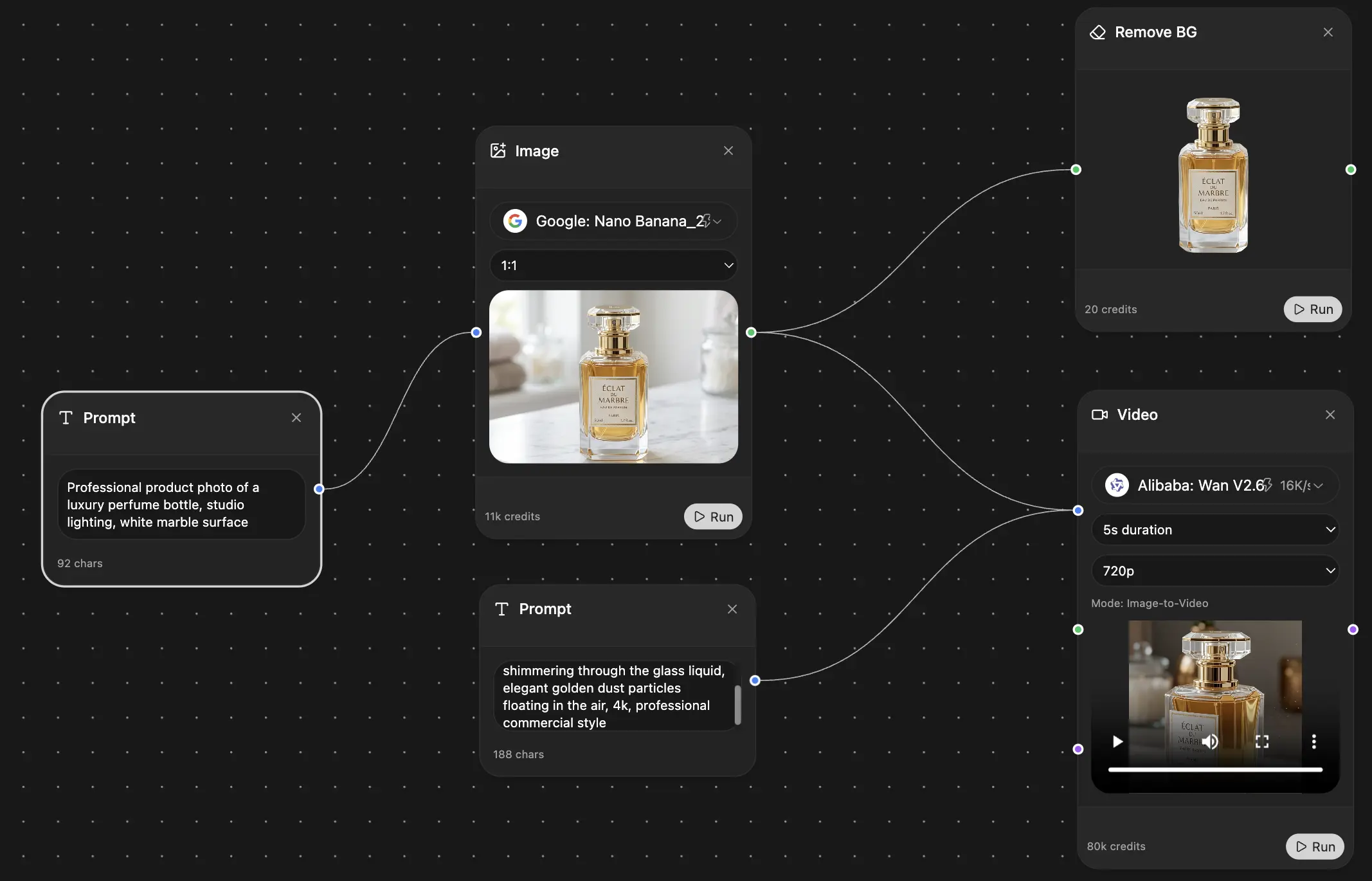
Your infinite AI canvas.
Chat, image, video & motion tools — side by side
Save hours of work and research
Transparent, High-Value Pricing
Trusted by teams at






Free
No credit card required
- 100 credits daily
- 3 AI models to try
- Basic AI chat
Plus
- 1,000,000 credits/month
- 25+ AI models — GPT, Claude, Gemini, Grok & more
- Agent Mode with web search, computer tools and more
- Creative Studio: image generation and video generation
- Project Library: chat with document, website and youtube, podcast generation, flashcards, reports and more
- Workflow Studio and FocusOS
Professional
- Everything in Plus, and:
- 2,100,000 credits/month
- Pro-exclusive models (Claude Opus, Grok 4, Sonar Pro)
- Motion Tools & Max Mode
- First access to latest features
- Access to additional offers
What Our Users Say
Great Tool after 2 months usage
"I love the way multiple tools they integrated in one platform. Going in the right direction."
— simplyzubair
Best in Kind!
"The quality of data and sheer speed of responses is outstanding. I use this app every day."
— barefootmedicine
Simply awesome
"The credit system is fair, models are perfect, and the discord is very responsive. Quite awesome."
— MarianZ
Great for Document Analysis
"Just works. Simple to use and great for working with documents. Money well spent."
— yerch82
Great AI site with accessible LLMs
"The organization of features is better than all the other sites — even better than ChatGPT."
— sumore
Excellent Tool
"It lives up to the all-in-one claim. All the necessary functions with a well-designed, easy UI."
— AlphaLeaf
Well-rounded platform with solid LLMs
"The team clearly puts their heart and soul into this platform. Really solid extra functionality."
— SlothMachine
Best AI tool I've ever used
"Updates made almost daily, feedback is incredibly fast. Just look at the changelogs — consistency."
— reu0691