


Every top model, with tools built in.
Search the web, run deep research, read files, create images and run code with GPT, Claude, Gemini, Grok and more.
Tired of forgetting things? Learn science-backed strategies and actionable tips on how to retain information better. Stop the brain drain today.
To make what you learn actually stick, you have to get your hands dirty with the material. Passively rereading your notes is like trying to learn how to swim by watching videos of Michael Phelps—it just doesn't work. You need to be testing yourself, finding ways to link new concepts to what you already know, and—this is a big one—revisiting the info at just the right moments. These actions are like sending a VIP signal to your brain, telling it, "Hey, this is important. Don't throw this out with last night's takeout menu."
Ever feel like your brain is a smartphone with no storage left? You try to cram in one more piece of information—your boss's detailed instructions or a key formula for an exam—and you get that dreaded 'storage full' pop-up. It's incredibly frustrating, but trust me, you're not alone. And it's definitely not a sign of a "bad memory."

Here's the wild part: your brain is designed to forget. It’s like a super-aggressive decluttering expert, constantly tidying up to keep only what it thinks you need for survival and day-to-day life. This automatic cleanup process is perfectly captured by something called the "Forgetting Curve."
The Forgetting Curve is a bit terrifying when you first see it. It shows that we lose a massive chunk of new information almost immediately—we can forget more than 50% within just one hour if we don't do anything to stop it. It’s like pouring water into a leaky bucket. But here's the good news: a leaky memory isn't a life sentence. It's usually just a sign that you're using the wrong learning strategies.
Forgetting isn’t a failure of your memory; it's a feature. The trick is learning how to tell your brain what information is worth keeping in the long-term storage unit instead of tossing it in the daily trash bin.
The secret is to work with your brain's natural tendencies, not against them. You just need a few solid strategies that interrupt the forgetting process at exactly the right time. And that's what this guide is all about. We're going to dive into how you can shift your learning habits from passive to active, making information stick for good.
You really can turn that leaky bucket of a memory into a steel trap, especially with the right tools in your corner. But the challenge often starts before you even try to remember anything; it begins with how well you actually understand it in the first place. For a deeper dive on that first crucial step, check out our guide on how to improve reading comprehension.
As we move forward, just keep these three things in mind:
This mindset shift is everything. From here, we'll show you how to put simple, science-backed techniques into practice that shout at your brain, "Hey, this is a keeper!" With a platform like Zemith designed to make these methods feel like second nature, you'll be well on your way.
Now that we know why our brains are so quick to hit the "delete" button, let's talk about how to stop them. The secret to retaining information isn't having some kind of "photographic memory" or innate superpower. It's about using a handful of ridiculously effective techniques that memory champions and top students rely on every single day.
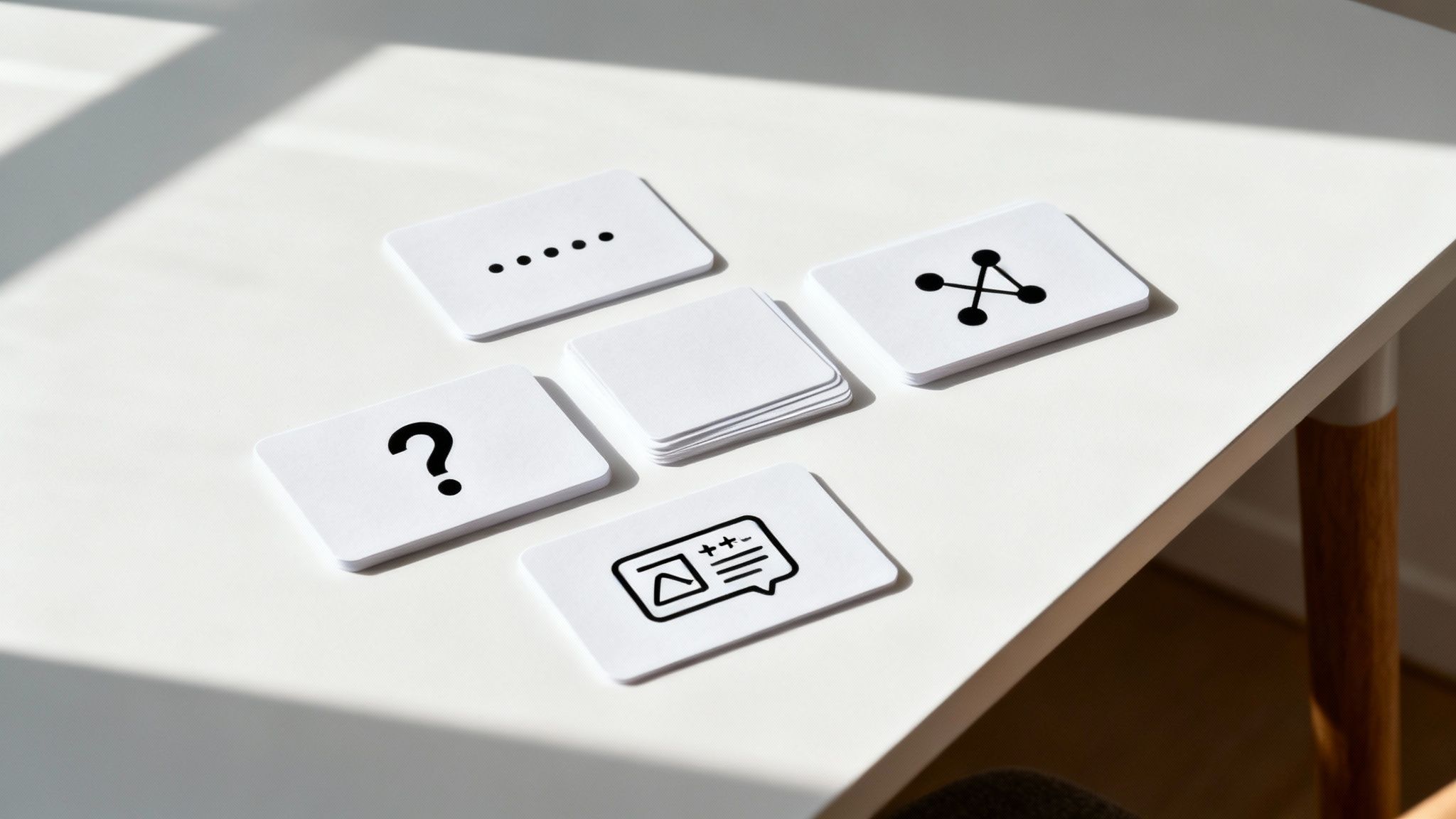
These five principles are the heavy hitters of learning science. They’re simple, backed by solid research, and when you start combining them, they create a powerful system for making knowledge actually stick. Let's break them down into habits you can really use.
To give you a quick fly-by, here are the big five learning techniques we're about to unpack. Think of this as your cheat sheet for a better memory.
This table is just the highlight reel. Now, let’s dig into how you can make each of these a core part of your learning routine.
Let’s be honest: passive rereading is the junk food of studying. It feels good and seems productive, but it gives you almost zero long-term benefits. Active recall is the total opposite; it's the healthy, muscle-building workout for your brain.
Instead of just glazing over your notes again, active recall forces you to pull information out of your head. It’s the difference between recognizing a face in a crowd and having to sketch that face from memory. One is easy recognition; the other is hard recall.
The very act of struggling to retrieve information is what strengthens the neural pathways for that memory. If it feels hard, it’s working.
So, how do you actually do it? Simple: quiz yourself constantly. After reading a chapter, close the book and try to summarize the key points out loud. Turn the headings into questions and force yourself to answer them. This is where tools like Zemith's Document Assistant, which can generate quizzes and flashcards from your notes in seconds, become your secret weapon.
Remember that scary Forgetting Curve we talked about? Well, spaced repetition is its kryptonite. The whole idea is to review information at increasing intervals over time. It’s the real reason why studying for 20 minutes a day consistently demolishes a five-hour cram session before a test.
Think of it like watering a plant. You don't just dump a month's worth of water on it at once. You give it just enough at the right times to keep it thriving. Spaced repetition does the same thing for your memories, catching them right before they fade away. For more on this, check out these effective textbook study strategies for better retention.
A simple schedule looks something like this:
Each time you successfully recall the info, you can push the next review even further out. Again, technology is a massive help here. A good flashcard system can automate this whole schedule for you. If you need a primer, our guide on how to create flashcards will get you started on the right foot.
Our brains don't store information in neat, isolated files. They build a massive, interconnected web of knowledge. Elaboration is just the process of intentionally weaving new information into that existing web. The more connections you build to a new concept, the more mental paths you have to find it later.
This is all about asking "why" and "how." How does this new marketing concept relate to that psychology principle I learned last year? Why does this line of code actually work the way it does?
A fantastic way to practice this is by trying to explain the concept to someone else (your dog or a rubber duck works, too). If you can't simplify it, you probably don't understand it well enough yet. Using something like Zemith’s Smart Notepad, you can jot down these connections as they pop into your head, linking ideas from different notes to build your own personal wiki.
It feels so logical to practice one skill or topic until you've mastered it before moving on. This is called "block practice." But the research is clear: interleaving, or mixing up different subjects or skills within a single study session, leads to much better long-term retention.
For example, if you're learning to code, don't just drill one type of function for an hour straight. Instead, spend 20 minutes on that function, then switch to a different data structure for 20 minutes, and then spend another 20 on debugging. It feels messier and more difficult at the moment, but that's the point! It forces your brain to constantly load and reload different mental models, which builds a far more flexible and robust understanding.
Finally, we have dual coding. It’s a simple but incredibly powerful idea: we remember things better when we learn them in two ways at once—verbally and visually. When you pair a concept with a relevant image, you’re giving your brain two different ways to store and recall that information.
So don’t just write down the word "photosynthesis." Draw a quick, messy diagram of the sun, a plant, and the exchange of CO2 and oxygen. This isn’t about becoming an artist; it’s about creating a visual anchor for a verbal concept. You can do this easily by sketching in a notebook or by dropping diagrams and images right next to your text notes in a digital workspace like Zemith.
Alright, theory is great. We’ve talked about the science behind a supercharged memory, but knowing the techniques and actually using them are two totally different things. It’s like owning a fancy cookbook versus actually cooking a meal that doesn’t set off the smoke alarm. This is where the rubber meets the road.
Let’s walk through a practical workflow using Zemith that turns these powerful concepts from abstract ideas into concrete results. It’s a lot easier than you think to create a system that helps you retain information better and builds a solid foundation of knowledge.
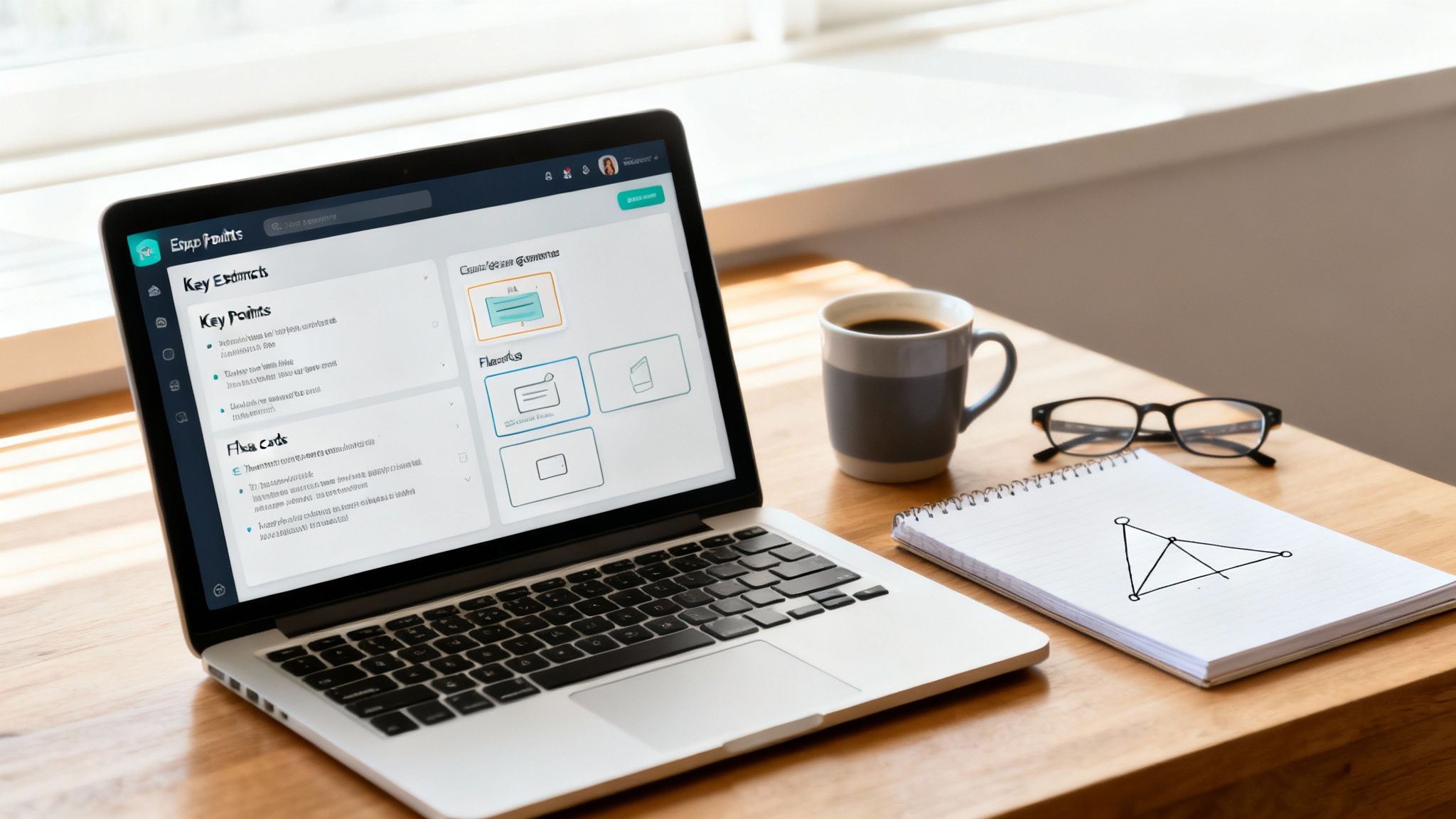
Imagine you've just wrestled with a dense, 30-page research paper or a complex article for work. Your brain is swimming in facts, figures, and jargon. In the past, you might have highlighted a few sentences, closed the tab, and hoped for the best—only to forget 80% of it by the next day. We've all been there.
Not anymore. This time, you’re going to use Zemith to process it like a pro.
The very first move is to fire up Zemith's Document Assistant. Just upload the document. Instead of spending the next hour manually hunting for the key takeaways, you let AI do the heavy lifting. You can ask it to do things like:
This isn’t just about saving time; it’s your first active step in learning. You're immediately engaging with the material by asking questions and forcing it into a format your brain can actually work with.
Okay, you've got the core ideas. Now it's time to build your active recall engine. This is where you transform those passive summary points into active learning tools. With Zemith, you can instantly generate flashcards and quizzes directly from your document or the summary you just created.
With a single click, the platform creates a deck of digital flashcards. The main concepts become the questions, and the explanations become the answers. You’ve just seamlessly set yourself up for both Active Recall and Spaced Repetition.
This is the game-changer. You’re not just creating study materials; you’re building an automated system that will ping you to review concepts right before you’re about to forget them. It’s like having a personal memory coach who knows exactly when to nudge you.
Suddenly, a task that felt like a chore becomes an effortless part of your workflow. You can review your flashcards on your phone while waiting for your coffee or take a quick quiz to see what’s sticking and what isn’t.
Remember Elaboration and Dual Coding? The goal here is to connect new information to what you already know and to pair words with visuals. This is where Zemith’s Smart Notepad becomes your personal knowledge playground.
After processing your document and creating flashcards, open a new note. Start jotting down your own thoughts. How does this new information connect to that project from last quarter? What are the implications for your upcoming presentation?
This is where you truly personalize your learning. Recent research highlights that personalized learning experiences can boost information retention by a staggering 47%. When you tailor content to your own context, you engage with it on a much deeper level, making it far more memorable.
The Smart Notepad is perfect for this. You can:
You could even get creative and use mnemonic devices to remember tricky lists or sequences. If you need some inspiration, you can check out our guide on using a mnemonic maker with letters to craft memorable phrases.
By following this workflow, you’ve hit all five major learning techniques without even breaking a sweat. You've actively recalled information, set up a spaced repetition schedule, elaborated on the concepts, and used dual coding with visuals. This isn't just about using a cool tool; it's about fundamentally changing your relationship with information—from a passive consumer to an active, engaged learner.
https://www.youtube.com/embed/nH6RWQ2xoRo
Look, knowing all the best memory techniques is kind of like having a gym membership—it’s totally useless if you never actually go. Great intentions are nice, but without a real plan, they don't get you very far. So, let's build a practical, sustainable weekly schedule you can start using today to actually lock in what you learn.
We're not talking about cramming more hours into your already packed week. The whole point is to be smart, not just busy. It's about building a low-effort, high-reward habit that makes learning feel less like a chore and more like a natural part of your routine.
Consistency is the secret sauce here. A little bit of focused effort spread throughout the week will always, always beat a frantic, last-minute cram session. Think about it like building muscle. You wouldn't do one massive 8-hour workout and expect to see results, right? You do shorter, regular workouts to build strength over time.
Here’s a sample weekly rhythm you can tweak to fit your own life. It’s designed to be simple, effective, and works perfectly with a tool like Zemith to make it almost effortless.
A Sample Week for Maximum Retention
This schedule isn't about brute force; it's about strategic timing. By spacing out your learning and reviews, you are working with your brain's natural memory cycle, not against it.
Let's be real: the biggest enemy of any plan is distraction. You can have the perfect schedule, but if you're constantly getting pulled away by notifications, emails, and the siren song of social media, it all falls apart. Protecting your focus is just as important as the learning techniques themselves.
This is where a tool like Zemith's Focus OS comes in handy. It’s built to help you carve out a distraction-free zone for these short, intense bursts of learning. You can block apps and websites, set a timer for your session, and create an environment where your brain can actually get down to business.
By scheduling these short blocks of time—that 15-minute review on Tuesday, the 25-minute session on Thursday—you make consistency feel automatic. You’re not trying to find two empty hours in your day; you’re finding small, manageable pockets of time and making them count. For a deeper look into optimizing your study habits, you might be interested in our guide to help you study smarter, not harder.
This entire approach transforms learning from a dreaded marathon into a series of satisfying little sprints. It stops the cycle of cramming and forgetting and starts building a real, lasting foundation of knowledge. You're not just studying for tomorrow's test; you're actually learning for life.
You can have the best learning techniques in the world, but if the machine running them—your brain—is low on fuel, you're not going to get very far. It’s like owning a race car but only putting cheap, watery gas in the tank. To truly lock in information, we need to zoom out from specific study strategies and look at the simple, day-to-day habits that are non-negotiable for a sharp memory.

Don't worry, this isn’t about some crazy life overhaul or a kale-only diet. It's about small, smart choices that create the perfect biological environment for your brain to form and keep memories. Let's get into the big three brain-boosters: sleep, nutrition, and movement.
Sleep isn’t a luxury; it's your brain’s dedicated maintenance shift. While you’re dreaming about finally winning that argument from three years ago, your brain is hard at work, performing a nightly "save and defrag" cycle on your memories.
During deep sleep, your brain consolidates what you’ve learned, transferring important info from the fragile, short-term storage of the hippocampus to the more permanent, long-term storage in the cortex. Skimping on sleep is basically like hitting "cancel" on that transfer.
Studies have shown that a full night of sleep after learning can boost retention by as much as 20-40%. It’s one of the most effective—and most overlooked—study hacks out there.
Getting 7-9 hours of quality sleep is non-negotiable if you’re serious about making knowledge stick. Your brain literally cleans house, strengthens neural pathways, and gets itself ready to absorb new information the next day.
What you eat directly impacts your brain’s ability to function. Think of certain foods as premium fuel, specifically designed to support cognitive processes like memory and focus. You don't need to become a gourmet chef, just mindful of a few key ingredients.
Here are a few brain-friendly food groups to start working into your diet:
Beyond specific memory techniques, a holistic approach involving a well-rounded lifestyle is key. If you want to dive deeper, you can find more actionable strategies to improve cognitive function.
You don’t need to run a marathon to reap the cognitive benefits of exercise. In fact, short bursts of movement can have an immediate and powerful effect on your ability to learn and retain new information.
Movement increases blood flow to the brain, delivering a fresh supply of oxygen and nutrients. It also triggers the release of brain-derived neurotrophic factor (BDNF), a protein that acts like fertilizer for your brain cells, promoting the growth of new neurons and strengthening connections.
Try this simple rule: the '20-minute walk pre-learning' rule. Before you sit down for a focused study session, take a brisk 20-minute walk. Research suggests this can significantly improve your ability to encode new memories. It’s the perfect way to reboot your system, clear out the mental cobwebs, and prime your brain for learning.
By connecting these foundational habits to your learning goals, you create a powerful, self-reinforcing system. Your brain will thank you by holding onto information more effectively, making all your active recall and spaced repetition efforts that much more successful.
Even with a solid game plan, you're going to have questions as you start building these new learning habits. That's completely normal. Let's walk through some of the most common ones I hear, so you can stay on track and feel confident.
This is the big one, right? The good news is, it's less about cramming for hours and more about consistency. Forget those soul-crushing, three-hour study marathons. They don't work.
Instead, try to get in 3-4 focused sessions of 25-45 minutes each day. The real magic happens when you bring in spaced repetition—reviewing that material a day later, then a few days after that. Tools like Zemith's flashcard system are perfect for this, since they can automate the schedule and ping you at just the right moment to really lock in that knowledge.
If it feels hard, that’s actually a fantastic sign. It means it's working! Active recall feels tougher because it forces your brain to work to retrieve information, and that struggle is precisely what builds strong, lasting memories.
Rereading, on the other hand, feels easy and familiar. It often creates an "illusion of knowing" where you recognize the material but can't actually recall it from scratch. So, lean into that feeling of mental effort; it's the sensation of your brain getting stronger, not a sign that you're failing.
Absolutely! These learning principles are for life, not just for cramming for an exam. The goal is to make learning an actual skill you can use anywhere.
Here are a few ways I’ve seen it work:
From the boardroom to your personal passion projects, these techniques will help you learn faster and remember more. This is especially true if you're trying to decide between the best note-taking apps—the right tool should make this stuff second nature.
Hands down, start with Active Recall. It's the biggest game-changer of the bunch and gives you the most return on your effort. It’s the core shift from just passively reading to actively participating in your own learning.
A super simple first step? Use Zemith's Document Assistant to generate questions from any text you’re reading. Then, just try to answer them without peeking. Making that one small change will have a massive and immediate impact on how well you remember things. It’s the perfect first domino to topple.
Ready to stop forgetting and start remembering? Zemith integrates all these powerful learning techniques into one seamless workspace. From generating instant flashcards with the Document Assistant to building interconnected knowledge in the Smart Notepad, you have everything you need to build a steel trap memory. Transform your learning today at zemith.com.






Trusted by teams at





The top models, plus image, video and voice tools, in one plan.
Without Zemith
ChatGPT PlusUS$20.00Claude ProUS$20.00Google AI ProUS$19.99SuperGrokUS$30.00Perplexity ProUS$20.00 MidjourneyUS$10.00
 ElevenLabsUS$6.00Le Chat ProUS$14.99
 RunwayUS$15.00Kling StandardUS$8.80
 Gamma PlusUS$12.00
 Otter ProUS$16.99
 QuillBot PremiumUS$19.95
 Photoroom ProUS$12.99
 Quizlet PlusUS$7.99
Total if paying separatelyUS$234.70/mo
"I love the way multiple tools they integrated in one platform. Going in the right direction."
— simplyzubair
"The quality of data and sheer speed of responses is outstanding. I use this app every day."
— barefootmedicine
"The credit system is fair, models are perfect, and the discord is very responsive. Quite awesome."
— MarianZ
"Just works. Simple to use and great for working with documents. Money well spent."
— yerch82
"The organization of features is better than all the other sites — even better than ChatGPT."
— sumore
"It lives up to the all-in-one claim. All the necessary functions with a well-designed, easy UI."
— AlphaLeaf
"The team clearly puts their heart and soul into this platform. Really solid extra functionality."
— SlothMachine
"Updates made almost daily, feedback is incredibly fast. Just look at the changelogs — consistency."
— reu0691
Hand off the research, writing, design and follow-ups. Zemith picks the tools it needs and brings back finished work.
Search the web, run deep research, read files, create images and run code with GPT, Claude, Gemini, Grok and more.
Zemith keeps working in the cloud and pings you when it's done.
Notion, Linear, Canva, Airtable and more. It asks before it creates or changes anything.
Docs, slides, sheets and PDFs, ready to send.
Chain models and tools on a visual canvas, from one prompt to a finished promo video.
Briefings, reports and reminders run on a schedule and are ready when you need them.
Real-time voice that can see your camera or screen.
The best image and video models, in one studio.
Turn PDFs, links and YouTube videos into podcasts, quizzes, flashcards and mind maps.










 Podcast
 Quiz
Quiz Flashcards
 Mind map
 Infographic