Best Competitor Analysis Tool 2026: The Ultimate Guide to Outsmarting the Competition
Discover the top competitor analysis tool for your business in 2026. Learn features, workflows, and how AI like Zemith helps you win.
Ever feel like your competitors have a secret playbook you just can't crack? What if I told you that a good competitor analysis tool is like having a spy who sneaks into their headquarters, copies their entire game plan, and then drops it on your desk? That's what we're talking about—a piece of software that automatically snoops on your rivals' every digital move, from website traffic to social media buzz, so you can stop guessing and start winning.
Why Your Old-School Competitor Analysis Spreadsheet Is a Joke
Remember those clunky spreadsheets? If you've ever found yourself hunched over a screen, manually copy-pasting your competitors' URLs, social media follower counts, and latest blog titles, you know the soul-crushing pain. It was tedious, it was slow, and frankly, in today's market, it’s like showing up to a Formula 1 race in a horse-drawn carriage. You’re not just late; you’re not even in the race.
The second you hit "save" on that spreadsheet, the data is already expired. A competitor just dropped a surprise flash sale, another snatched a top Google keyword, and a third launched a viral TikTok campaign. That meticulously organized Excel file? It's a history book, not a strategy guide. This is exactly why specialized tools like the Market Edge platform for price tracking even exist—to save us from the tyranny of stale data.
The Shift from Data Dumps to Actionable Insights
The best tools today aren't just data scrapers; they're decision-making sidekicks. They don't just show you what your rivals did yesterday; they use AI to predict their next move and help you brainstorm a brilliant counter-attack.

This is a massive leap forward. A modern competitor analysis tool has become an all-in-one intelligence command center, tracking everything in near real-time. The goal has shifted from "here's a mountain of data, good luck" to "your competitor just did X, you should consider doing Y."
Think of it this way: A spreadsheet gives you a blurry, static photo of the battlefield from last week. A modern competitor analysis tool gives you a live satellite feed, drone surveillance, and an AI strategist whispering genius ideas in your ear.
This new approach is all about turning their strategy into your playbook. For example, a platform like Zemith doesn't just hand you data; it integrates this analysis directly into your workflow. It's about leveraging an AI assistant for work to brainstorm your next marketing campaign right after discovering a competitor's weakness. It’s all about turning insight into action, instantly.
How to Choose a Competitor Analysis Tool That Doesn't Suck
Alright, you're ready to tool up. But shopping for a competitor analysis tool can feel like walking into a Best Buy on Black Friday—everything is shiny, everything promises to change your life, and you're pretty sure you only need half of what they're selling.
So, how do you find a tool that actually moves the needle, instead of just burying you in useless charts and vanity metrics?
A great tool doesn't just throw numbers at you. It tells you the story behind the numbers. It’s the difference between a tool that says, "Your competitor gained 100 backlinks," and one that says, "Your competitor just got featured on Forbes by pitching this specific angle on sustainable packaging. Here's a summary of their article and a list of similar journalists you could pitch." See the difference? One is a fact; the other is a freaking treasure map.
Core Intelligence Features (The Non-Negotiables)
To get real, actionable insights, your tool needs to be able to see your competitor's entire digital footprint. Think of these as the absolute must-haves for any serious player.
- SEO and Keyword Gap Analysis: What keywords are your rivals ranking for that you're not? This is digital gold. A good tool will not only show you these "keyword gaps" but will also tell you which ones are easiest to steal. It's the ultimate cheat sheet for your content strategy.
- Backlink Profile Tracking: Who is giving your competition a digital thumbs-up? Seeing who links to them is like getting a peek at their professional network. It reveals potential PR opportunities, guest posting targets, and what kind of content earns authority in your niche.
- Social Media and Sentiment Monitoring: What are actual humans saying about your competitors on the internet? This isn't just about counting likes. It's about finding customer complaints you can solve, spotting viral trends before they blow up, and understanding the public's true feelings about their brand.
- Ad Campaign Intelligence: Ever wonder what ads your competitors are running? This feature is like having a mole inside their marketing department. You can see their exact ad copy, the landing pages they're using, and where they're spending their money—giving you a masterclass in what works without spending a dime of your own budget.
The AI-Powered Secret Sauce (This is Where the Magic Happens)
Now for the real game-changer. The single most important feature in any competitor analysis tool you consider in 2026 is AI-powered analysis. Old tools would just dump raw data in your lap, leaving you to spend days trying to connect the dots. It was like being handed a 1,000-page novel with no plot.
The best competitor analysis platforms no longer just report what happened; they recommend what you should do next. This is the critical shift from data overload to actionable intelligence.
This is precisely where a platform like Zemith shines. It doesn't just find a competitor's article; its AI can instantly summarize it, identify the core arguments, and even help you brainstorm a more compelling, original angle for your own content. You can go from discovery to a strategic response outline in minutes, not days.
To really understand how this AI-driven approach is reshaping the game, our guide on semantic search versus keyword search reveals how AI is changing what it means to be "visible" online. It's all about making your analysis faster, smarter, and directly tied to action.
A Practical Workflow for Actually Using Your Competitor Analysis Tool
So, you got the shiny new tool. Now what? The biggest mistake people make is letting that powerful software gather digital dust. Having the tool is one thing; building a system to use it is what separates the wannabes from the market dominators.
Let's walk through a simple, repeatable workflow that turns that monthly subscription into your unfair advantage.
Step 1: Start with the Easiest Win—SEO Keyword Gaps
The lowest-hanging fruit is almost always in SEO. I promise you, your competitors are ranking for valuable keywords you haven't even thought of. Your first mission, should you choose to accept it, is to find these "keyword gaps" and plant your flag.
Fire up your tool and run a keyword gap analysis against your top 2-3 rivals. Don't just export a giant list of 10,000 keywords. Filter it down to terms with decent search volume and, most importantly, high purchase intent. For instance, if you're looking for what competitor analysis tools are best for small businesses, that's a long-tail keyword with serious intent!
A competitor might be ranking for "best AI project management tool for remote teams." That's not just a casual search; that person is ready to buy. That's a golden opportunity. Once you find these gems, you can use a tool like Zemith to instantly research and draft a better, more comprehensive article to steal that traffic.
Step 2: Become a Trend Spotter, Not a Trend Follower
Next, zoom out. Your competitors are basically canaries in the coal mine—their content, product updates, and marketing campaigns are all signals of where the market is headed. Your job is to read those signals before everyone else does.
Set up alerts for their blogs, press releases, and even their YouTube channels. If they suddenly release a whitepaper on "The Future of AI in Logistics," that's a strategic flag being planted. Don't just read it—outsmart it. With Zemith's Document Assistant, you can upload that PDF, get an instant summary, extract their core arguments, and even brainstorm counter-points for your own content. Check out our guide on how to do market research online for more sneaky tricks.
This simple infographic shows you what to look for when evaluating if a tool can give you these kinds of actionable insights.

The bottom line? A great tool doesn't just show you data. It helps you figure out what to do next.
Step 3: Decode Their Product and Content Strategy
Finally, it's time to go deep. This is where you analyze the "why" behind their actions.
- Analyze Their Content Angles: Don't just see what they cover; see how they cover it. Is it super technical or beginner-friendly? Witty or corporate? This reveals who they're trying to attract.
- Track Every Feature Launch: When a competitor rolls out a new feature, they're tipping their hand. It shows where they see market demand. Document it.
- Look Beyond the Blog: Are they crushing it on video? You can find some amazing YouTube competitive insights by analyzing their video strategy, which might reveal a completely different customer focus than their blog.
A great workflow isn’t about generating a 50-page report nobody will read. It’s about creating a simple, repeatable system that delivers 1-2 "aha!" moments each week that you can act on immediately.
The All-in-One Advantage: Stop Juggling, Start Winning with Zemith
If your browser currently looks like a chaotic mess of 27 open tabs—one for your SEO tool, one for social listening, another for a content idea Google Doc—you're not alone. But what if you could do all your competitive research in the exact same place you build your strategy and create your content?
That’s not some far-off dream; it's just working smarter. The real breakthrough happens when competitor analysis isn't a separate chore. As you'll see in this in-depth look at different AI platforms, the best solutions are finally tearing down the walls between tools.
Your Mission Control for Competitive Intelligence
This is where an all-in-one platform like Zemith becomes your unfair advantage. It was built from the ground up to eliminate the "tab-switching chaos" that kills productivity. Instead of a standalone Competitor Analysis Tool on its own lonely island, Zemith weaves these features directly into your creative process.
Let’s play out a scenario:
- Spot a Target: You see a competitor's new whitepaper is getting a ton of buzz.
- Instantly Research It: Instead of bookmarking it for "later" (which never comes), you use Zemith's 'Deep Research' feature to pull in the document and real-time web data about it.
- Analyze and Brainstorm: Now, you just drop that PDF into Zemith’s 'Document Assistant'.
In seconds, you're not just reading a document—you're having a conversation with it.
Zemith's AI Advantage: The platform doesn't just show you what your competitor wrote. It can instantly summarize the entire whitepaper, pull out the main arguments, and even help you brainstorm three strategic counter-moves for your own content. This is how you find out what a competitor analysis tool can't tell you on its own.
From Data to Draft in Under a Minute
This is the all-in-one advantage in action. You can go from discovering a competitor's move to having a strategic draft in less time than it takes to brew a cup of coffee. Your 'Smart Notepad' becomes the command center where you turn insights into action.
Found a killer statistic in their report? Highlight it and ask the AI to help you find the original source. Uncovered a weak point in their argument? Immediately start drafting a rebuttal with AI-powered suggestions right there.
The conversation shifts from "what's the best competitor analysis tool?" to "what's the best workflow?" Why pay for one tool to find data, another to analyze it, and a third to write about it? With Zemith, the research, analysis, and creation flow together seamlessly. That’s not just a better tool; it's a smarter way to work.
Future-Proofing Your Strategy: Winning in the Age of AI
For years, the game was simple: win on Google. But the ground is shifting beneath our feet. The new battle isn't just for search rankings; it's for visibility inside AI conversations. Being on page one is great, but it's worthless if you're invisible when a customer asks an AI for a recommendation.
This isn't some sci-fi future; it's the strategic challenge for 2026 and beyond. When a potential customer asks an AI, "what's the best tool for X," does your brand show up? If not, you're losing battles you don't even know you're fighting.
The New Frontier of Brand Visibility
The next evolution of any good competitor analysis tool is monitoring your rivals' presence inside these AI models. You can’t do this by hand. A Sprout Social report on how competitive analysis tools are adapting shows this is quickly becoming a must-have feature for tracking visibility in AI Overviews, ChatGPT, Perplexity, and Gemini.
This lets you track:
- Share of Voice in LLMs: How often does your brand pop up for key prompts versus the competition?
- Sentiment Analysis: When the AI mentions you, is it good or bad?
- Positional Advantage: Are you the top recommendation or an afterthought?
This is a direct look at how AI is shaping your brand's reputation.
Asking AI About Your Competitors
So, how do you get this intel? You can't just Google it. This is where a multi-model platform like Zemith gives you a massive advantage. You can ask the AIs directly how you stack up.
For example, prompt an AI with: "Compare Zemith and Competitor X for content creation features." The answer is a raw, unfiltered look at how the AI perceives your brand. Is it highlighting your best features, or are they totally overlooked? This was science fiction a year ago.
By querying AI models directly, you get a sneak peek into the future of brand perception. You’re not just analyzing what your competitors say about themselves; you’re analyzing what an influential, third-party AI thinks about them.
This process uncovers opportunities you'd never spot with traditional SEO. The latest AI SEO tools for brands are built for this, helping you influence the models to shape future conversations. This is how you build a long-term content strategy for brand visibility in AI-driven search.
If you want more ideas on what's possible, this list of AI tools is a great starting point. This is your guide to winning the market of tomorrow, starting today.
Common Questions About Competitor Analysis Tools
Okay, we've covered a lot, from plugging keyword gaps to preparing for the AI revolution. But you probably still have some practical questions. Let's tackle them head-on. No fluff.
It’s one thing to get pumped about uncovering a rival's secret strategy, but it's another to figure out the budget, the ethics, and how to fit this into your already packed schedule. Let's clear the air.
How Much Should I Budget for a Competitor Analysis Tool?
Ah, the million-dollar question! Or, hopefully, a much cheaper one. Prices are all over the place.
You can find decent starter tools for around $29-$79 a month. These are great for freelancers or small teams. For more firepower, specialized platforms can run from $140 to over $250 per month. The trick is to not pay for a bunch of features you'll never touch.
But here’s a thought: instead of adding another subscription, what if you consolidated? A platform like Zemith bundles competitor research with AI writing and project management. You get the insights and simplify your tech stack, which is often a much better value. It’s like getting the spyglass, the map, and the treasure chest all in one package.
Are These Tools Legal and Ethical to Use?
Short answer: Yes, using a competitor analysis tool is 100% legal and totally standard. Anyone who tells you otherwise is probably trying to hide their own strategy.
Think of it this way: these tools aren't hacking into private servers. They're just hiring a team of super-fast robots to read everything that's already public online—websites, social media, news articles. It's information anyone could find with enough time and coffee.
The ethics come down to how you use the intel. The goal is inspiration, not plagiarism. Spot market gaps, understand trends, and learn from their successes (and failures!). Don’t just rip off their work. Use your intelligence for good!
How Often Should I Run a Competitor Analysis?
This is not a "set it and forget it" task. For big-picture strategy, a deep dive every quarter is a good rhythm.
But for tactical stuff—like SEO, content, and ads—you should be checking in weekly. A competitor can launch a new campaign or snatch a top keyword in a matter of days.
The real pros use tools with automated alerts. That’s how you find out about a rival's new launch the day it happens, not three months later when you stumble upon it by accident. It’s the difference between playing offense and constantly playing catch-up.
Ready to stop chasing your competitors and start outsmarting them? Zemith integrates deep research capabilities into a single, powerful AI workspace, so you can analyze, strategize, and create faster than ever before. Discover the all-in-one advantage at zemith.com.
Explore Zemith Features
Every top AI. One subscription.
ChatGPT, Claude, Gemini, DeepSeek, Grok & 25+ more








Always on, real-time AI.
Voice + screen share · instant answers
What's the best way to learn a new language?
Immersion and spaced repetition work best. Try consuming media in your target language daily.
Voice + screen share · AI answers in real time
Image Generation
Flux, Nano Banana, Ideogram, Recraft + more

Write at the speed of thought.
AI autocomplete, rewrite & expand on command
Any document. Any format.
PDF, URL, or YouTube → chat, quiz, podcast & more
Video Creation
Veo, Kling, Grok Imagine and more

Text to Speech
Natural AI voices, 30+ languages
Code Generation
Write, debug & explain code
Chat with Documents
Upload PDFs, analyze content
Your AI, in your pocket.
Full access on iOS & Android · synced everywhere
Your infinite AI canvas.
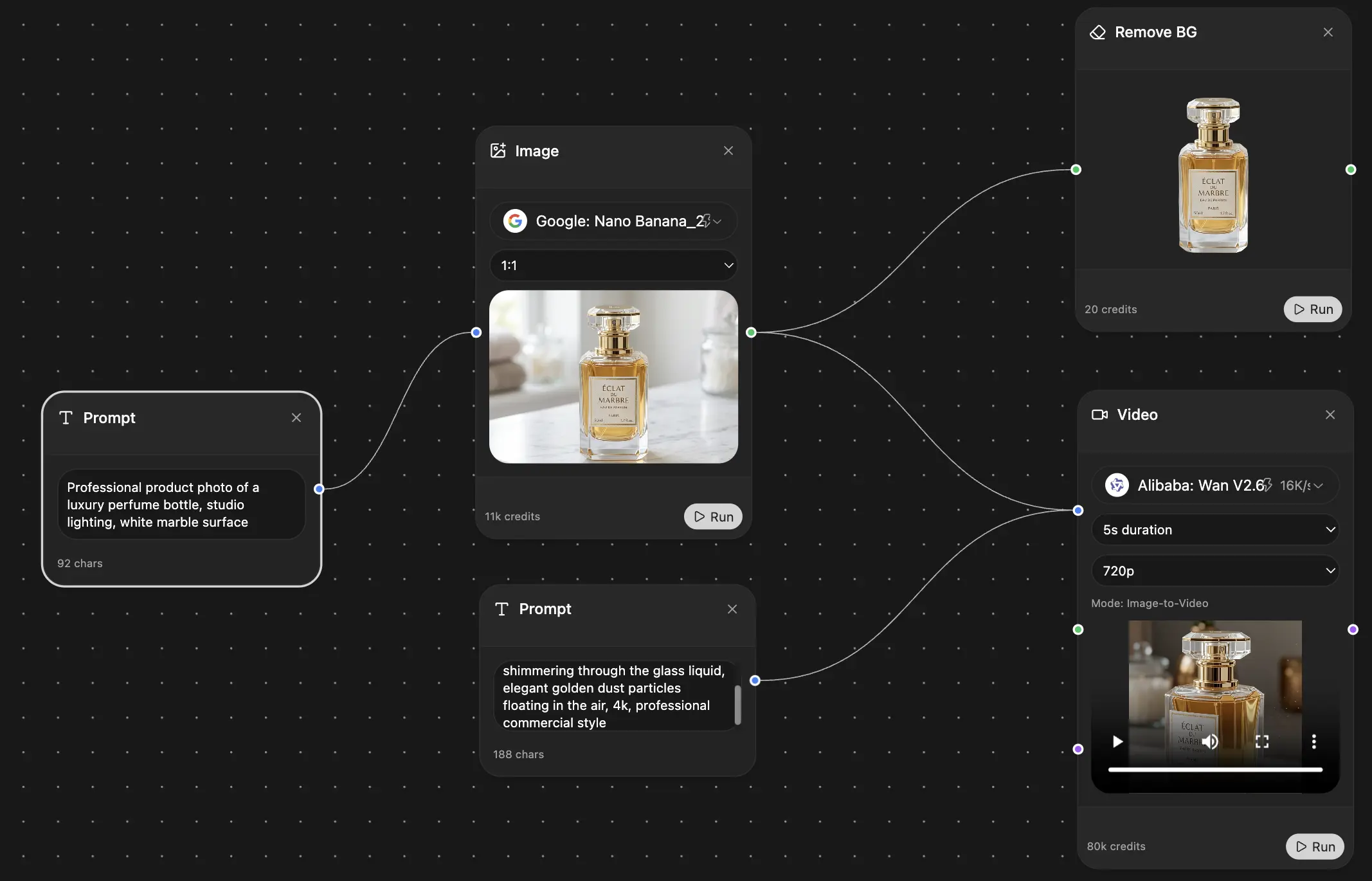
Chat, image, video & motion tools — side by side
Save hours of work and research
Transparent, High-Value Pricing
Trusted by teams at






Free
No credit card required
- 100 credits daily
- 3 AI models to try
- Basic AI chat
Plus
- 1,000,000 credits/month
- 25+ AI models — GPT, Claude, Gemini, Grok & more
- Agent Mode with web search, computer tools and more
- Creative Studio: image generation and video generation
- Project Library: chat with document, website and youtube, podcast generation, flashcards, reports and more
- Workflow Studio and FocusOS
Professional
- Everything in Plus, and:
- 2,100,000 credits/month
- Pro-exclusive models (Claude Opus, Grok 4, Sonar Pro)
- Motion Tools & Max Mode
- First access to latest features
- Access to additional offers
What Our Users Say
Great Tool after 2 months usage
"I love the way multiple tools they integrated in one platform. Going in the right direction."
— simplyzubair
Best in Kind!
"The quality of data and sheer speed of responses is outstanding. I use this app every day."
— barefootmedicine
Simply awesome
"The credit system is fair, models are perfect, and the discord is very responsive. Quite awesome."
— MarianZ
Great for Document Analysis
"Just works. Simple to use and great for working with documents. Money well spent."
— yerch82
Great AI site with accessible LLMs
"The organization of features is better than all the other sites — even better than ChatGPT."
— sumore
Excellent Tool
"It lives up to the all-in-one claim. All the necessary functions with a well-designed, easy UI."
— AlphaLeaf
Well-rounded platform with solid LLMs
"The team clearly puts their heart and soul into this platform. Really solid extra functionality."
— SlothMachine
Best AI tool I've ever used
"Updates made almost daily, feedback is incredibly fast. Just look at the changelogs — consistency."
— reu0691