10 Best AI Code Review Tools for 2026
Discover the top 10 AI code review tools for 2026. Compare features, pricing, and integrations to find the best AI assistant for your pull requests.
You're probably staring at a pull request right now that should have been simple. It wasn't. The diff grew legs, someone snuck in a config change nobody mentioned, the tests are green in that suspicious way, and the human reviewer left “LGTM” after skimming half the files. That's the moment ai code review tools stop sounding like shiny dev-tool bait and start sounding useful.
The catch is that the tools are frequently purchased for the wrong reason. They hope an AI reviewer will replace human review. It won't. The good ones act more like a tireless first pass. They catch obvious bugs, flag risky patterns, summarize messy diffs, and save senior engineers from spending their afternoon arguing about null checks and naming bikesheds. The bad ones generate fluffy comments that read like a junior dev trying to sound confident in a standup.
The key question isn't “which tool has the most AI.” That's how you end up paying for a bot that proudly explains the code you just wrote back to you. The key question is what job you need done. Do you want a security cop, a pair programmer, a PR gatekeeper, or a historical analyst that points at the scary parts of the codebase humans keep pretending are fine?
That difference matters a lot in practice. A GitHub-native team usually wants low-friction review inside the pull request. A platform team may care more about policy enforcement and governance. A security-heavy org may want AI only where static rules already found something suspicious. And if your stack is already sprawling, an all-in-one setup like Zemith can make more sense than duct-taping five subscriptions together and calling it a workflow.
1. GitHub Copilot – Code Review

If your team already lives in GitHub, GitHub Copilot for code review is the obvious first tool to test. That's not because “native” automatically means “best.” It means fewer excuses. You can run reviews on demand or automatically on pull requests, and the feedback lands where developers already spend their time: the PR timeline and inline comments.
This one feels less like a separate product and more like GitHub trying to make review less annoying. That's good. Friction kills adoption faster than bad prompts do.
What it does well
Copilot can post structured review comments, summarize a pull request, and support diff-aware chat around the changes. It also fits neatly with Copilot Chat and GitHub's broader coding workflow, so a dev can move from “what's wrong with this diff?” to “help me fix it” without playing tab tennis.
A few practical strengths stand out:
- Low workflow friction: Developers don't need to learn a new review surface.
- Org-level controls: Admins can manage usage and budgets through AI credit controls.
- Flexible triggering: Teams can use automatic reviews, CLI triggers, or mention-based workflows.
Practical rule: If a team ignores external bots but responds quickly to native PR comments, use the native tool first and optimize later.
The trade-off is cost visibility. GitHub's usage-based AI credits can get fuzzy fast, especially if leadership assumes “it's included” and engineering later learns that “included” had an asterisk the size of a legal disclaimer. There's also been public grumbling around UI choices, which is a reminder that platform-native tools still make product decisions you don't control.
For GitHub-heavy teams, though, this is the easiest place to start. If you're comparing it with broader assistants, this guide to the best AI coding assistant options helps frame where review fits versus generation and debugging. You can explore GitHub's product page at GitHub Copilot.
2. GitLab Duo – Code Review

GitLab Duo makes the most sense when your company has already standardized on GitLab and wants AI review without introducing another vendor with another dashboard and another procurement meeting nobody enjoys. You can assign Duo as a reviewer on merge requests, generate summaries, and ask MR-specific questions through Duo Chat.
That matters more than it sounds. Review tools fail when they sit outside the merge request flow and force developers to context-switch. GitLab Duo avoids that problem by staying inside the house.
Where it fits best
GitLab Duo behaves like an embedded reviewer, not a standalone PR cop. It's good at helping someone understand the merge request quickly and asking focused questions about the diff. For tech leads managing a lot of parallel changes, that summary layer is often the feature that gets used most.
What I like about the GitLab approach is the governance angle. Admin-level controls sit inside the broader GitLab environment, which makes rollout and permissions cleaner for teams that already care about centralized policy. You don't need to bolt AI review onto the process with custom glue and crossed fingers.
Still, there are two annoyances:
- Plan complexity: Availability can vary by subscription or add-on.
- Evolving packaging: Pricing and credit policies aren't always as straightforward as engineers want them to be.
GitLab Duo is strongest when your org already treats GitLab as the platform, not just the repo host.
If your team is still split across GitHub, Bitbucket, and GitLab, Duo won't magically solve that fragmentation. But for a GitLab-first shop, it's one of the cleanest native experiences in the category. You can check the current offering at GitLab Duo.
3. CodeRabbit

CodeRabbit is what I reach for mentally when someone says, “We don't want a coding assistant that also reviews code. We want a review bot that takes pull requests seriously.” That distinction matters. CodeRabbit is purpose-built around PR review, and it shows.
It handles inline comments, summaries, policy checks, autofix-style workflows, and extra polish tasks like docstrings or tests. It also plugs into tools teams already use, including Jira, Linear, linters, SAST hooks, IDEs, and CLI flows.
Why teams like it
This is a PR-centric product. It doesn't feel like review was stapled on after the core product shipped. If your team wants the AI to sit in the review lane and stay there, CodeRabbit is one of the better fits.
Useful strengths include:
- Review-first UX: The product is built around pull requests, not just general AI chat.
- Automation breadth: Policy gates and finishing touches can reduce repetitive review work.
- Enterprise readiness: SSO, self-hosting options, and clearer tiering than some competitors.
The downside is predictable. Costs can pile up on larger teams, and lower tiers come with limits that growing orgs hit faster than they expect. That doesn't make it overpriced. It means you should test it against real PR volume before promising finance that the bill will stay “small.”
A practical way to use CodeRabbit is to pair it with a human process that defines what must block a merge and what should remain advisory. Otherwise, your bot becomes the coworker who comments on everything and helps with nothing. This code review checklist for engineering teams is a good companion if you want to tighten review standards before turning on automation. Product details live at CodeRabbit.
4. Qodo Platform formerly Qodo Merge / PR-Agent

Qodo is interesting because it sits between open-source flexibility and enterprise hardening. A lot of teams know it through PR-Agent history, and that legacy still shapes how people think about it. Under the hood, the appeal is pretty simple: automated PR review with commands like /review, /improve, and /describe, plus support across GitHub, GitLab, and Bitbucket.
This is less “cute AI helper” and more “review system with knobs.”
The philosophy behind it
Qodo's philosophy is agent-based review with rules and guardrails. That's attractive for organizations that want AI review behavior to be shaped by policy, not vibes. If your company needs transparency, self-managed options, or a path from open-source experimentation to hosted control, Qodo has a compelling story.
A few reasons teams shortlist it:
- Open-source roots: PR-Agent gives engineering teams something concrete to inspect and extend.
- Multi-repo context: Useful for orgs where changes rarely live in one clean little service.
- Enterprise controls: Hosted offerings add governance and security-focused layers.
The main friction point is commercial clarity. Some enterprise details and pricing paths aren't as publicly obvious as product-led buyers usually want. The name transition also means you'll occasionally hear three versions of the same product in one meeting, which is only charming the first time.
If your platform team wants review automation it can shape, not just consume, Qodo is worth serious evaluation.
I'd put Qodo high on the list for engineering orgs that already think in terms of internal standards, reusable commands, and AI guardrails across repositories. If that's your environment, the platform approach can age better than a simpler bot. You can review the current product at Qodo.
5. DeepSource – AI Review + Autofix

DeepSource takes a hybrid path that many teams overlook. It combines static analysis with AI review and autofix behavior, which means it isn't relying purely on free-form model judgment. That usually leads to better grounding and fewer comments that sound smart while saying absolutely nothing.
For teams that want broad language coverage and a more analysis-driven workflow, DeepSource is a strong option.
What makes it practical
The strongest part of DeepSource is the blend. It analyzes the codebase and pull requests, explains issues, and can generate patches through Autofix. That creates a tighter loop between “we found a problem” and “here's a plausible fix,” which is exactly where many review tools fall apart.
The billing model is also more explicit than some competitors. Not necessarily cheaper in every case, but easier to reason about. Engineers appreciate that. Nobody wants to explain a mysterious AI line item in sprint planning.
The gotchas are mostly operational:
- User onboarding matters: Private repo analysis can depend on getting committers properly added.
- Org rollout takes care: Larger companies need change management, not just a quick install.
- AI usage still needs policy: Autofix is handy, but blind acceptance is how weird patches end up in main.
If your team is already experimenting with model-driven reviews, it's worth comparing a tool like DeepSource against a more conversational workflow. This breakdown of Claude code review workflows is useful if you want to see where direct model review differs from a platform with built-in analysis and remediation. DeepSource itself is at DeepSource.
6. Sonar – AI CodeFix (SonarQube Cloud/Server)
Sonar's AI CodeFix works best when you understand what it is not. It is not a general-purpose AI reviewer that roams through your pull request making broad suggestions about architecture, naming, and your life choices. It proposes fixes for issues Sonar already detects through its static analyzers.
That narrower scope is a feature, not a flaw.
Best for rule-driven teams
If your team already uses Sonar quality gates, quality profiles, and PR decoration, AI CodeFix slots into an existing discipline. You're not replacing the rule engine with AI. You're using AI to accelerate remediation after the rule engine finds something.
That gives Sonar a very different personality from PR-chat tools:
- Grounded suggestions: Fixes are tied to known Sonar issues.
- Existing workflow fit: Teams already running Sonar won't need a cultural reboot.
- Security and quality continuity: The AI layer stays inside the rule-based review system.
The trade-off is obvious. Sonar won't catch free-form concerns outside what its analyzers detect, so it won't feel as “creative” as broader ai code review tools. That can be a relief. Creative code review is sometimes just hallucination with better branding.
“Use Sonar when you trust the rules and want help fixing findings, not when you want a bot to philosophize about your diff.”
For engineering orgs trying to improve code hygiene systematically, Sonar is still one of the most pragmatic choices. It also pairs nicely with internal coding standards work, especially if your team is pushing for more maintainable practices. This guide on how to write clean code complements that mindset well. The product site is Sonar.
7. Snyk Code powered by DeepCode AI

Some tools review code like an editor. Snyk Code reviews code like a security team member who also knows developers hate useless alerts. That doesn't mean it's never noisy. It means the product philosophy is clearly DevSecOps first.
If your organization already uses Snyk across open source dependencies, containers, or infrastructure as code, Snyk Code is the most natural extension.
Where Snyk wins
Snyk Code brings interfile and framework-aware analysis, AI Fix support for certain languages, PR checks, IDE integrations, and policy management inside a broader application security platform. That broad platform angle is the draw. Security teams often prefer one vendor with shared controls over a shelf full of disconnected point tools.
There are good reasons for that:
- Unified AppSec workflow: Code, OSS, containers, and IaC can live under one umbrella.
- Policy management: Security and platform teams can set standards centrally.
- Developer touchpoints: PR decoration and IDE hints reduce the “security found this three weeks later” problem.
The downside is complexity. Product quotas, capabilities, and rule depth can feel uneven depending on language and stack. Some teams also find the output noisier in certain ecosystems, which means tuning and suppression are part of the implementation, not optional cleanup.
For security-first code review, though, Snyk belongs on the shortlist. It's especially useful when you want AI assistance as one layer inside a broader security program rather than a standalone review bot. You can explore it at Snyk Code.
8. AWS CodeGuru Reviewer

AWS CodeGuru Reviewer doesn't get as much hype in AI tool roundups, but hype and usefulness aren't the same thing. For AWS-centric teams, CodeGuru Reviewer is often appealing because it's managed, familiar, and relatively straightforward to pilot inside existing AWS workflows.
It integrates with GitHub, Bitbucket, and AWS CodeCommit, and it can run incremental PR reviews as well as full repository scans.
The practical case for it
CodeGuru is a sensible fit when your infrastructure and delivery pipeline already lean heavily on AWS. The easier something is to wire into existing CI and governance, the more likely it will be used. That's the boring truth of developer tooling, and boring truth beats sexy slide deck every time.
A few things it does well:
- Managed AWS fit: Easy to add to AWS-heavy delivery pipelines.
- Incremental and full-repo review: You can use it for day-to-day changes and broader scans.
- Security plus quality recommendations: Helpful for teams wanting one service to cover both categories.
The trade-off is specialization. Compared with dedicated SAST products or more context-heavy PR reviewers, CodeGuru's language coverage and review depth can feel narrower. If your environment is heterogeneous or your code review problems are mostly architectural, this probably won't be your forever tool.
Still, I like it for teams that need a low-drama pilot. Not every review tool decision needs to become a six-vendor tournament. Sometimes you just need to start catching issues in pull requests without setting fire to procurement. Current details are on AWS CodeGuru Reviewer.
9. Sourcegraph Cody

Sourcegraph Cody shines when the problem isn't “review this diff” but “help me understand how this diff collides with the rest of the universe.” On small repos, that can sound excessive. On giant codebases and monorepos, it's exactly the problem.
Cody is built on Sourcegraph's code intelligence and code graph, which changes the character of the review experience. It's less of a line-by-line commenter and more of a context engine that can reason across repositories, diffs, and related code.
Why enterprises care
Large organizations usually don't struggle because developers can't read a single file. They struggle because changes ripple across systems, ownership is fuzzy, and context lives in too many places. Cody is useful in that environment because it can bring repo-wide and cross-repo context into review and investigation.
That makes it strong for:
- Monorepo understanding: Review gets better when the assistant can see beyond the local diff.
- Cross-platform support: GitHub, GitLab, and Bitbucket teams can still work in mixed environments.
- Deployment controls: SSO, data isolation, and BYO LLM options matter in enterprise settings.
The obvious drawback is accessibility. Cody's best value tends to show up at larger scale, and public pricing clarity isn't always the product's strong suit. Smaller teams may find it overpowered for their actual needs.
If your engineers constantly ask “where else is this used?” during code review, Sourcegraph Cody solves a real pain point. It also fits naturally into a larger development toolkit, especially if you're evaluating AI tools for software development across the full workflow, not just pull request comments. The product page is Sourcegraph Cody.
10. CodeScene

CodeScene is the odd one out here, and that's exactly why it deserves a spot. It doesn't try to be your chatty AI reviewer that rewrites comments in a friendly tone. It looks at version control history, hotspots, change coupling, and code health to surface systemic risk in pull requests.
That's a different kind of intelligence. Often a more useful one.
Why historical analysis matters
Most ai code review tools stare at the current diff and try to infer risk from the snippet in front of them. CodeScene asks a better question: is this change landing in an area of the codebase that history says is volatile, tangled, or expensive to maintain? Human reviewers often miss that because nobody keeps the whole repo's behavioral history in their head.
CodeScene works well for:
- Risk-based review: It helps reviewers focus attention where the codebase is fragile.
- Refactoring prioritization: Hotspots and code health signals point to chronic pain areas.
- Complementing LLM reviewers: It catches socio-technical and structural risks that snippet-based AI often ignores.
The main limitation is simple. It's not a generative fixer. If you want automatic patch suggestions or conversational PR commentary, CodeScene isn't trying to be that tool. It's more like the experienced architect in the room who quietly says, “every outage starts somewhere around this folder.”
A historical analyst like CodeScene pairs well with a generative reviewer. One tells you what changed. The other tells you why this area keeps biting teams.
For mature teams, that combination is powerful. You can learn more at CodeScene.
AI Code Review Tools Comparison
Final Thoughts
The best ai code review tools aren't all trying to solve the same problem, so the “best” choice depends on what kind of mistakes your team makes. If your issue is review latency and lightweight bug catching inside pull requests, native options like GitHub Copilot and GitLab Duo are easy wins. If you want a dedicated PR reviewer with stronger automation and policy behavior, CodeRabbit and Qodo are better fits. If your culture already trusts static analysis, Sonar and DeepSource offer a grounded path that feels a lot less like rolling dice with a chatbot.
Security-first teams should look hard at Snyk Code and, in AWS-heavy environments, CodeGuru Reviewer. Teams with giant repos and tangled service boundaries will get more value from Sourcegraph Cody than from a bot that only understands the diff in front of it. And if your problem is deeper than one pull request at a time, CodeScene gives you something most tools don't: historical risk and code health context.
That's the philosophy piece people often skip. Some tools are security cops. Some are pair programmers. Some are quality gate enforcers. Some are historians. When teams ignore that distinction, they end up disappointed for the wrong reason. They buy a product that's excellent at one job and complain because it doesn't do a different job.
There's also a workflow lesson here. AI review works best as part of a broader system. A healthy stack often looks like this: code generation or debugging support during development, automated review at PR time, static analysis and security gates in CI, and stronger research or documentation support when engineers need to understand unfamiliar systems. Used that way, AI doesn't replace engineering judgment. It protects engineering attention, which is usually the scarcer resource.
That's also where an all-in-one platform becomes interesting. If your team is juggling separate tools for coding help, review analysis, documentation chat, research, and writing support, the overhead adds up fast. Context switching isn't just annoying. It breaks flow, fragments team habits, and leads to the classic enterprise setup where everyone has six tools and nobody uses half of them properly. One workspace that combines coding assistance, document work, deep research, and general AI workflows can be the smarter operational choice, especially for startups, lean teams, and tech leads trying to keep tool sprawl under control.
My practical advice is simple. Start with the bottleneck you can name clearly. If reviews are slow, pick the native PR tool. If security is weak, start with the security-first option. If reviewers keep missing broader risk, add a historical analysis layer. Don't buy based on marketing demos. Run a pilot on real pull requests, inspect the comments, measure whether developers act on them, and kill anything that creates more noise than signal. The best tool is the one your team trusts enough to keep enabled.
If you want one place to handle coding help, research, documentation, writing, and the rest of your AI workflow without bouncing between a pile of separate apps, take a look at Zemith. It's a practical fit for developers who want an all-in-one AI workspace that supports code review decisions, deeper technical research, and day-to-day execution without the subscription circus.
Explore Zemith Features
Every top AI. One subscription.
ChatGPT, Claude, Gemini, DeepSeek, Grok & 25+ more







Always on, real-time AI.
Voice + screen share · instant answers
What's the best way to learn a new language?
Immersion and spaced repetition work best. Try consuming media in your target language daily.
Voice + screen share · AI answers in real time
Image Generation
Flux, Nano Banana, Ideogram, Recraft + more

Write at the speed of thought.
AI autocomplete, rewrite & expand on command
Any document. Any format.
PDF, URL, or YouTube → chat, quiz, podcast & more
Video Creation
Veo, Kling, Grok Imagine and more

Text to Speech
Natural AI voices, 30+ languages
Code Generation
Write, debug & explain code
Chat with Documents
Upload PDFs, analyze content
Your AI, in your pocket.
Full access on iOS & Android · synced everywhere
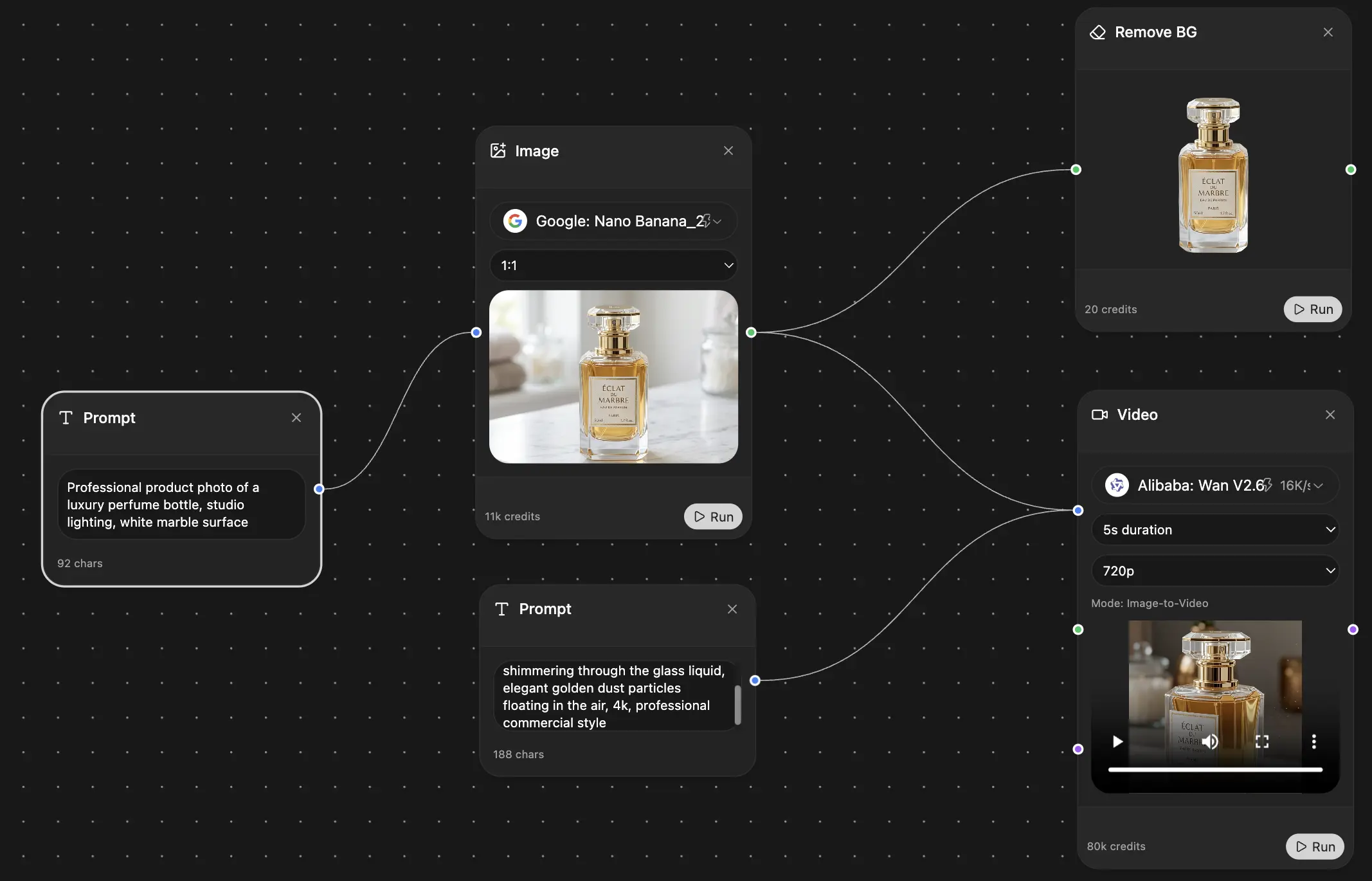
Your infinite AI canvas.
Chat, image, video & motion tools — side by side
Transparent, High-Value Pricing
Free
No credit card required
- Limited daily usage
- Selected AI models to try
- Limited features
Plus
- Choose from multiple leading models — GPT, Claude, Gemini and Grok.
- 25× more usage than Free.
- Create and edit images with Creative Studio.
- Connect your favorite apps and get work done in one place.
- Research the web and turn sources into clear answers.
- Turn documents, websites and YouTube into podcasts, flashcards and reports.
- Build repeatable workflows and stay focused with FocusOS.
Professional
- Everything in Plus, and:
- Unlock every model on Zemith, including GPT 6 Astra, Claude Opus and Sonar Pro.
- 50× more usage than Free.
- Create more with the full Creative Studio toolkit.
- Let agents work in the background — run Cloud tasks and schedule recurring work.
- Push further on complex work with Max Mode.
- First access to new features.
Trusted by teams at






What Our Users Say
Great Tool after 2 months usage
"I love the way multiple tools they integrated in one platform. Going in the right direction."
— simplyzubair
Best in Kind!
"The quality of data and sheer speed of responses is outstanding. I use this app every day."
— barefootmedicine
Simply awesome
"The credit system is fair, models are perfect, and the discord is very responsive. Quite awesome."
— MarianZ
Great for Document Analysis
"Just works. Simple to use and great for working with documents. Money well spent."
— yerch82
Great AI site with accessible LLMs
"The organization of features is better than all the other sites — even better than ChatGPT."
— sumore
Excellent Tool
"It lives up to the all-in-one claim. All the necessary functions with a well-designed, easy UI."
— AlphaLeaf
Well-rounded platform with solid LLMs
"The team clearly puts their heart and soul into this platform. Really solid extra functionality."
— SlothMachine
Best AI tool I've ever used
"Updates made almost daily, feedback is incredibly fast. Just look at the changelogs — consistency."
— reu0691