


Every top model, with tools built in.
Search the web, run deep research, read files, create images and run code with GPT, Claude, Gemini, Grok and more.
A publisher's guide to the best software affiliate programs of 2026: real commission rates, cookie windows, and who each one actually fits.
Why do two bloggers with identical search traffic earn wildly different payouts from the exact same software niche? Usually, one of them chased the biggest percentage on a directory page while the other read the cookie window and payout trigger first.
A 100% commission looks electric on a partner signup screen. It stops looking electric when you notice it only applies to a top-tier first-year plan, buyers need six weeks to get budget approval, and the tracking cookie dies on day 30. According to Affiliate Statistics, the global affiliate-marketing industry reached roughly $18.5 billion in 2024 and is projected to climb to $31.7 billion by 2031, with reported SaaS commission rates commonly spanning 20% to 70%. That wide spread exists for a reason, and headline percentages alone won't tell you which programs put money in your bank account.
Real earnings from one realistic article come down to simple multiplication: commission rate times cookie window times payout trigger. Before you grab a referral link, check those three levers together.
The eleven best software affiliate programs below passed three blunt filters: one focused tutorial or comparison post can plausibly convert, the commercial terms are documented publicly, and there is a clear buyer profile. No passive-income fantasies here. Every entry ends with a "Skip it if" line so you can disqualify bad fits in five seconds flat.
[blocked]
Software directories rarely pay publishers well, which makes Awesome Tools an unusual starting point for tech writers, indie newsletters, and developer communities. Instead of pushing one narrow SaaS subscription, you're pointing startup founders, indie hackers, and tool makers toward a curated software, AI, and developer tools directory housing 390+ hands-on software reviews across 73 categories.
Before deciding whether it fits your audience, take a look at how the platform structures its editorial reviews and category leaderboards.
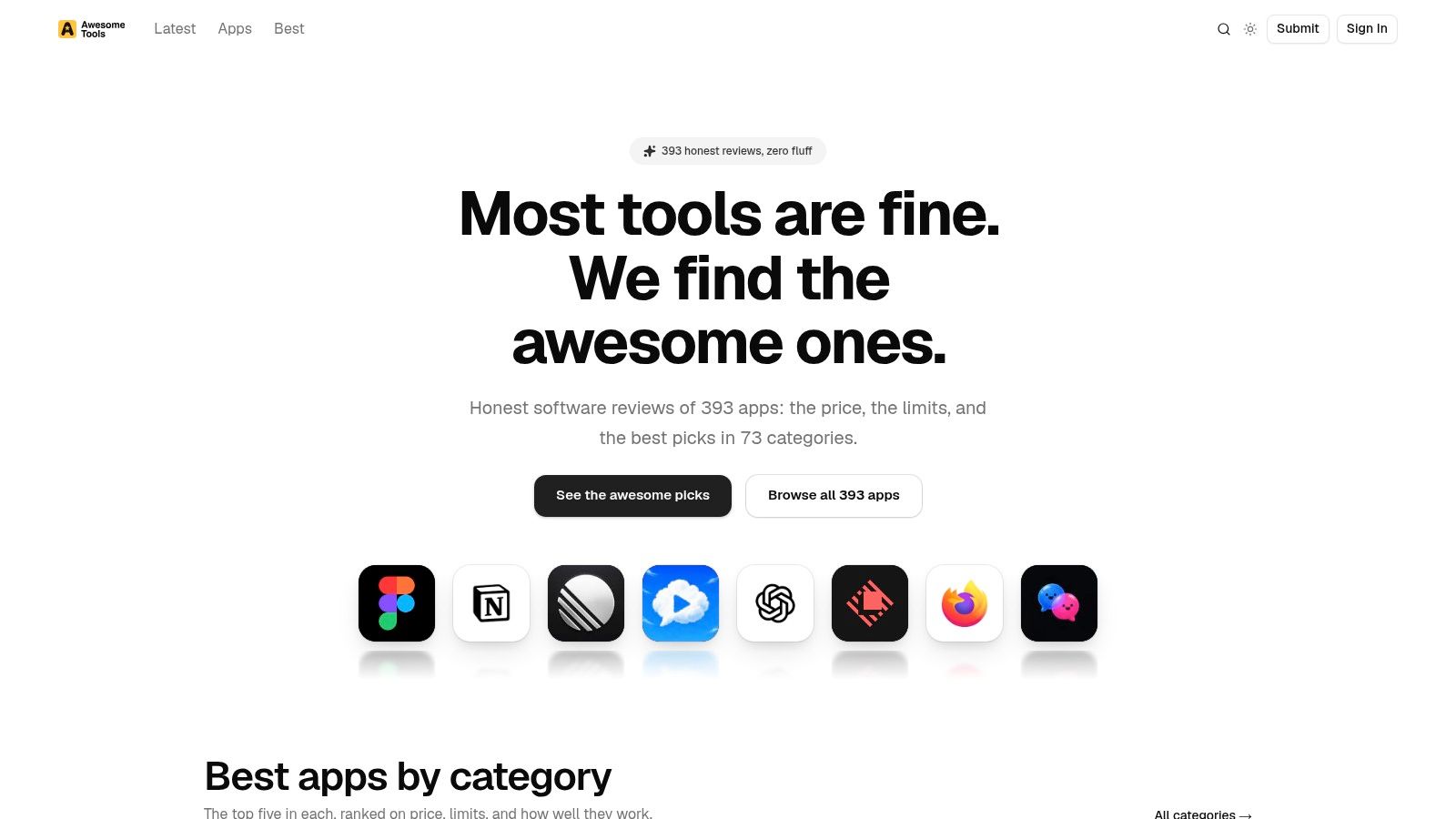
Every listed product gets a real editorial breakdown covering pricing tiers, hidden usage limits, pros, cons, and direct alternatives rather than recycled press releases. Approved tools also earn dynamic SVG embed badges displaying verified live Ahrefs Domain Rating or monthly organic search traffic, giving founders a tangible SEO and trust asset they want on their landing pages. For developer-heavy audiences, Awesome Tools even maintains a public JSON Agent Submission API and WebMCP workflow so founders or AI coding agents like Claude Code, Cursor, Codex, and OpenCode can submit products programmatically in one step.
[blocked]
Through the Awesome Tools partner program, creators, curated directory lists, and newsletters earn a flat 40% commission with a 30-day cookie window and no signup or approval gate — just append ?via=<handle> (or ?ref=<handle>) to start tracking immediately. Payouts go out monthly via PayPal, Wise, or USDT once your balance reaches $40. Because founders pay one-time launch fees rather than deliberating over an enterprise contract, one targeted "where to submit your SaaS" article can convert fast.
Skip it if your readers are consumers shopping for personal apps rather than founders, marketers, or developers actively launching and promoting software products.
[blocked]
B2B buyers almost never purchase a CRM on their first lunch break. They read your comparison post in April, argue about pipeline stages in May, and swipe a corporate card in July. HubSpot solves that exact lag with a 180-day cookie window, giving long-form B2B content a realistic shot at getting credited when the deal finally closes.
Six months of tracking turns a slow enterprise sales cycle from an affiliate killer into a quiet pipeline of delayed payouts.
The HubSpot affiliate program is free to join and covers its full customer platform across CRM, marketing, sales, and service hubs. You can see how its partner tiers and resources are organized on the official enrollment portal.
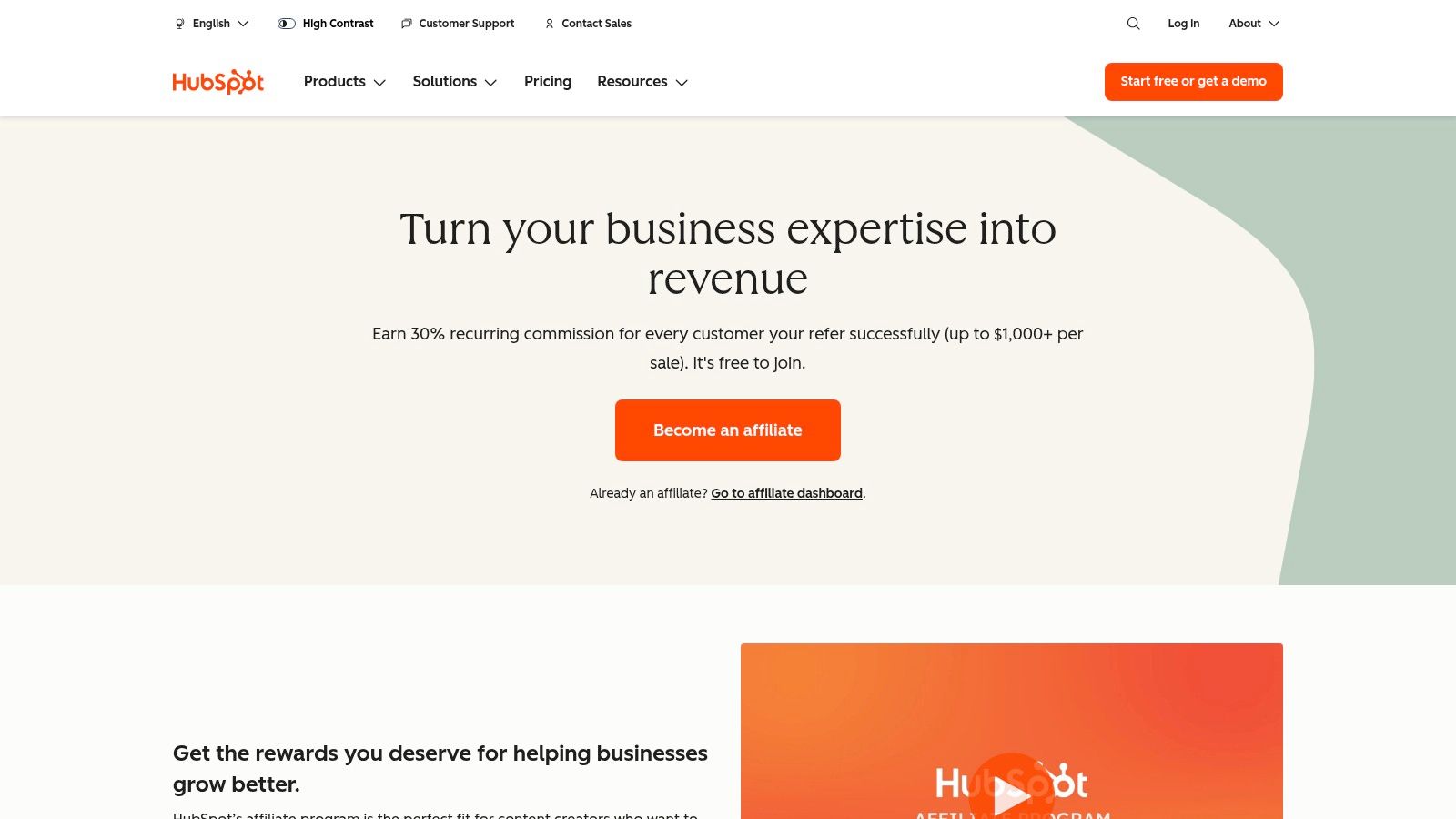
As documented in Gator Affiliator's SaaS program comparison, HubSpot's Starter-tier offer pays 30% recurring commission for up to one year, whereas competitors vary widely from Apollo.io's 15% on monthly plans and 20% on annual plans for 12 months to Omnisend's 24-month recurring window and Circle's 30% lifetime recurring structure on Standard plans. Because HubSpot's multi-seat business plans get pricey fast, a single larger referral can reach $1,000 or more in commissions, and high performers advance to graduated tiers with custom terms. If you publish buying guides comparing business software costs alongside an AI subscription pricing breakdown, HubSpot slots naturally into stack-consolidation posts.
Skip it if you write for solo hobbyists or expect lifetime recurring checks, since applications are screened for B2B audience fit and commissions stop after month twelve.
[blocked]
Say you publish a hands-on guide showing ecommerce owners how to fix cannibalized product pages. A reader clicks your link, starts a free trial, checks ten keywords, and gets pulled into an inventory crisis for two months. With most software programs, you earn nothing. With the Semrush affiliate program, you collect $10 per qualifying trial activation right away, and if they upgrade within 120 days, payouts climb up to $450 per sale depending on the product and partner tier.
That dual trigger makes Semrush one of the easiest high-paying SaaS affiliate programs to test on mid-funnel SEO, content, social, local-marketing, and AI-visibility tutorials. You don't need every reader to pull out a credit card immediately just to validate whether your page attracts real buyers.
Still, Semrush relies on last-click attribution, which comes with a real-world catch. According to the Performance Marketing Association attribution deep dive, browser privacy protections and ad blockers mean traditional browser-based tracking may capture roughly 60% to 70% of conversions in affected environments, pushing modern programs toward server-to-server tracking and multi-touch models. If a reader discovers Semrush through your tutorial and later clicks a random discount link before paying, that second link takes the credit.
Skip it if you run a general lifestyle or consumer blog where readers have zero interest in search rankings, traffic analytics, or paid marketing tools.
[blocked]
Adobe's payout math tricks hasty skimmers every single week. You see 85% of the first month's subscription price for eligible monthly and annual-paid-monthly plans, and your brain immediately starts pricing out a boat. Then you read the next line: prepaid annual plans pay 8.33% of the first-year price, which is mathematically identical to one month's revenue, and tracking runs on a tight 30-day cookie through Partnerize.
You can check the current product eligibility rules and creative kits on the Adobe affiliate portal, which covers Creative Cloud, Adobe Express, Document Cloud, and Adobe Stock.
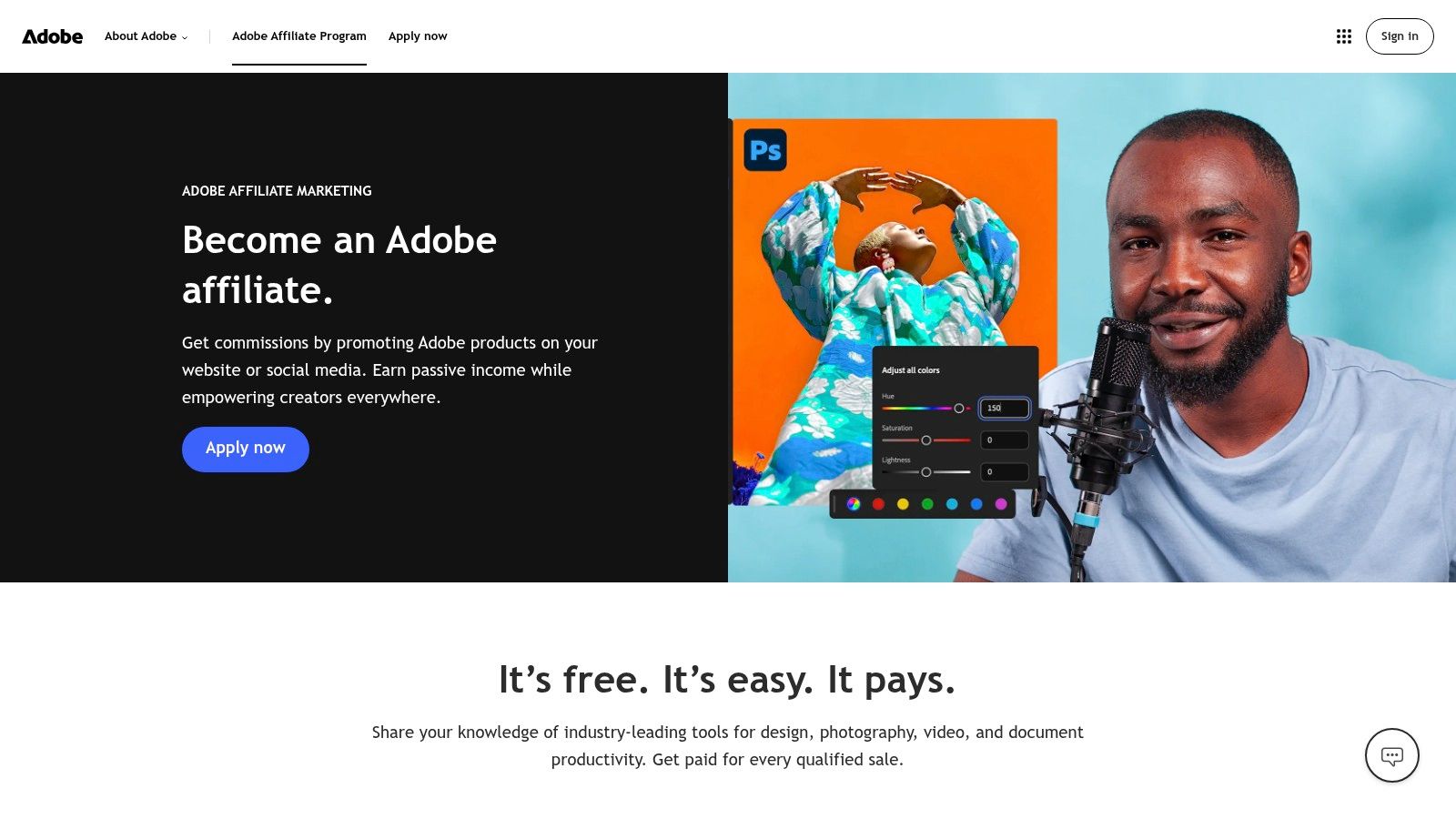
Don't write Adobe off because of the short window, though. Few software brands carry this level of built-in recognition among designers, video editors, photographers, students, and anyone wrestling with stubborn PDFs. If your audience is already weighing creative subscriptions or reading an Adobe Firefly pricing guide, you spend zero paragraphs convincing them the brand is legitimate.
[blocked]
Because a qualifying purchase has to happen inside 30 days and commission terms differ for Adobe Stock and across locations, vague "top design tools" roundups underperform here. Specific, problem-solving tutorials win.
Write articles that end with the reader needing the exact tool right now: removing a background in Adobe Express, batch-editing RAW photos in Lightroom, or signing and compressing contract PDFs in Document Cloud. One well-placed product-specific link inside a tutorial outperforms twenty banner ads in your sidebar.
Skip it if your traffic sits at the top of the funnel taking months to decide, or if you need ongoing recurring revenue rather than a one-month burst.
[blocked]
Earning $0.20 per eligible free account sign-up won't buy your morning latte unless you refer roughly twenty-five people before breakfast. Yet that tiny number hides why the Grammarly affiliate program stays on so many writers' and educators' shortlists: Grammarly pairs that low-friction signup with $20 per paid upgrade (per its support documentation), backed by a 90-day cookie and cross-device tracking.
Put that next to industry conversion norms to see why the two-step trigger works. According to KhrisDigital's affiliate marketing statistics, while roughly 81% of advertisers and 84% of publishers participate in affiliate marketing, SaaS affiliate traffic averages only about 0.8% referral-to-sale conversion, meaning roughly eight of every 1,000 referred visitors turn into paying customers. When a tool costs nothing to try and improves every email or essay someone writes today, far more readers clear that first free-account hurdle, giving Grammarly's onboarding emails three full months to convert them into $20 upgrades.
The partner portal lays out both its consumer and business offers clearly for publishers evaluating the fit.
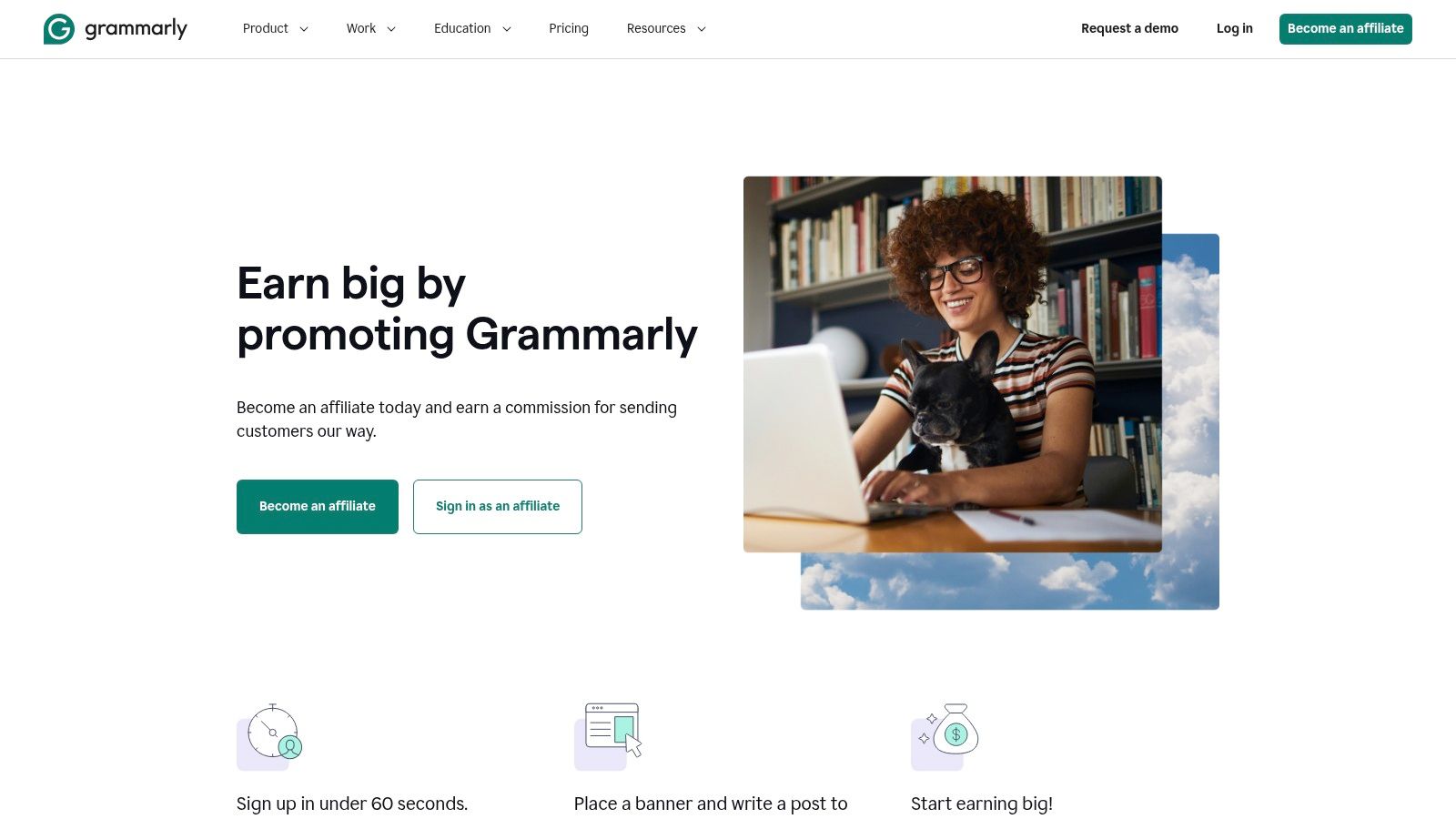
It fits naturally into academic writing tips, ESL guides, remote-team communication articles, and side-by-side reviews next to a QuillBot pricing comparison. Top performers can also earn bonuses and higher payouts, provided they respect strict promotion rules, including bans on trademark bidding.
Skip it if you have a tiny, ultra-specialized audience and need $200+ per conversion to make content production pencil out.
[blocked]
50% revenue share on a qualifying new customer's first subscription, continuing for up to 12 months on an active monthly plan, wrapped inside a 90-day cookie. On paper, the Webflow affiliate program delivers one of the cleanest year-one payouts in the website-building category.
Retention reality: A 50% monthly share only beats a flat bounty if the user stays past month four, and websites are notoriously sticky once a founder connects a custom domain.
That stickiness is why recurring software offers pull ahead over time. Industry analysis from FluentAffiliate cites research showing recurring-subscription affiliates earn 67% more annually than affiliates focused on one-time sales, though smart publishers still model expected lifetime payout after accounting for churn, downgrades, and eligibility rules rather than assuming every referral pays out for a full year.
Here's a look at how Webflow positions its affiliate tiers and resources for creators and educators.
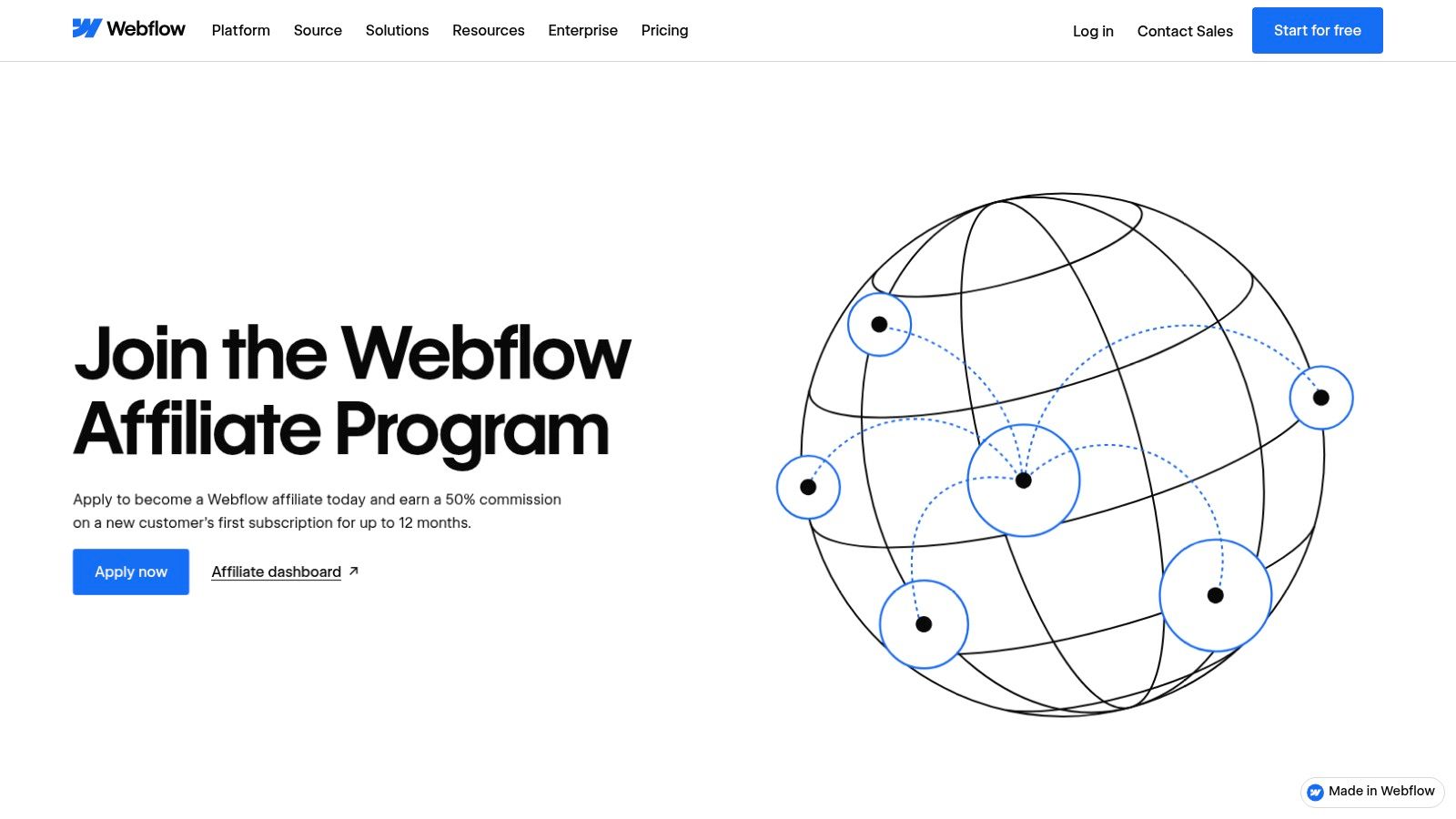
Webflow shines inside build-along tutorials, portfolio teardowns, and "Webflow vs. WordPress" comparisons aimed at designers, developers, founders, and marketing teams. Note two administrative guardrails before applying: client referrals belong in Webflow's separate partner program rather than standard affiliate links, and you'll need a PayPal or Stripe account to collect payouts once your reviewed application clears.
Skip it if you're a freelance web designer trying to drop affiliate links onto client handoffs, or if your audience wants a five-minute no-code link-in-bio page rather than visual layout control.
[blocked]
Whenever a software company advertises up to 100% commission on the first year's sales, your inner skeptic should sit up straight. Notice the words "up to." The monday.com affiliate program runs on a tiered commission structure, which means brand-new affiliates rarely walk in the door collecting 100% on day one.
Even without hitting the top tier immediately, monday.com remains a heavy hitter for productivity bloggers, operations consultants, and managers comparing team workflows. Its partner landing page outlines the multi-workflow pitch and marketing support available to approved creators.
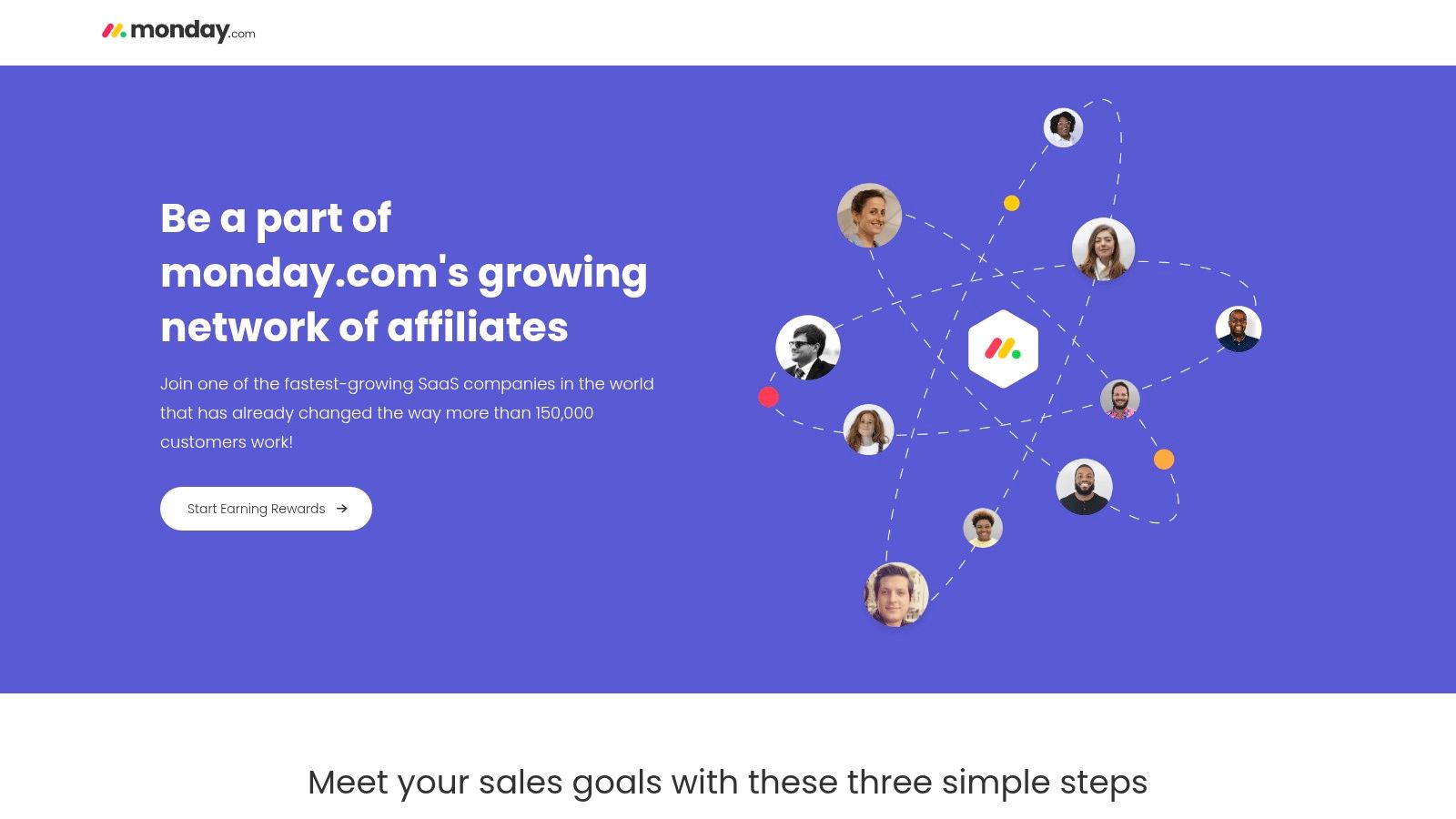
Treat monday.com as a volume-and-positioning play rather than a magic lottery ticket. Three practical details decide whether a single article converts here.
Skip it if you only plan to drop a single casual mention once a year, because tiered structures reward consistent referral volume in a brutally competitive productivity niche.
[blocked]
Accounting software isn't sexy, which is precisely why it pays reliably. Nobody wakes up daydreaming about reconciling receipts, yet every freelancer, consultant, and small-business owner eventually hits the moment when a messy spreadsheet triggers a tax-season panic attack. That urgency makes the FreshBooks affiliate program a dependable earner for business and freelance publishers.
Managed through PartnerStack, FreshBooks advertises commissions of up to $200 per paid subscriber, alongside potential payouts for trial sign-ups, with individual terms customized by partner.
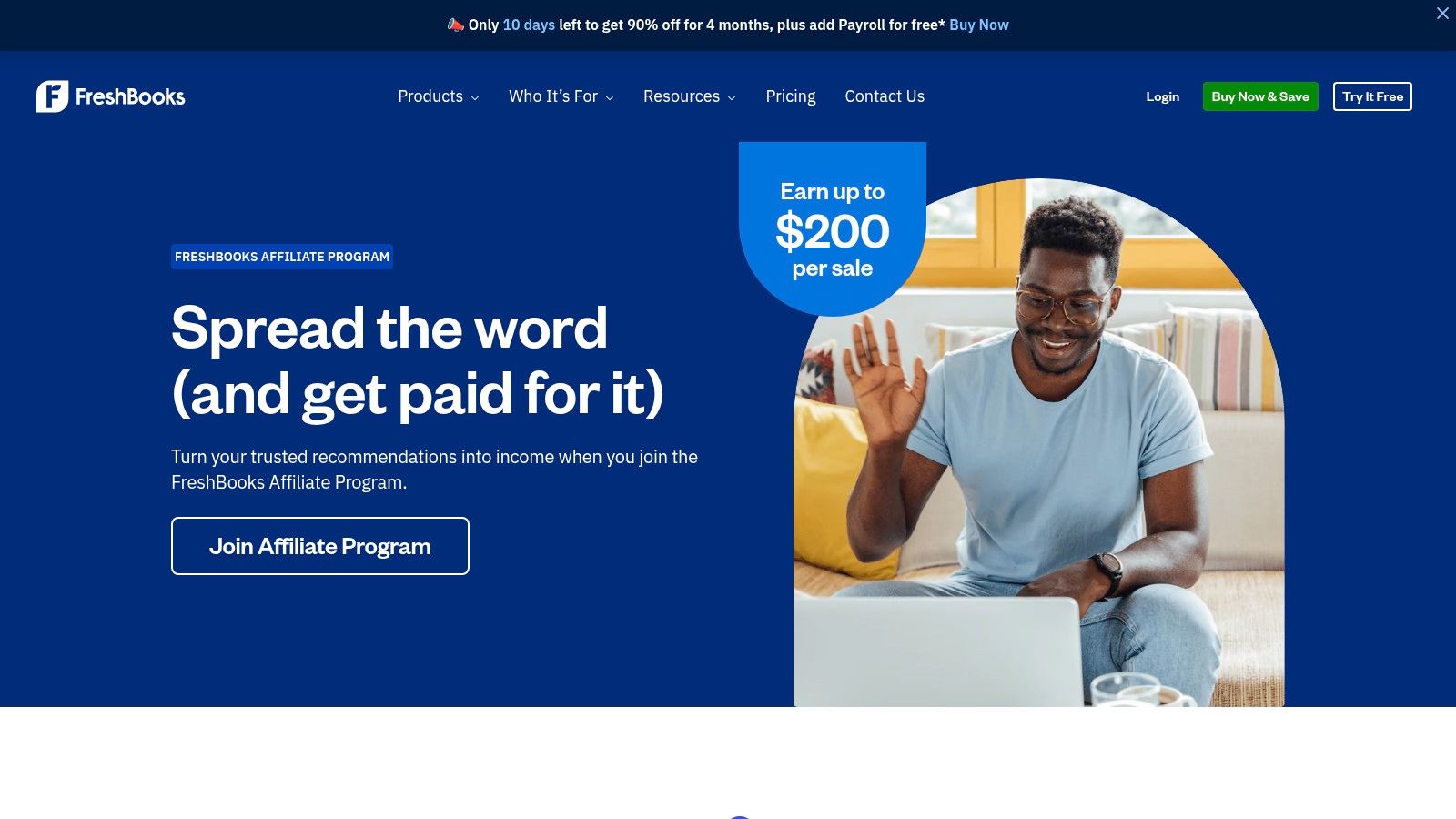
One operational detail matters greatly with high flat-rate bounties: refund clawbacks. As FirstPromoter's conversion tracking guide explains, subscription-tracking systems treat refunds as reversal events where a partial refund cuts a percentage commission proportionally, while a flat commission may be clawed back in full and deducted from your next unpaid payout. Driving high-intent freelancers who need invoicing and bookkeeping protects your approval rate far better than chasing bargain hunters.
In fact, FreshBooks reviews applications closely and often rejects coupon- and cashback-focused sites altogether. Publish practical invoicing templates, freelance tax checklists, or "how to chase late client invoices" tutorials, and FreshBooks becomes the obvious next click.
Skip it if your readers hold salaried nine-to-five jobs with no side business, or if your monetization model relies on promo-code pages.
[blocked]
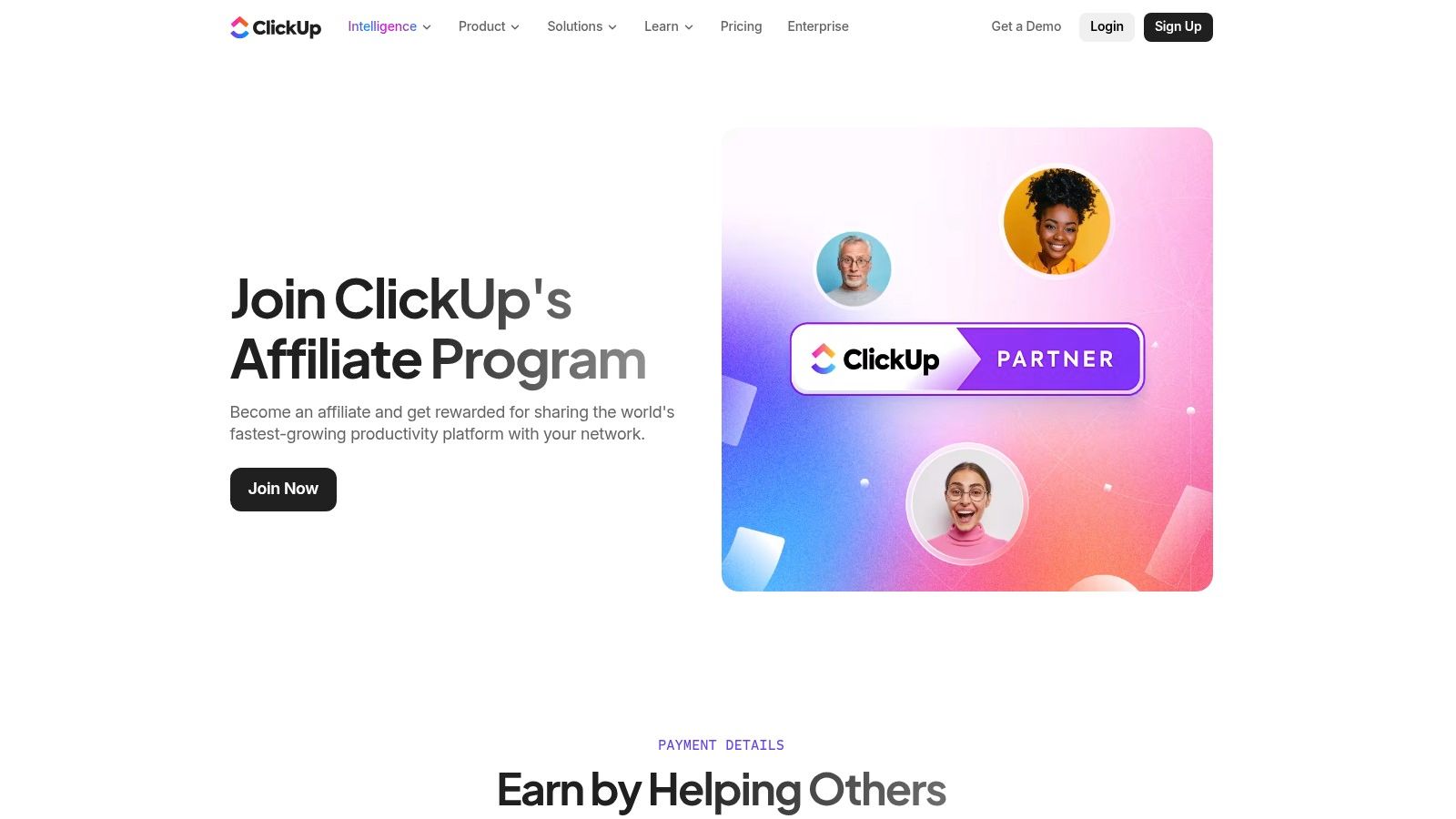
ClickUp makes you read the fine print twice, and that's a helpful litmus test for any affiliate. Publicly, the ClickUp affiliate program advertises up to $25 per new free workspace referral as a signup-based offer, backed by official promotional assets and volume-based partner tiers. Other program materials also reference commissions when referred users upgrade, so verify your exact payout schedule inside your dashboard before publishing a ten-part ClickUp series.
The official partner page breaks down how signup-based referrals and volume tiers work for productivity creators.
[blocked]
A signup-triggered payout completely changes your content strategy. Because a reader doesn't need to use a company credit card to open a free workspace, your article's job is showing one concrete setup they can copy in ten minutes.
Think SOP hubs, sprint boards, or client onboarding checklists. Readers searching for workspace alternatives alongside a Notion AI pricing overview are actively comparing features and limits right now, making side-by-side template tutorials prime conversion territory. Just don't promise yourself infinite recurring income unless your specific partner agreement confirms recurring upgrade terms.
Skip it if you refuse to build around signup bounties and strictly want guaranteed recurring monthly revenue shares from every single partner on your site.
[blocked]
Audio is one of the rare software categories where ten seconds of proof beats two thousand words of hype. Embed a short voiceover sample, show how you turned a blog post into crisp narration, and podcasters, YouTubers, educators, and developers instantly get why the tool matters. Through the ElevenLabs affiliate program, partners earn up to 22% commission on qualifying payments for the first 12 months, supported by promotional assets and a partner dashboard covering creative, voice-agent, and API products.
You can preview the partner portal and available product lines right from their affiliate hub.
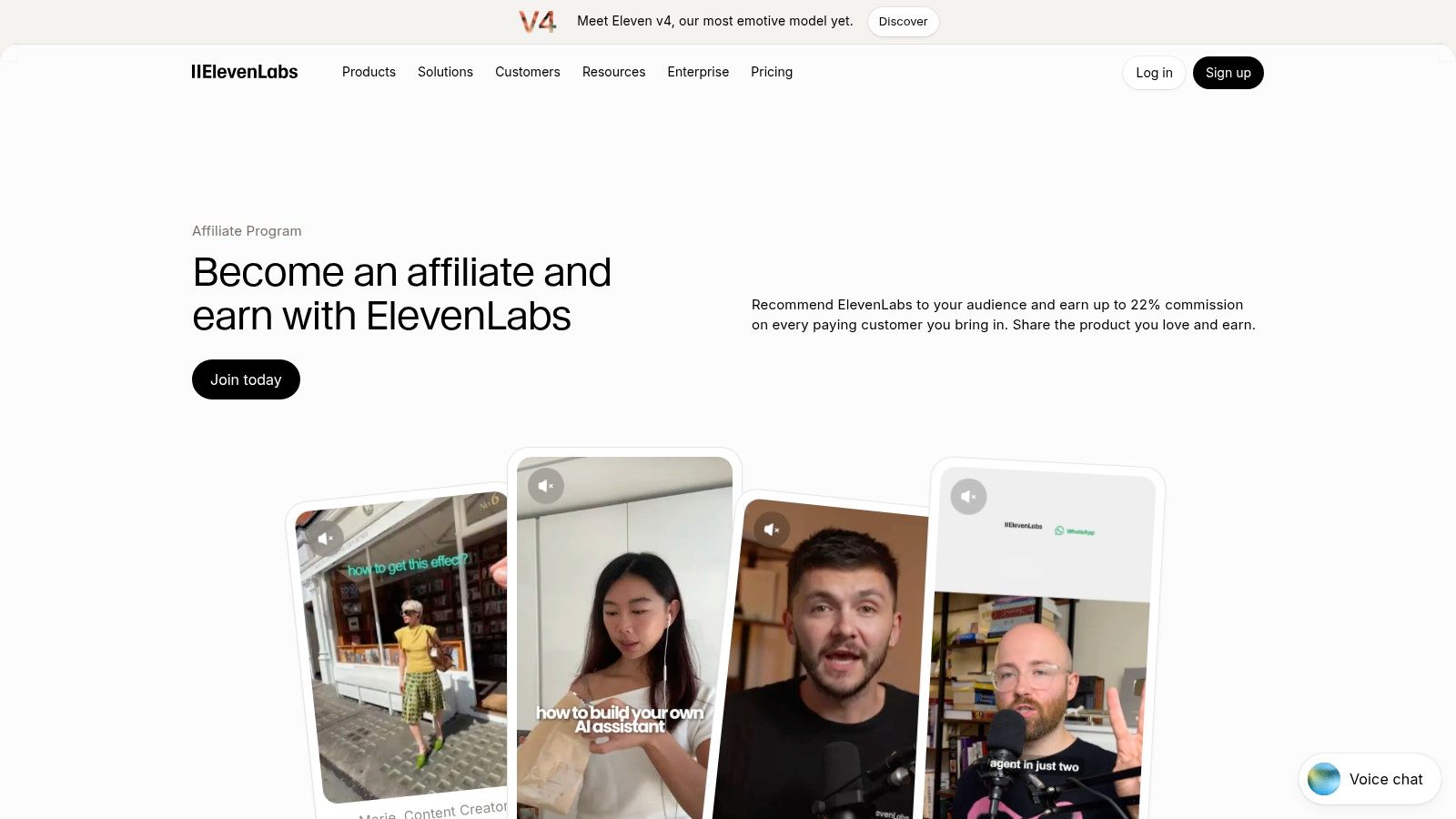
Never recommend an AI voice tool without embedding an audio clip or walking through real credit consumption. Readers can smell a review written without an active account in three seconds.
That's why hands-on tutorials, API integration guides, and an honest ElevenLabs review outperform generic "best AI tools" listicles. Keep in mind that commissions apply to qualifying paid customers rather than free-tier dabblers, and your copy should never imply an official brand endorsement beyond your affiliate relationship. Also notice a growing reader objection in AI content: creators get subscription fatigue fast when every single capability costs another monthly bill. Pairing niche reviews with consolidated workspaces like Zemith, which bundles 50+ AI tools (including text to speech, voice cloning, document to podcast, AI notes, and FocusOS) with a free plan requiring no credit card, gives budget-conscious readers a practical alternative when a standalone voice subscription feels too narrow.
Skip it if your audience rarely produces video, podcasts, audiobooks, or voice-enabled apps, because general office workers seldom pay for standalone voice synthesis.
[blocked]
Email platforms stay glued to a creator's business for years. Once a newsletter publisher migrates subscribers, welcome sequences, and digital-product funnels into Kit's affiliate program (formerly ConvertKit), switching feels roughly as pleasant as moving apartments in August.
Managed through PartnerStack, Kit offers 50% commission for up to 12 months, followed by 10% to 20% recurring revenue beyond year one for qualifying affiliate tiers. That two-phase curve is unusually transparent, and it highlights why reading historical program behavior matters across affiliate marketing. For perspective on how commission terms can shift over time, Geniuslink's historical Amazon Associates guide tracks how Amazon's average commission rate peaked around 9.25% in mid-2012 before dropping to roughly 3.14% by early 2020 under fixed category schedules spanning 0% to 10%. Software programs support far healthier margins than physical retail, yet checking both the year-one rate and the post-year-one tier requirements keeps your earnings forecast grounded.
Skip it if you write for enterprise IT buyers or general productivity readers who aren't building an audience, newsletter, or digital-product business.
[blocked]
| Program | Commission | Cookie Window | Best For | Payout Trigger |
|---|---|---|---|---|
| Awesome Tools | 40% per paid launch | Not specified | Creators, newsletters, and agencies referring software launches | Paid launch |
| HubSpot | 30% recurring for up to one year | 180 days | Publishers serving business buyers, marketers, and sales teams | Referred customer purchase |
| Semrush | Up to $450 per sale; $10 per qualifying trial | 120 days | SEO, digital marketing, and business-growth publishers | Qualifying sale or trial activation |
| Adobe | 85% of the first month on eligible monthly plans; 8.33% of the first year on eligible prepaid annual plans | 30 days | Design, photography, video, and creative-workflow publishers | Qualifying purchase |
| Grammarly | $0.20 per eligible free account; $20 per upgrade | 90 days | Publishers serving writers, students, and professionals | Eligible sign-up or paid upgrade |
| Webflow | 50% of a qualifying new customer's first subscription, for up to 12 months | 90 days | Website-building and design publishers | Qualifying new subscription |
| monday.com | Tiered; advertised up to 100% of first-year sales | Not specified | Productivity and workflow publishers | Referred customer sales |
| FreshBooks | Customized terms; advertised up to $200 per paid subscriber | Not specified | Freelance and small-business publishers | Trial sign-up or paid-plan upgrade |
| ClickUp | Up to $25 per new free workspace referral | Not specified | Productivity and project-management creators | New free workspace referral |
| ElevenLabs | Up to 22% of qualifying payments for the first 12 months | Not specified | Creators, podcasters, educators, and developers covering voice AI | Qualifying paid customer payments |
| Kit | 50% for up to 12 months; qualifying tiers may earn 10–20% recurring afterward | Not specified | Newsletter publishers and creator-business educators | Referred customer subscription |
[blocked]
Grab a sticky note and run a ten-minute audit before applying to half the internet. Joining eleven programs today sounds ambitious until you end up with eleven forgotten dashboards, eleven tax forms, and zero pages that rank.
[blocked]
Three unglamorous habits separate publishers who get paid from publishers who get suspended. First, disclose your links clearly up front. According to the Federal Trade Commission's Endorsement Guides FAQ, truth-in-advertising standards apply to software, apps, and online services, and clear wording such as "paid link" right next to an affiliate link (or a plain notice near the top of the article) keeps you compliant rather than burying text in a footer.
Second, never bid on a software brand's trademarked keywords in paid search unless the contract explicitly permits it, because trademark bidding is the fastest way to forfeit pending commissions. Third, tag every outbound link by page and placement using sub-IDs so you know which specific paragraph earned the payout instead of guessing.
Keep one structural limit in mind while planning your editorial calendar: most recurring programs on this list cap commissions at 12 months. Your affiliate revenue isn't a set-and-forget pension. A winning comparison post needs steady new organic traffic every month to replace older cohorts rolling off month twelve.
[blocked]
If your readers specifically shop for AI software, you've probably noticed a new conversion blocker: nobody wants seven separate $20 subscriptions eating their budget alive. That shift creates a sharp editorial angle for promoting an all-in-one workspace. Zemith pays affiliates a 20% commission on payments from all referred customers, and its Plus plan at US$15.99 per month includes every listed AI model plus 50+ AI tools (from Agent Mode and Deep Research to Creative Studio, AI notes, and plugins for Notion, Linear, Canva, and Airtable). Explaining how readers can replace 15 separate subscriptions totaling US$234.70 per month with one workspace is a far easier value pitch than trying to defend another single-purpose AI app, especially since readers can test the free plan with no credit card required.
Bottom line: The best software affiliate programs aren't the ones with the loudest percentage on a banner. They're the ones whose buyers already read your work and trust your math.
Ready to test a stronger angle for your next software comparison or AI workflow guide? Try Zemith free with no credit card required to see how multi-model chat, Deep Research, Creative Studio, and 50+ integrated AI tools fit into one workspace, then compare our US$15.99/month Plus plan against the fragmented subscriptions your readers are tired of paying for. Once you've built real workflows inside the platform, share your honest breakdown with your audience and earn a 20% commission on payments from every customer you refer.
Ask the same question to different models without opening another subscription, then run the result in the sandbox. Claude 5.5 Opus and GPT 6.2 Sol are on Professional ($29.99/month); Plus covers the rest.
Free $0 (chat with the free models) · Plus $15.99/month · Professional $29.99/month. Prices in USD.
Pay less than one AI subscription and get GPT, Claude, Gemini and more, plus 50+ AI tools.






Trusted by teams at






The top models, plus image, video and voice tools, in one plan.
Without Zemith
ChatGPT PlusUS$20.00Claude ProUS$20.00Google AI ProUS$19.99Grok PremiumUS$30.00Perplexity ProUS$20.00 MidjourneyUS$10.00
 ElevenLabsUS$6.00Le Chat ProUS$14.99
 RunwayUS$15.00Kling StandardUS$8.80
 Gamma PlusUS$12.00
 Otter ProUS$16.99
 QuillBot PremiumUS$19.95
 Photoroom ProUS$12.99
 Quizlet PlusUS$7.99
Total if paying separatelyUS$234.70/mo
"I love the way multiple tools they integrated in one platform. Going in the right direction."
— simplyzubair
"The quality of data and sheer speed of responses is outstanding. I use this app every day."
— barefootmedicine
"The credit system is fair, models are perfect, and the discord is very responsive. Quite awesome."
— MarianZ
"Just works. Simple to use and great for working with documents. Money well spent."
— yerch82
"The organization of features is better than all the other sites — even better than ChatGPT."
— sumore
"It lives up to the all-in-one claim. All the necessary functions with a well-designed, easy UI."
— AlphaLeaf
"The team clearly puts their heart and soul into this platform. Really solid extra functionality."
— SlothMachine
"Updates made almost daily, feedback is incredibly fast. Just look at the changelogs — consistency."
— reu0691
Hand off the research, writing, design and follow-ups. Zemith picks the tools it needs and brings back finished work.
What should I check before signing this lease?
DeepSeekRead Lease agreement.pdf · 12 pages
GPTGeminiClaudeDeepSeekGrokDeepSeekSearch the web, run deep research, read files, create images and run code with GPT, Claude, Gemini, Grok and more.
Research my top 3 competitors and write a report
 Searching the web
 Reading 24 sources
 Writing your report
Zemith keeps working in the cloud and pings you when it's done.
Turn my launch notes into tasks, a launch graphic and a tracker entry
 Read Launch plan
 3 issues ready to create
 Launch graphic ready in Canva
 Tracker row drafted
Done. Issues created, tracker updated
Notion, Linear, Canva, Airtable and more. It asks before it creates or changes anything.
Turn my Q3 notes into a board update
On it. I'll turn your notes into a board doc, a deck, a KPI sheet and a PDF.
 Board updateDOCX
 Q3 reviewPPTX
 KPIsXLSX
Docs, slides, sheets and PDFs, ready to send.
Product photoNano BananaChain models and tools on a visual canvas, from one prompt to a finished promo video.
Morning news briefReady at 8:02 Weekly sales reportMondays at 9:00
 Invoice reminders1st of every month
Briefings, reports and reminders run on a schedule and are ready when you need them.
 Sharing screen
You“Can you check my work?”
Zemith“Every answer I can see is right, and 3 × 4 under your pencil is 12.”
Real-time voice that can see your camera or screen.


 Nano BananaGPT Image
 FluxVeoKling
 Seedance
The best image and video models, in one studio.
 Biology notes.pdf42 pages
 Podcast
 Quiz
 Flashcards
 Mind map
 Infographic
Turn PDFs, links and YouTube videos into podcasts, quizzes, flashcards and mind maps.